Historical Data User Guide
Historical data is the operation record of Pickwiz over a past period of time. It stores the input data and output results of each process including 2D recognition, 3D calculation, and Pick Point processing, and is used to trace abnormal issues.
1. View Historical Data
Prerequisites
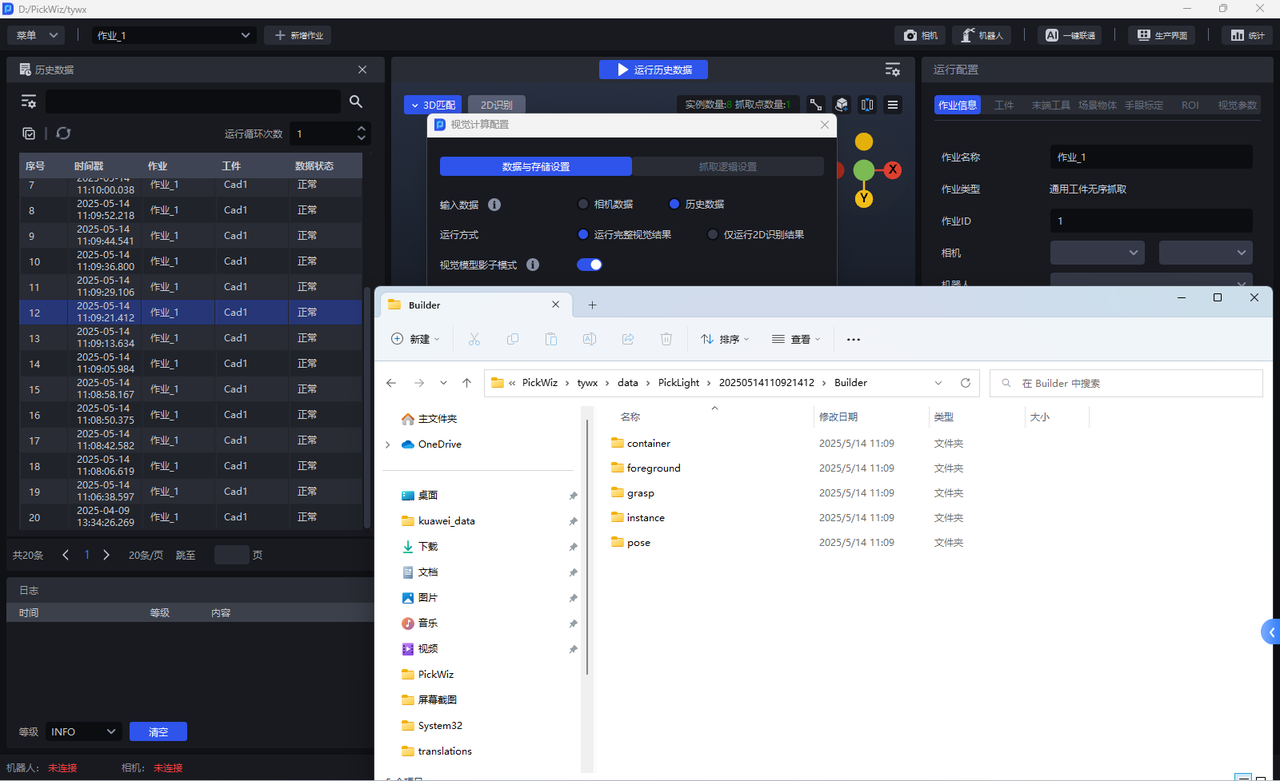
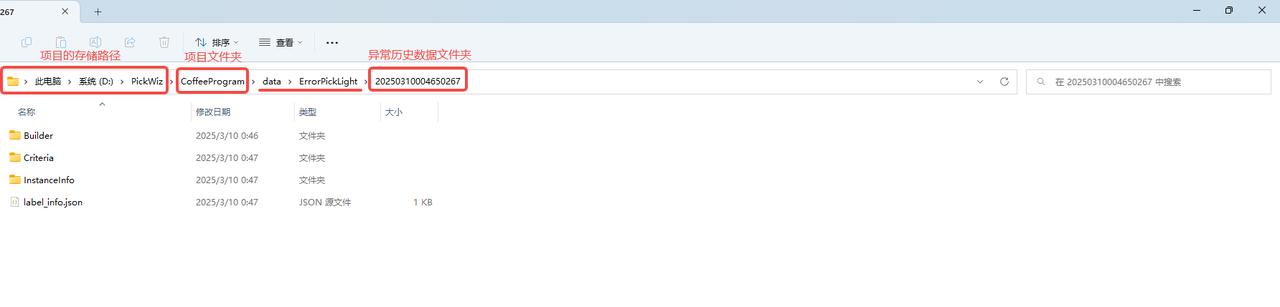
Folder names in historical data correspond to node names:
Builder - generation-related nodes
Criteria - filtering-related nodes
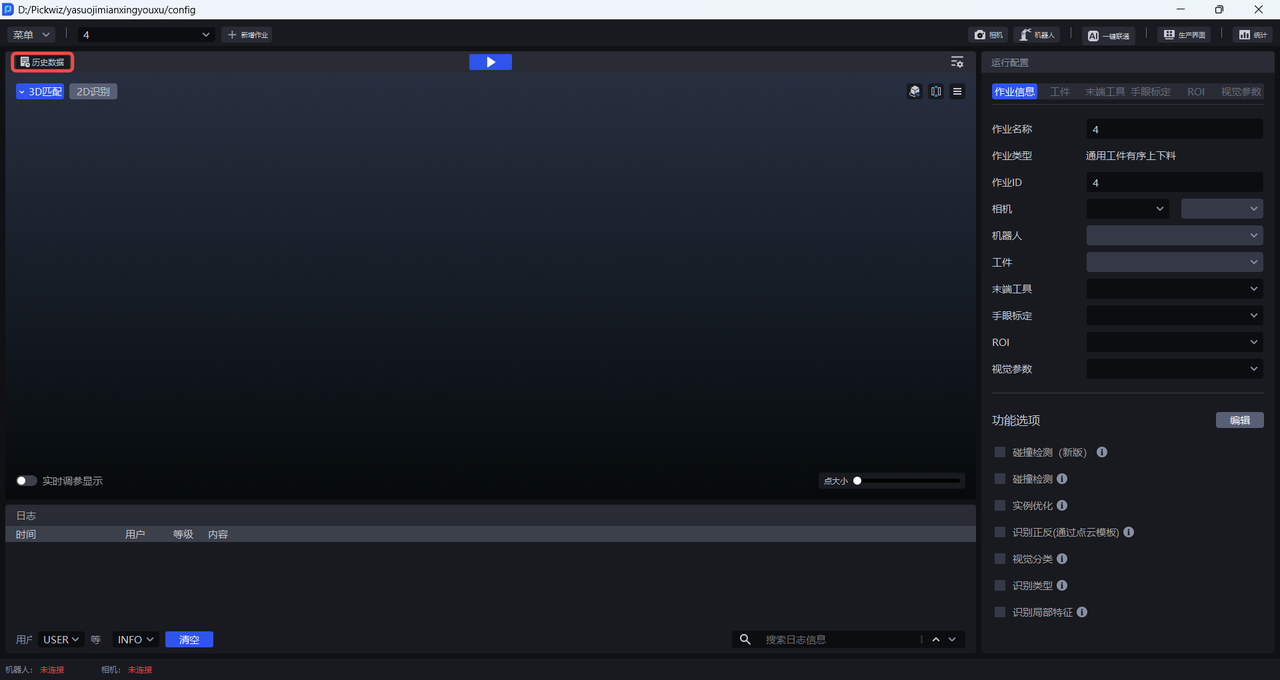
On the main page, click Historical Data to open the historical data panel, where you can view the historical data list.
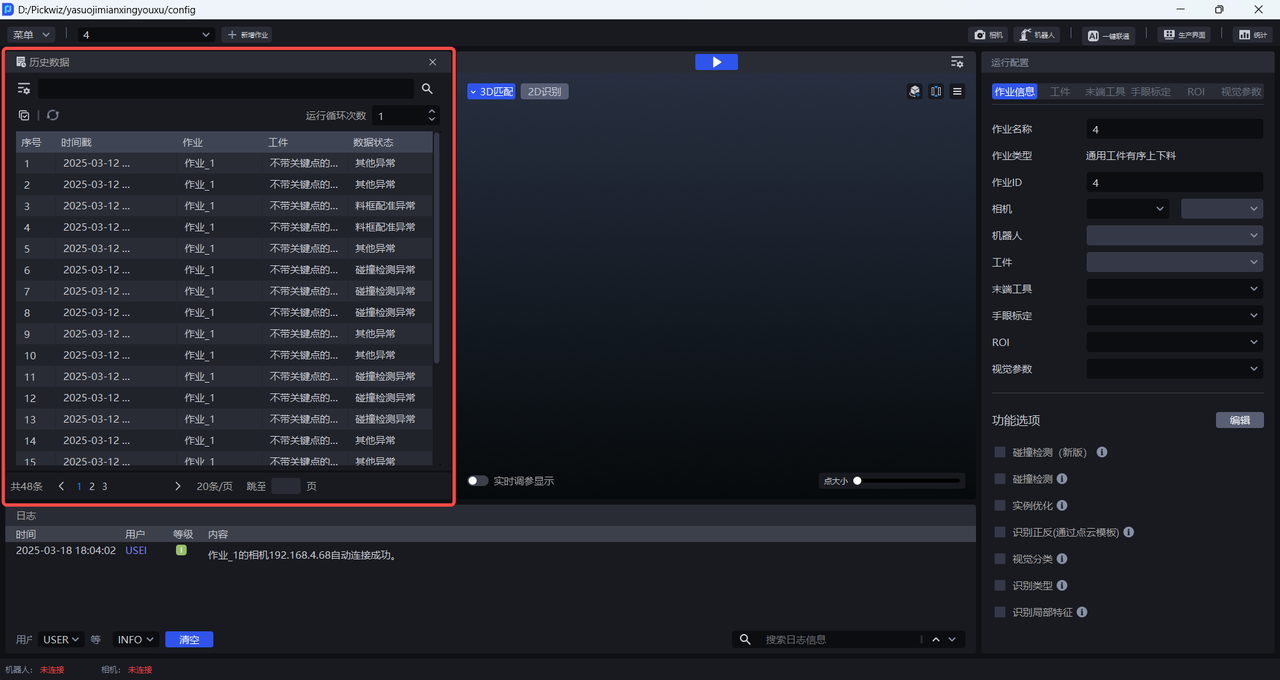
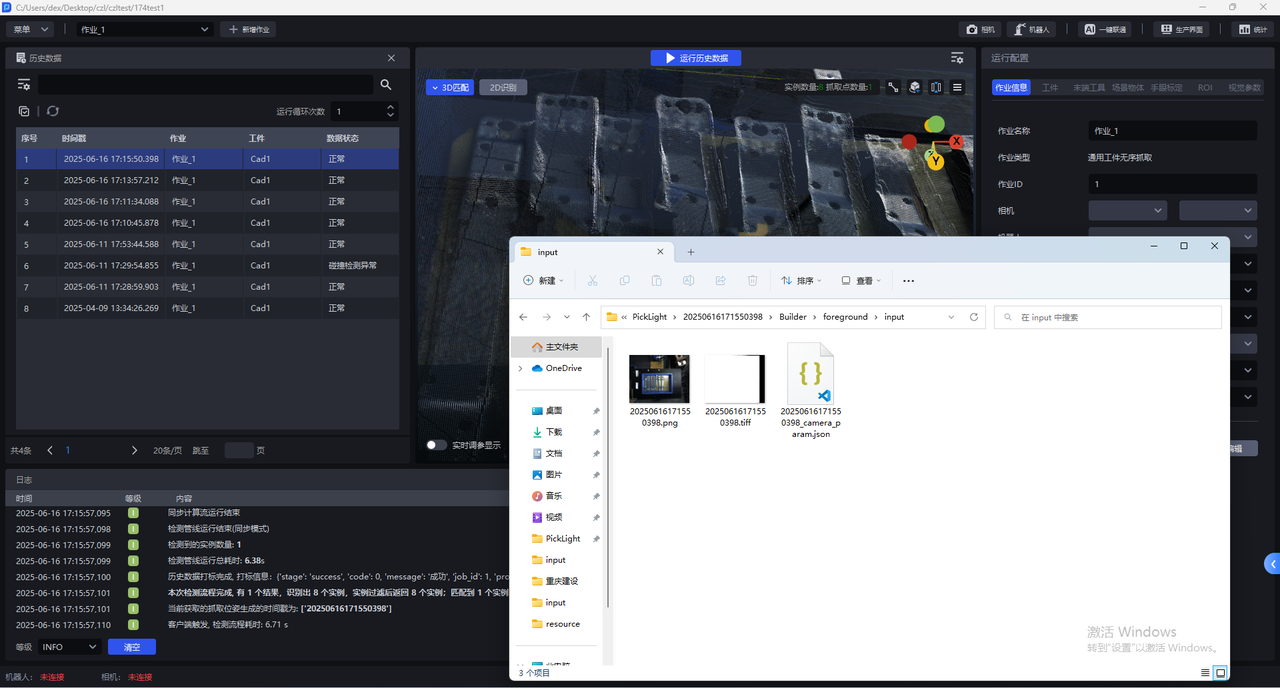
Each historical data entry displays its timestamp, task, workpiece, and data status. The timestamp is the time when the historical data entry was run, the task is the task name of the entry, the workpiece is the workpiece name of the entry, and the data status is the run result of the entry.
Hover the mouse cursor over the timestamp, task, workpiece, or data status of each historical data entry to view the corresponding full name.
Click "<"">" or fill in "Jump to Page" to turn pages and view the next page of historical data in the list.
Click a specific historical data entry to view its 3D Matching results and 2D recognition results in the visualization window on the right.
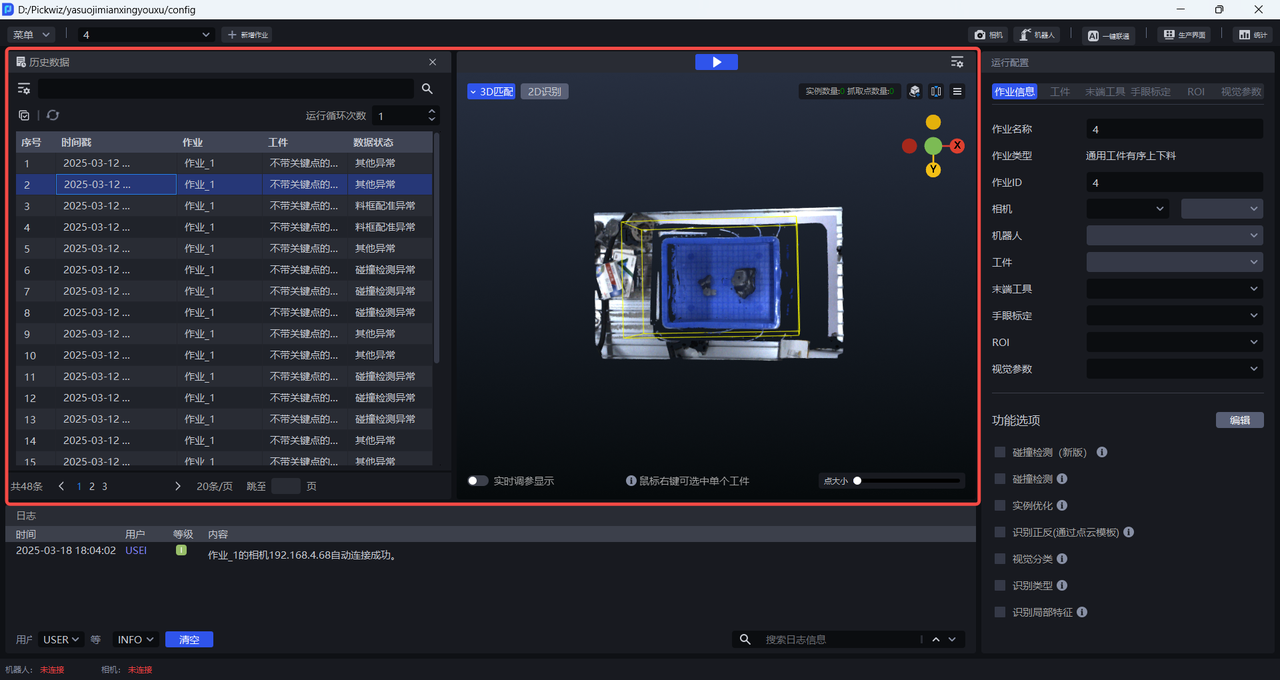
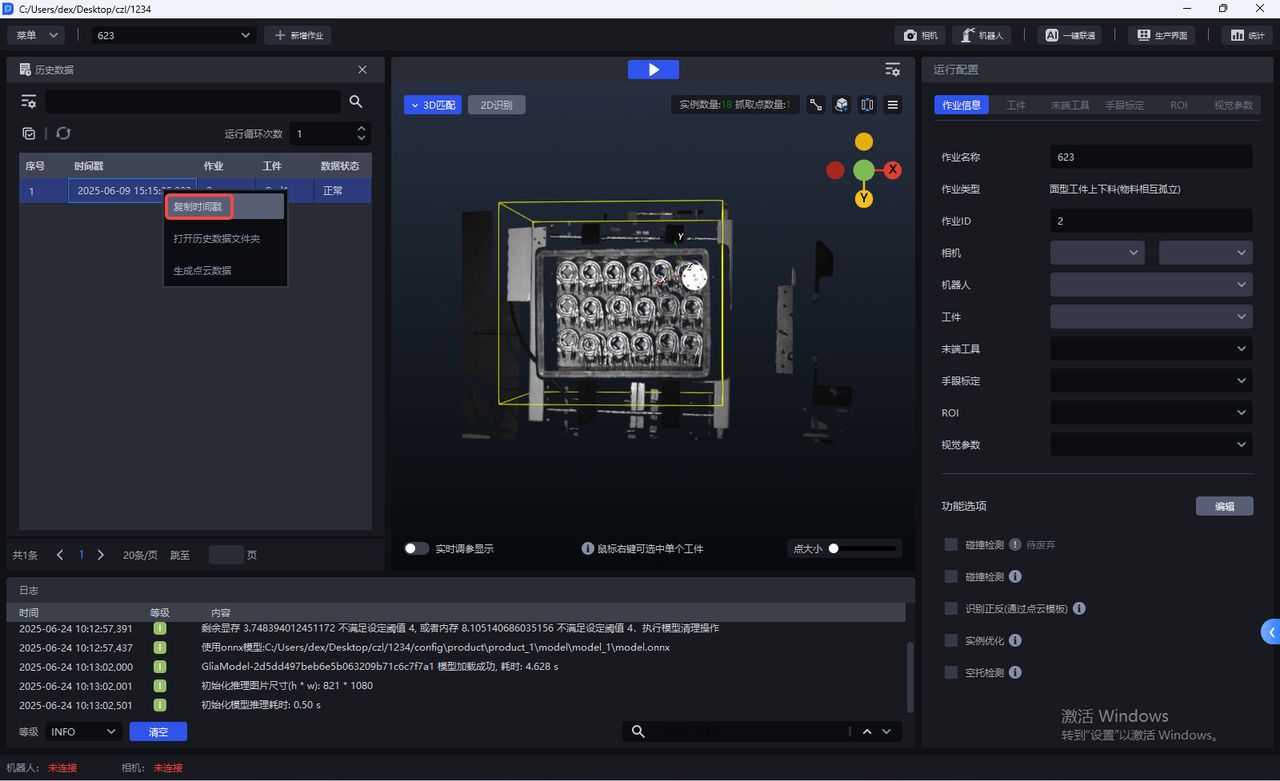
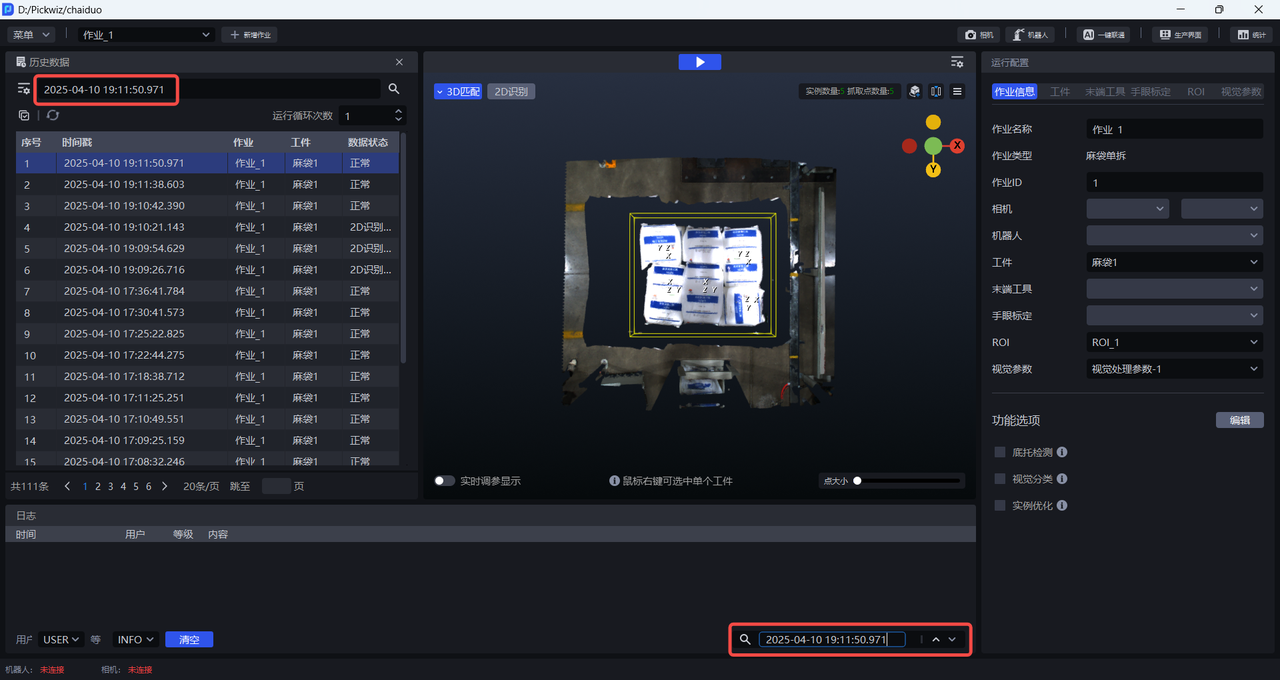
- Right-click the timestamp of a historical data entry to copy the timestamp, then paste it into the search box of historical data or the search box in the log area to search for the corresponding historical data or log.
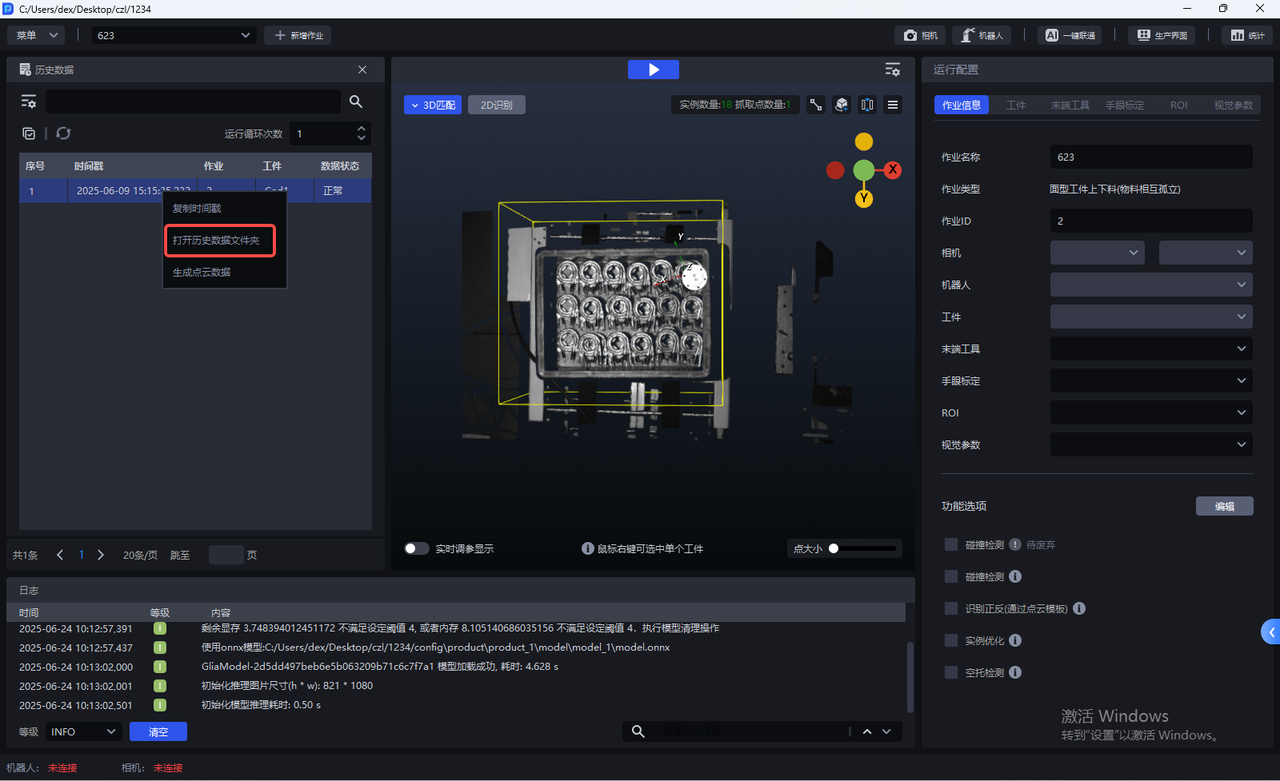
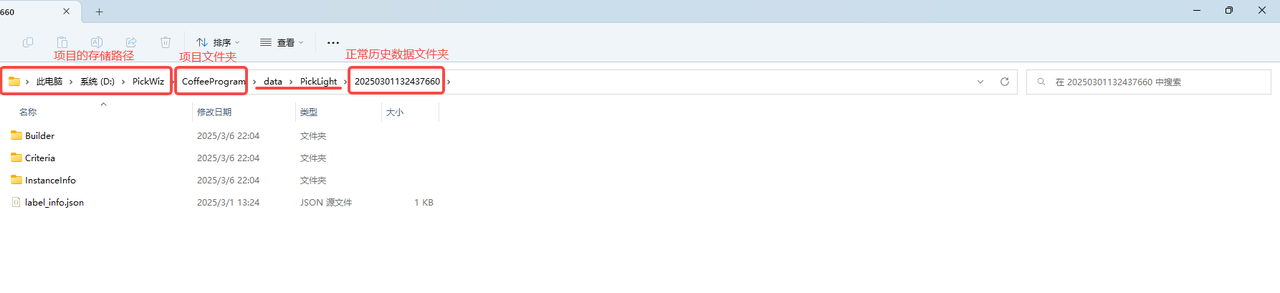
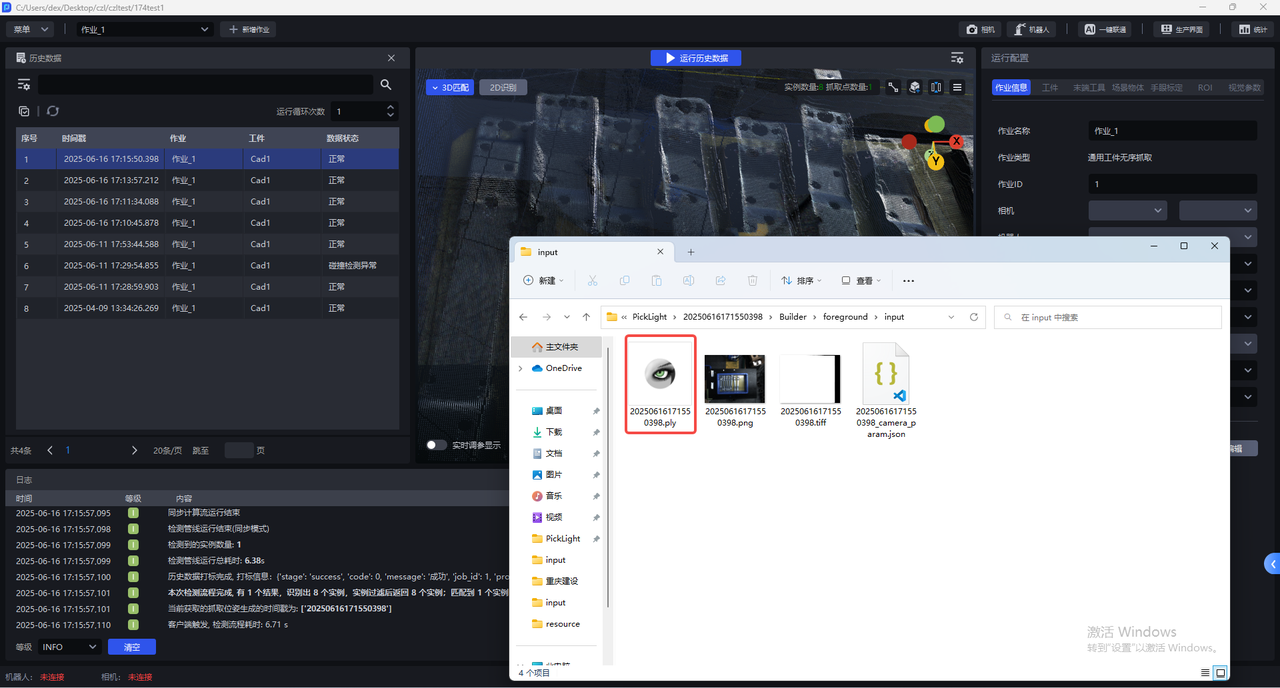
- Right-click the timestamp of a historical data entry to open the folder of that historical data entry.
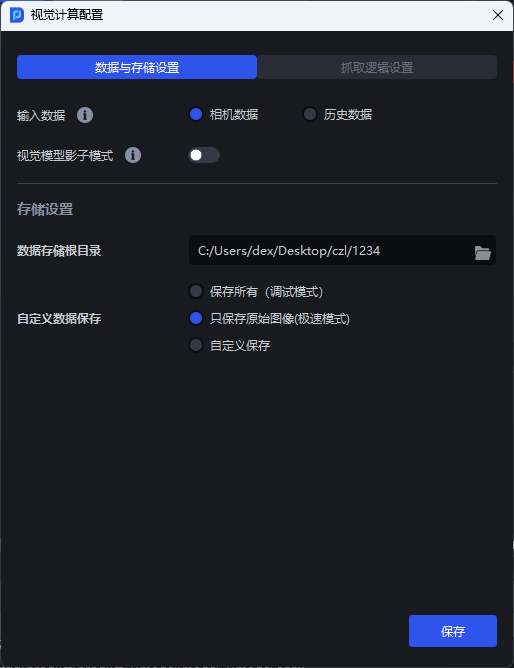
If Vision Calculation Configuration is set to Save Original Images Only (High-Speed Mode) for custom data saving, historical data will not save Point Cloud data, which means neither the ROI area nor the Point Cloud template can be adjusted, as shown below. (For ROI-related instructions, refer to ROI Operation Guide; for Point Cloud template-related instructions, refer to Point Cloud Template Creation Guide)
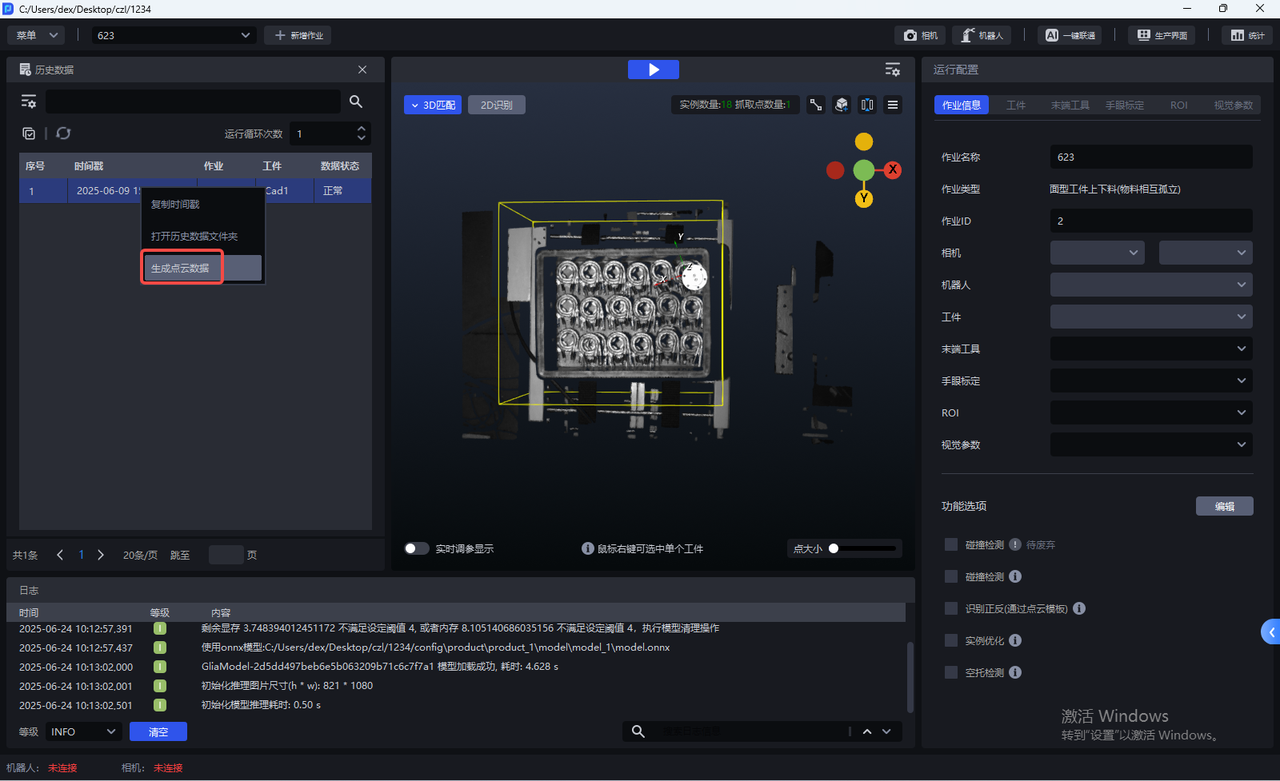
If the Camera is occupied and Camera data cannot be obtained, so Point Clouds can only be generated using historical data, you can right-click the timestamp of the historical data and then left-click Generate Point Cloud Data. The system will generate Point Clouds based on the original images and save them in the directory of the corresponding historical data, as shown below.
2. Search Historical Data
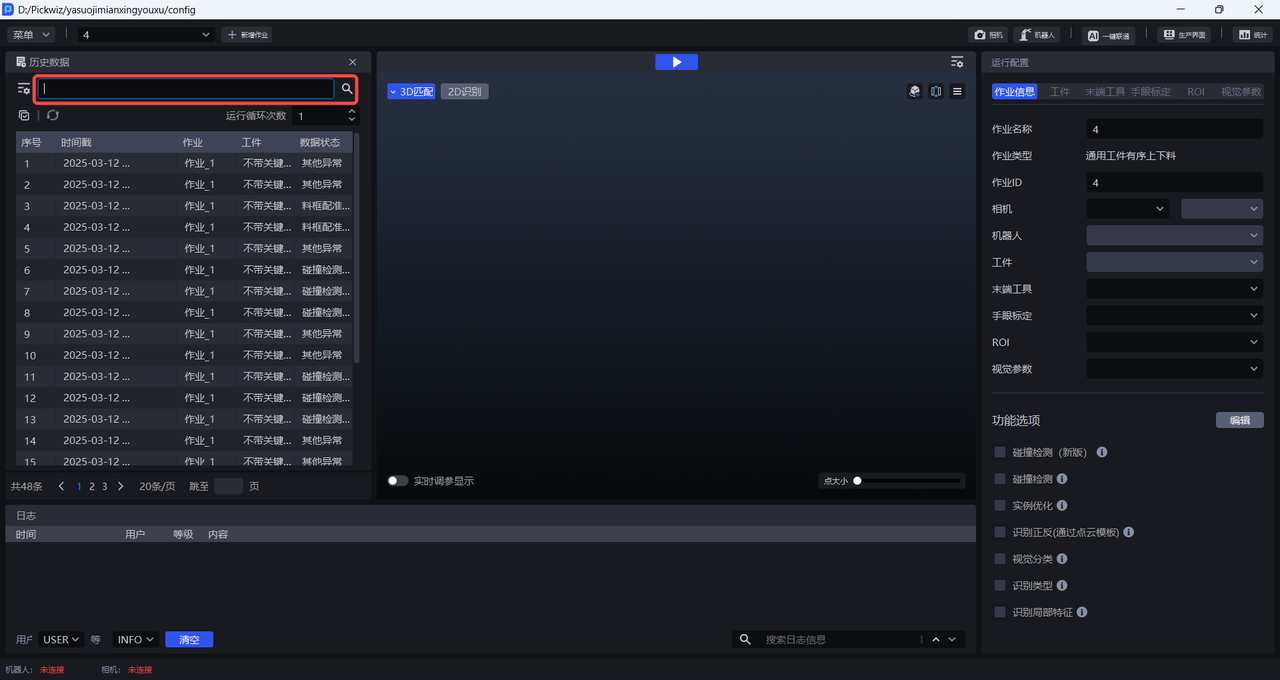
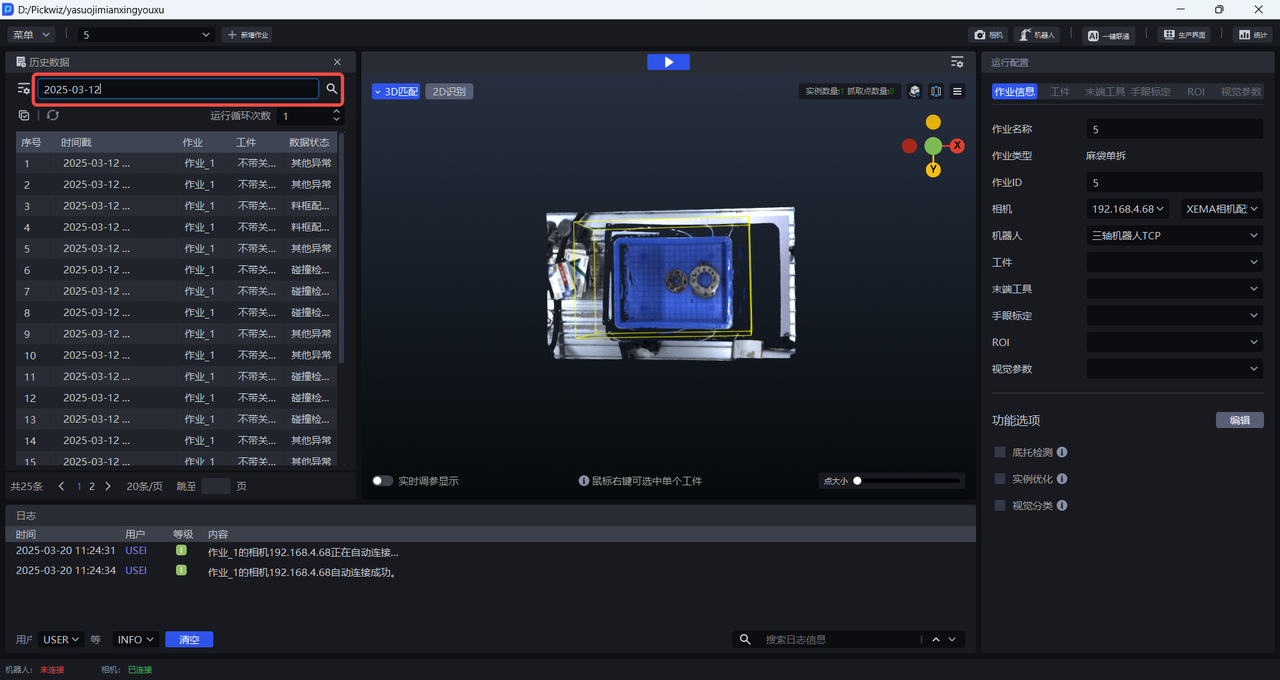
Enter a timestamp, task, workpiece, or data status in the search box of the historical data panel to search for the corresponding historical data.
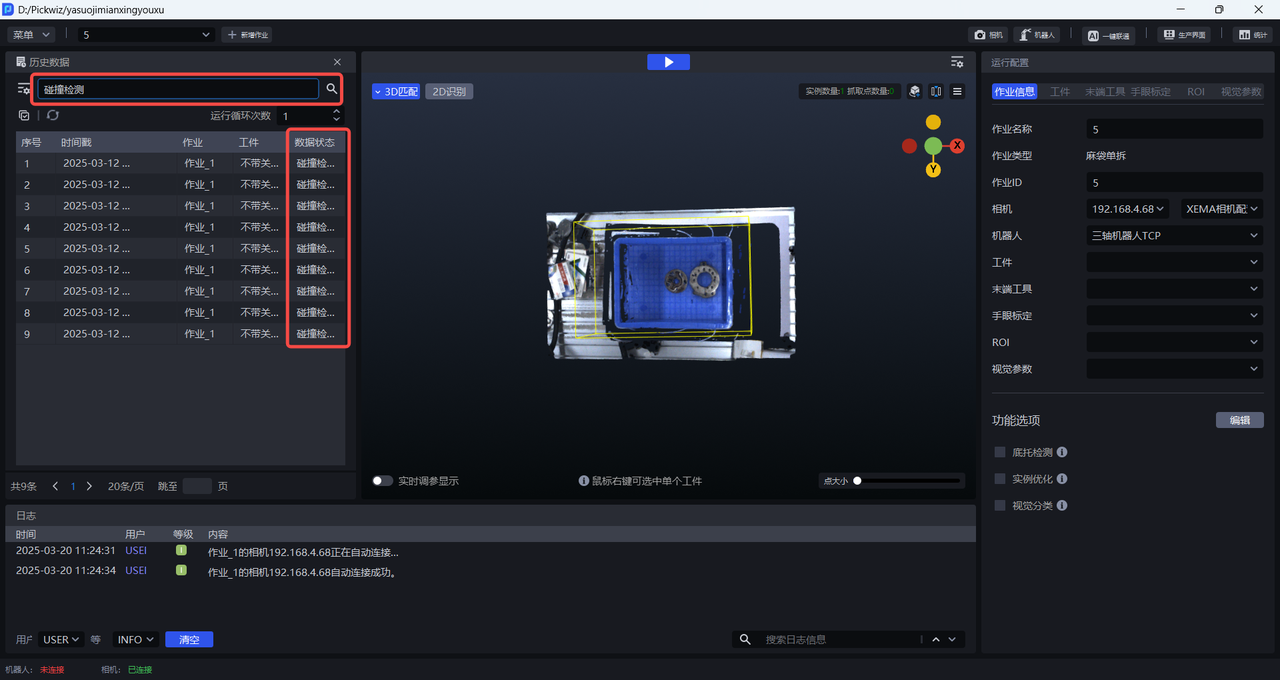
Enter abnormal data statuses, such as bin detection abnormality or 2D recognition error, to filter abnormal cases from the historical data.
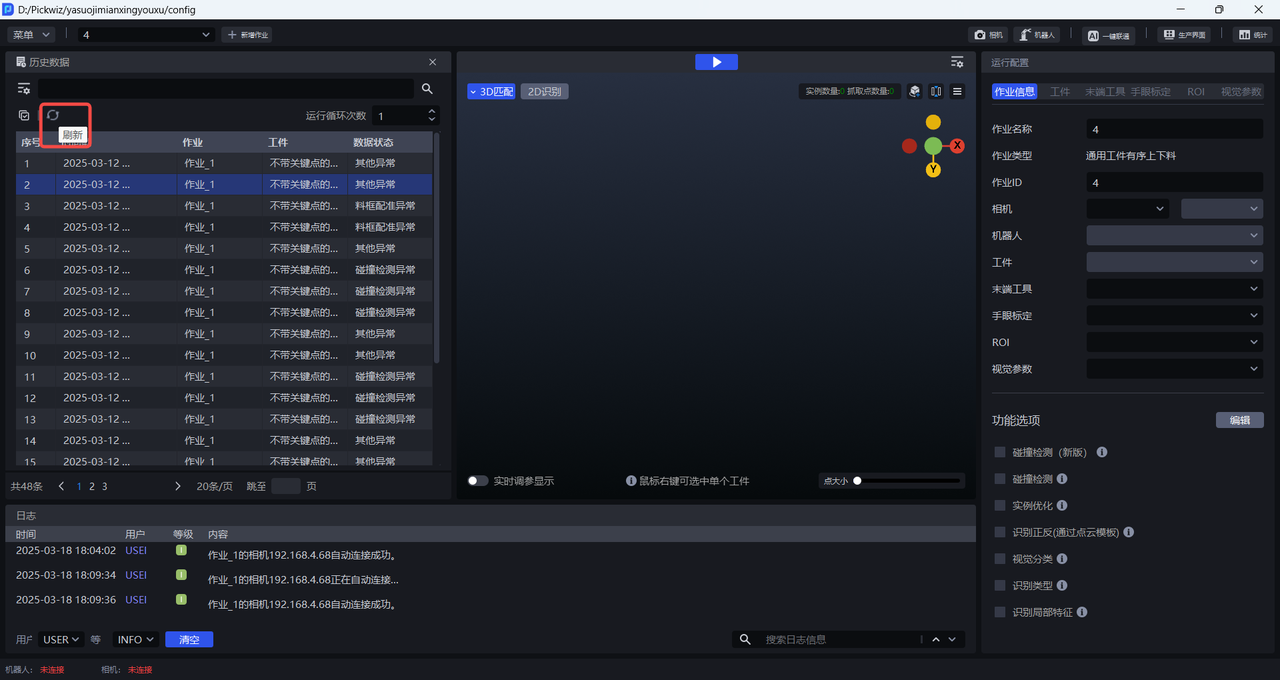
3. Refresh Historical Data
Click the Refresh button to refresh to the latest historical data.
4. Run Historical Data
(1)Run historical data on the PickWiz side
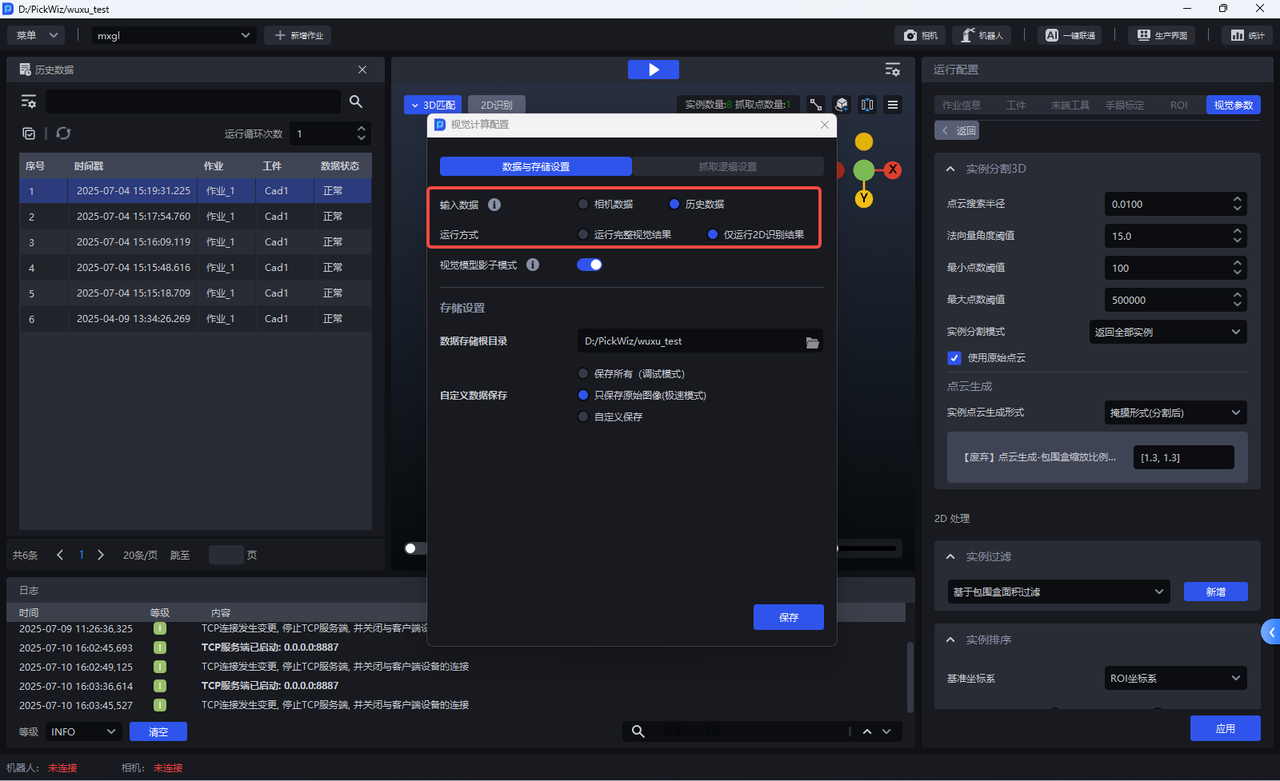
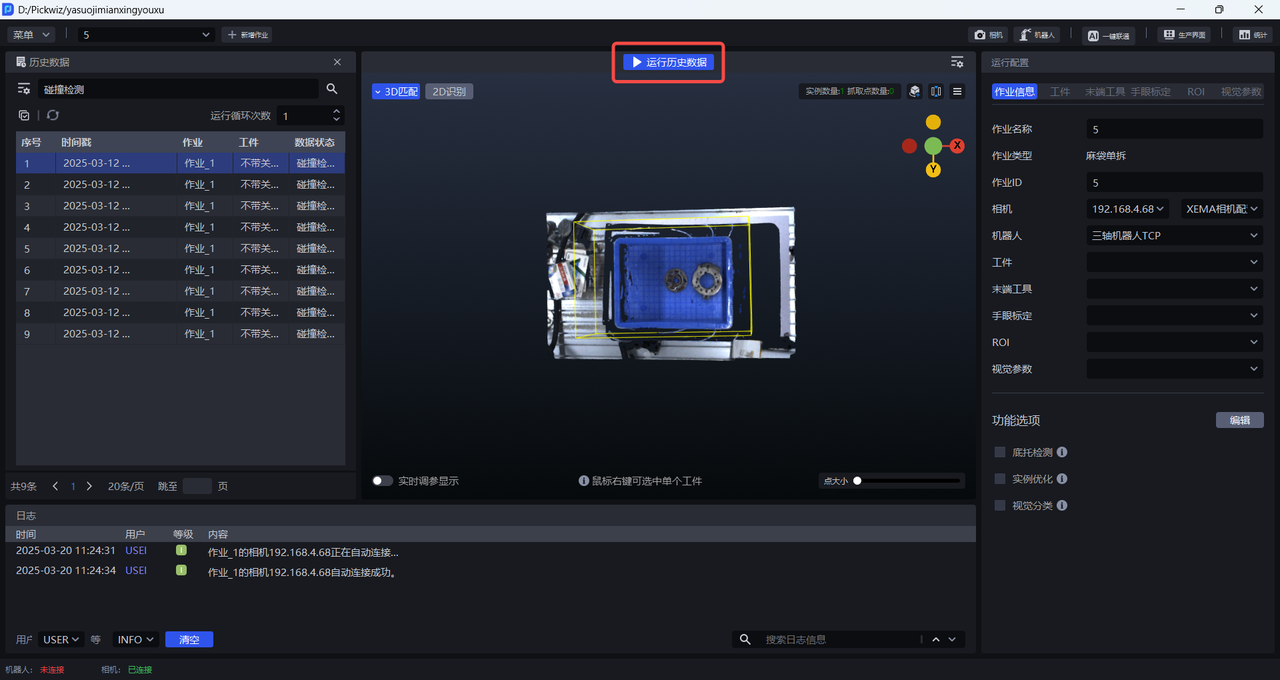
- If you need to rerun the selected historical data, go to the Vision Calculation Configuration panel, change Input Data to "Historical Data", and finally click the "Run Historical Data" button to rerun that historical data entry.
- If you need to view the 2D recognition results and Pick Points of that historical data entry, click Run Full Vision Result. This run mode will save the complete record of rerunning that historical data entry again, as shown below.
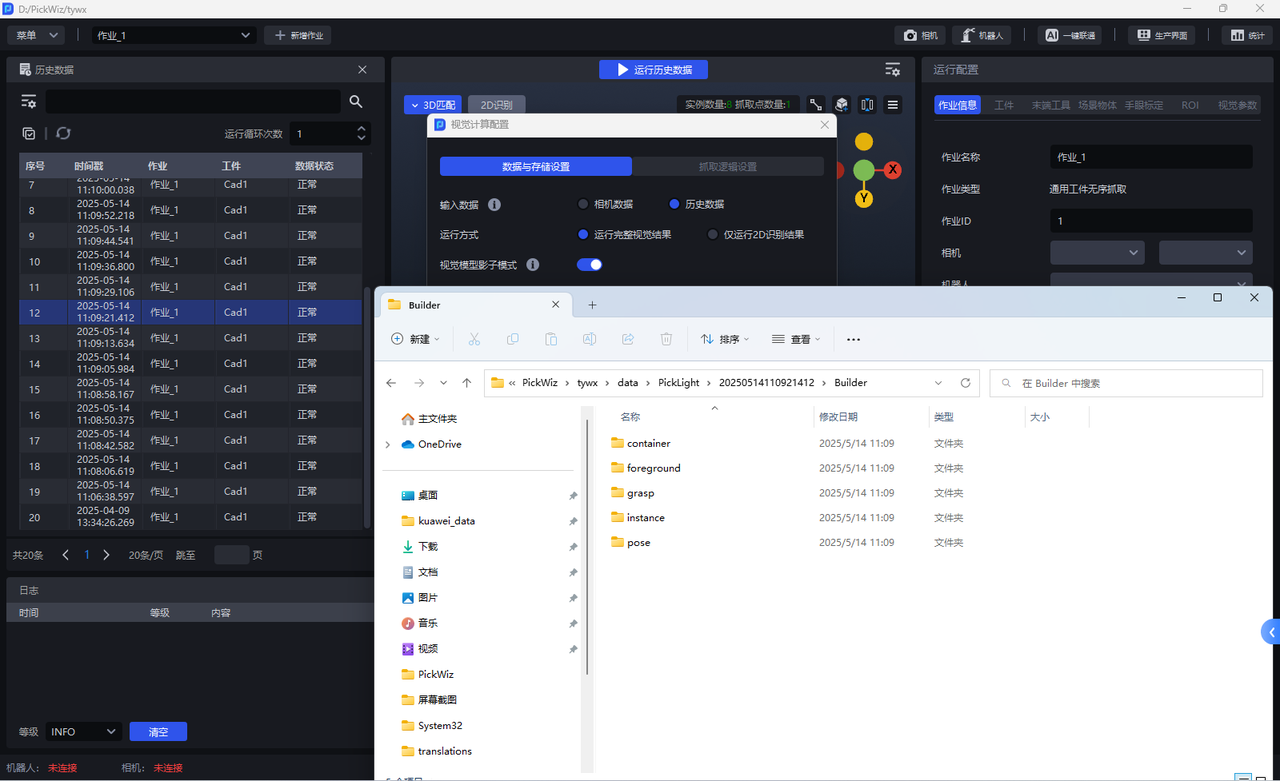
- If you only need to view the 2D recognition results of that historical data entry and do not need to view its Pick Points, click Run 2D Results Only. This run mode saves only the rerun 2D recognition results of that historical data entry (the Builder folder saves only the foreground node
foreground, bin detectioncontainer, and instance detectioninstance, but does not save the pose estimation nodeposeor the Pick Point generation nodegrasp), as shown below.
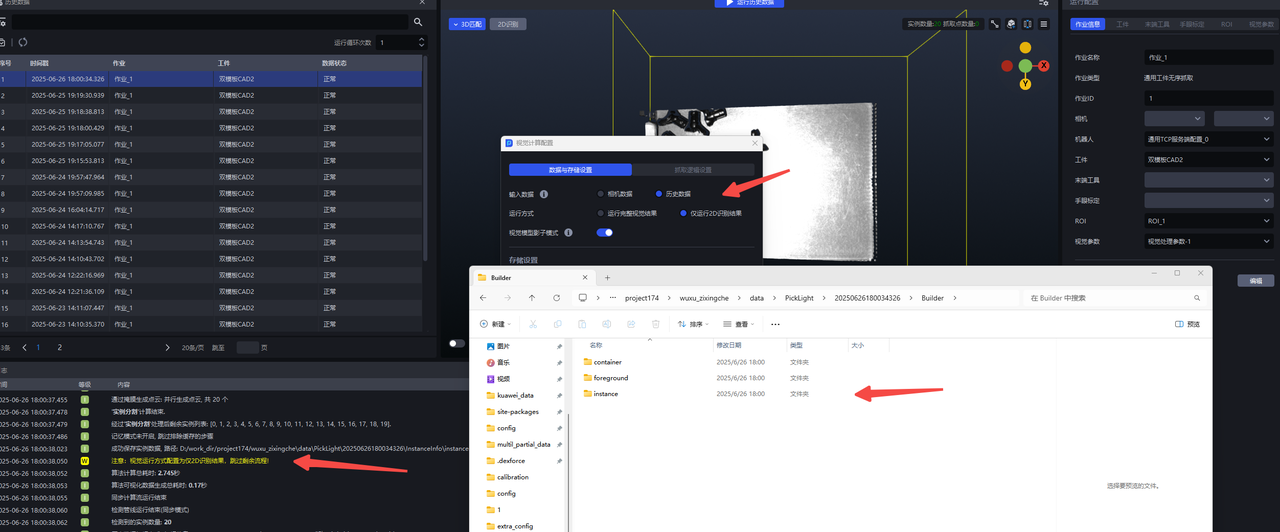
(2)Run historical data on the Robot side
Select a historical data entry. When the Robot sends a command with a co value of 5, it will trigger the use of historical data to run the vision result, as shown below.
Robot
cocommand triggering supports only single-run historical data and does not support batch running of historical data.
5. Batch Operations
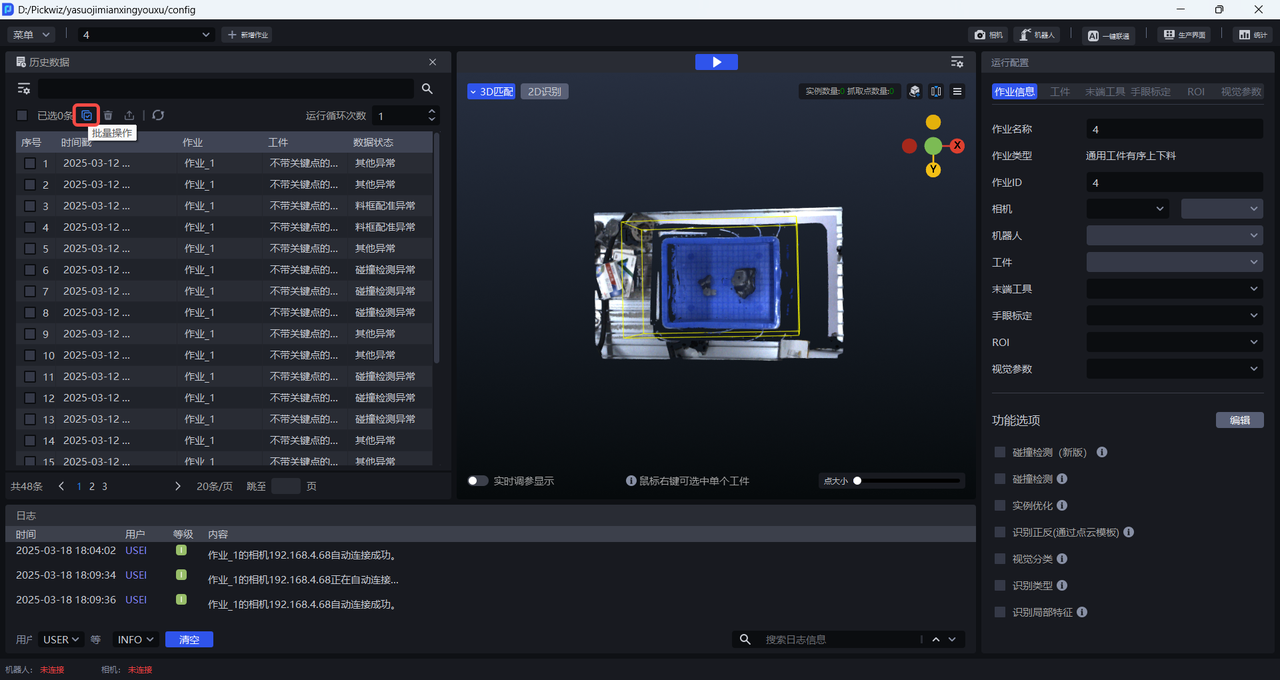
Click the Batch Operations button to select multiple historical data entries for batch deletion, export, or running.
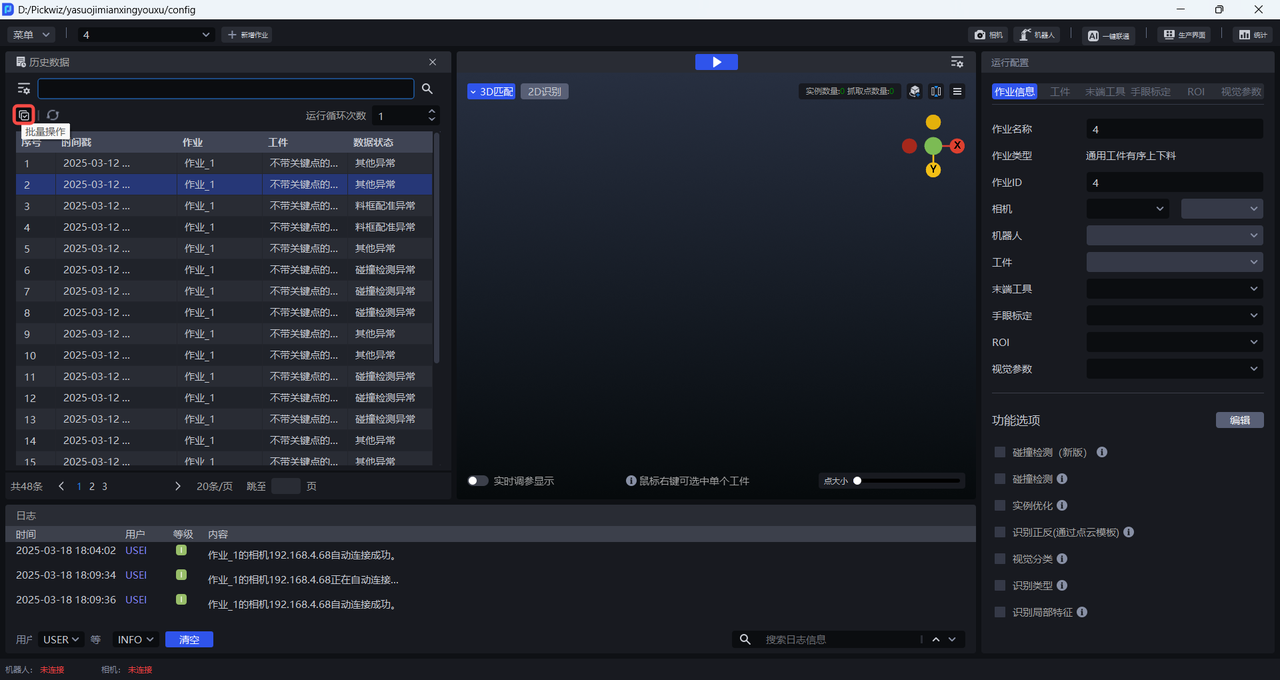
- Click the
🗑button to batch delete multiple historical data entries
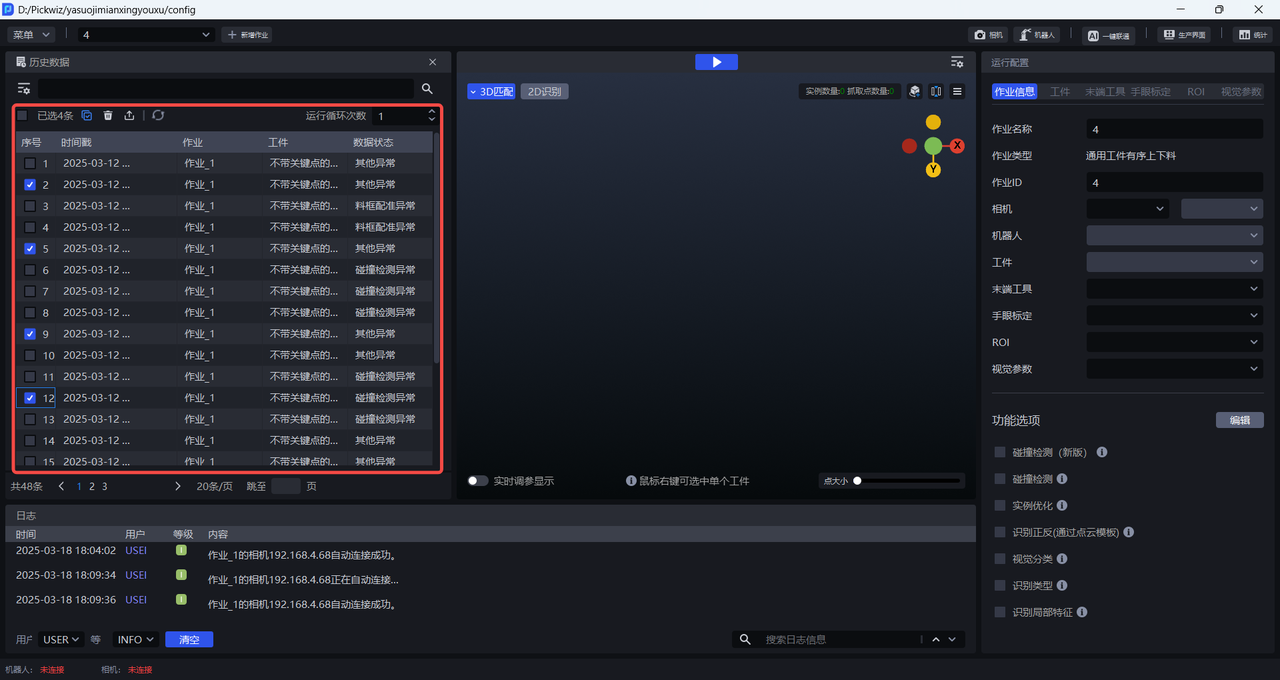
- Click the Export button to batch export multiple historical data entries
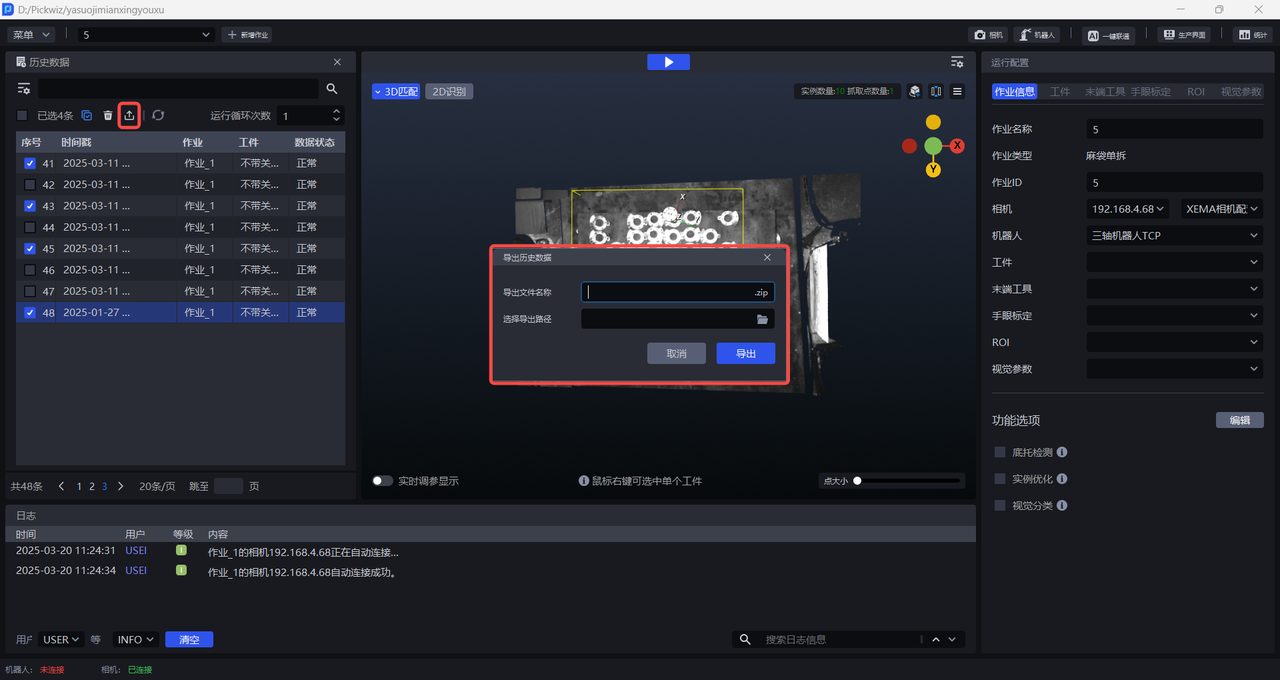
- Click the Run Historical Data button to run multiple historical data entries one by one in batch
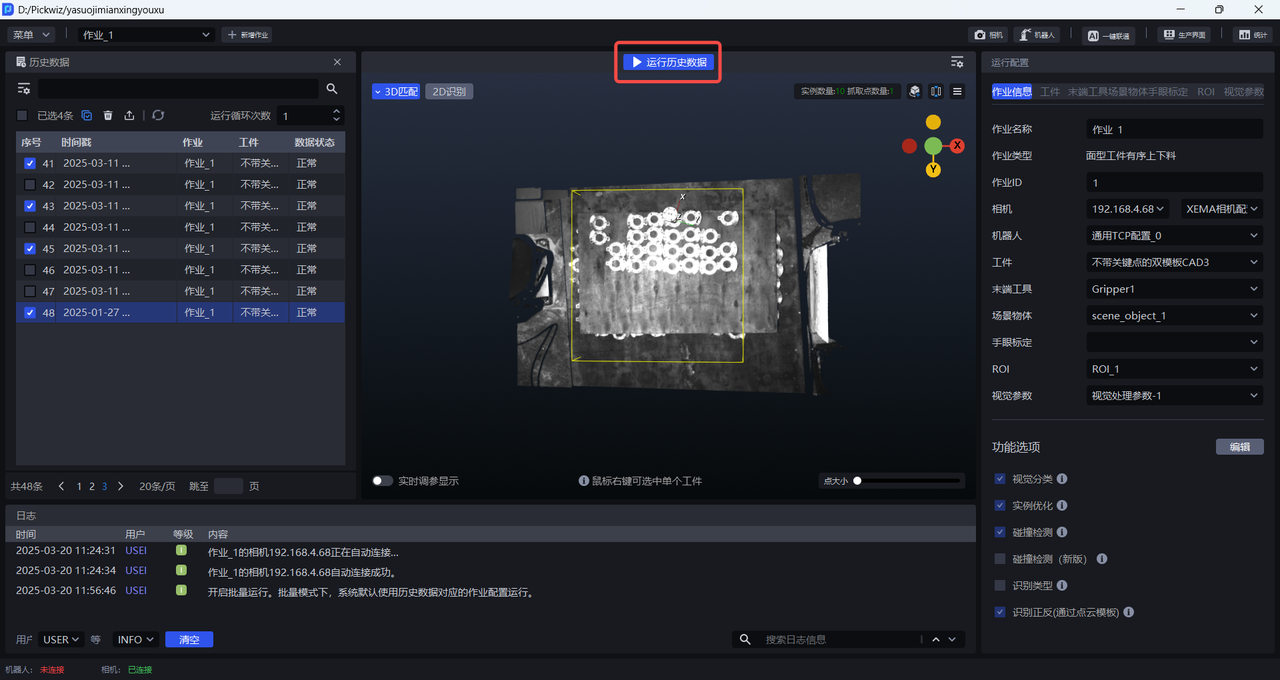
- Click the Batch Operations button again to cancel the batch operation selection function
6. Run Cycle Count
The run cycle count refers to running the selected historical data n times. If multiple historical data entries are selected and the run cycle count is greater than 1, the multiple historical data entries will be run one by one, and the next cycle will start after one full cycle is completed.
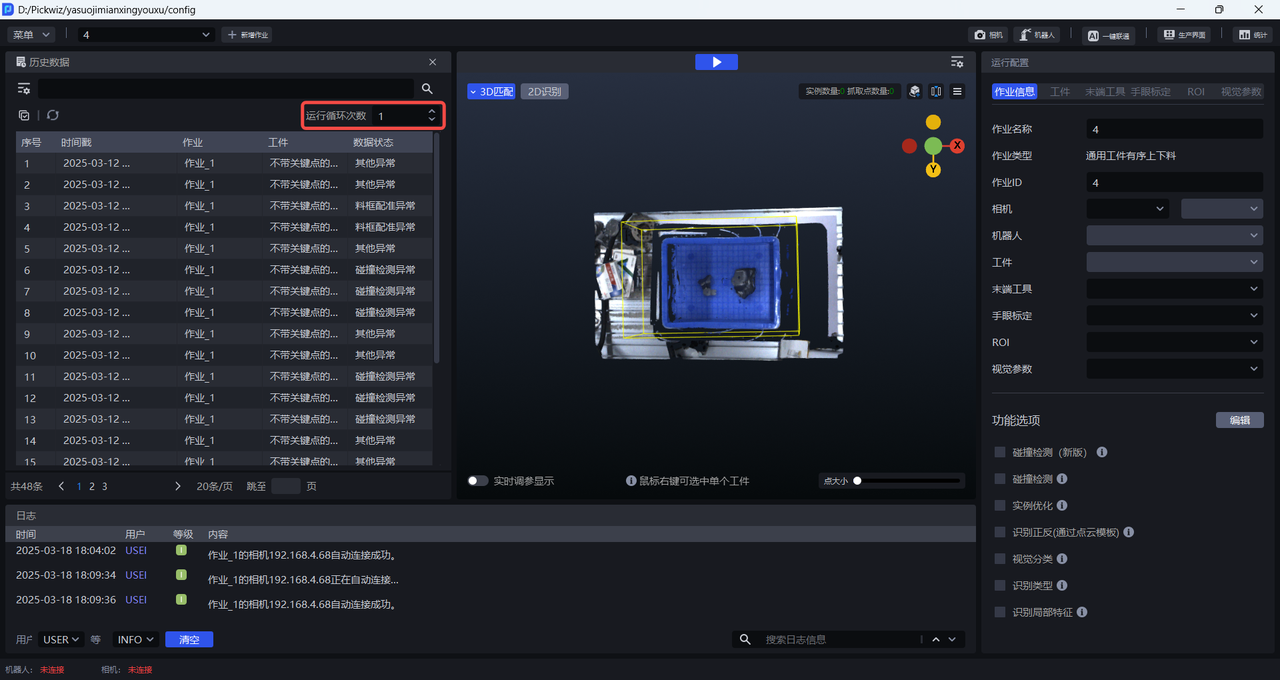
When the run cycle count is greater than 1, you can view the current historical data run progress in the lower-right corner of the main page.

Click Stop Historical Data to stop cyclic running.

7. Historical Data Storage Management
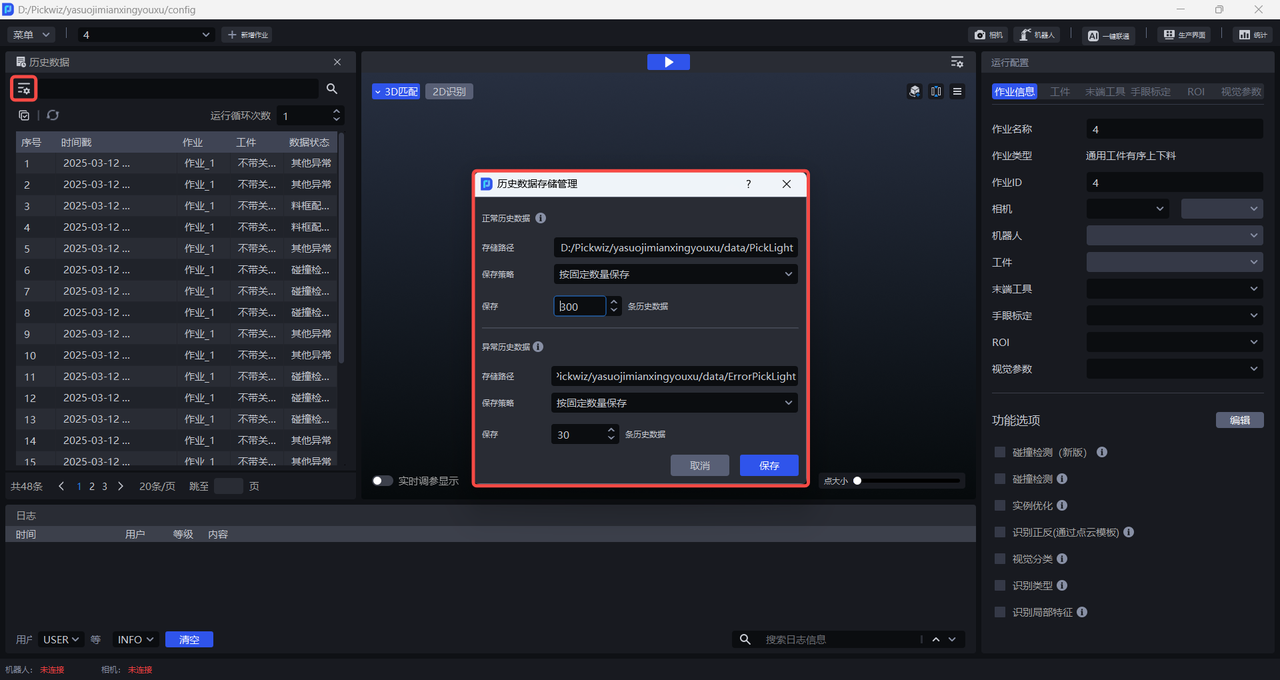
Click to open the historical data storage management panel, where you can view the path for storing historical data and configure the retention policy for historical data.
- Normal historical data
The storage path of normal historical data is: Project folder/Project folder/data/PickLight
There are two retention strategies: retain by fixed quantity and retain by fixed time. For retain by fixed quantity, n normal historical data entries are saved, with a default of 300 entries; for retain by fixed time, normal historical data within n hours is saved, with a default of 24 hours.
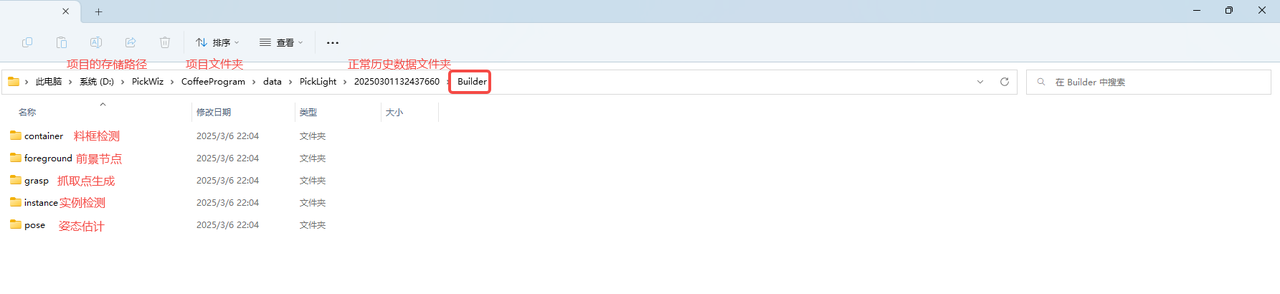

- Abnormal historical data
The storage path of abnormal historical data is: Project folder/Project folder/data/ErrorPickLight
There are two retention strategies: retain by fixed quantity and retain by fixed time. For retain by fixed quantity, n abnormal historical data entries are saved, with a default of 30 entries; for retain by fixed time, abnormal historical data within n hours is saved, with a default of 24 hours.
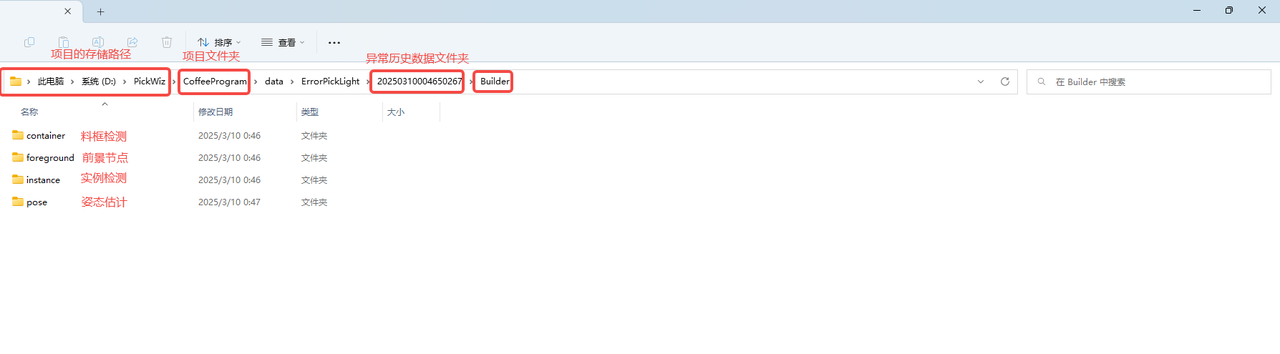

Abnormal nodes can be identified from abnormal historical data. For example, if the Pick Point generation folder (Builder/Pose) is missing from the abnormal historical data shown above, it indicates that an error occurred in Pick Point generation.