XEMA Series Camera User Manual
1. Product Overview
The XEMA series Camera is a structured-light 3D Camera based on DLP projection. Its core components include the TI DLP3010 projection chip, Sony IMX392 imaging chip, and Nvidia Jetson Nano computing module. Data is transmitted through the GigE interface, and multiple exposure modes are supported. It is suitable for highly reflective objects, small sheet metal parts, track links, and black bar stock, and can be used for 3D scanning and industrial 3D defect detection. It can also work with industrial robots in scenarios such as random bin picking and loading/unloading.
The Camera is CE/FCC/RoHS certified
2. Safety Precautions
Please read the safety precautions carefully and operate strictly in accordance with the following specifications. Otherwise, the Camera may be seriously damaged, and Dexforce will not be responsible for any resulting maintenance issues.
Do not immerse in water
Do not expose to fire
Do not disassemble the unit
Do not connect the Power Supply privately
Do not extend the network cable without authorization
Do not use the Camera in humid environments, environments with condensation, or dusty environments
Do not use the Camera in environments with strong magnetic fields or high-voltage discharge equipment (such as electric welders)
Do not subject the Camera to external impact or drops. If this occurs, contact service personnel for inspection and repair
Keep away from devices such as laser marking machines and laser engraving machines that may damage the Camera. If use is necessary, contact company personnel for confirmation
Do not use beyond the specified range. Operating distance: XEMA-P:100-150mm;XEMA-DCW:0.3-0.5m;XEMA-SCW:0.5-1m;XEMA-LCW:1-2.5m;SPARROW:0.3-0.5m;FINCH:1.5-3.5m:for special customization, communicate requirements with the camera team in advance
Use the Camera strictly within the allowable high and low temperature range specified in the product specification.
3. Specifications
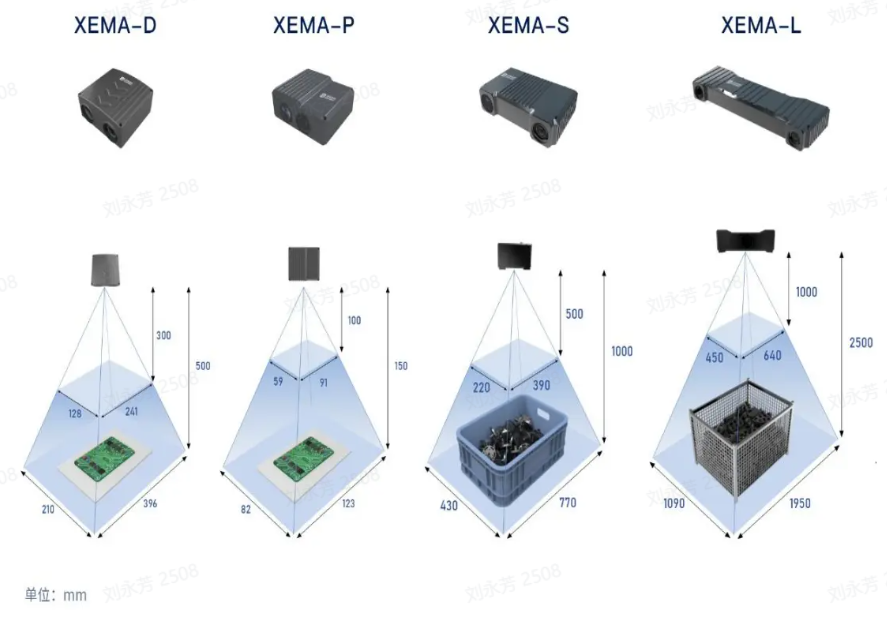
| Model | XEMA-D | XEMA-P | XEMA-S | XEMA-L | |
|---|---|---|---|---|---|
| Hardware Parameters | Field of View (H/V) | 38°/23° | 43°/23° | 35°/26° | 43°/23° |
| Dimensions (mm) | 433×133×51 | 207×127.5×50.5 | 126×146×61 | 126×120×60 | |
| Weight (kg) | 2.1 | 1.2 | 1.1 | 0.7 | |
| Baseline Length (mm) | 350 | 145 | 70 | 80 | |
| Resolution | 1920×1200 | 1920×1200 | 2448×2048 | 1920×1200 | |
| Interface Type | Gigabit Ethernet | Gigabit Ethernet | Gigabit Ethernet | Gigabit Ethernet | |
| Computing Unit | NVIDIA Jexson Nano | NVIDIA Jexson Nano | NVIDIA Jexson Nano | NVIDIA Jexson Nano | |
| Rated Voltage | DC 24V 3.2A | DC 24V 3.2A | DC 24V 3.2A | DC 24V 3.2A | |
| Technical Parameters | Near Field (mm) | 640×450 | 390×220 | 91×59 | 241×128 |
| Far Field (mm) | 1950×1090 | 770×430 | 123×82 | 396×210 | |
| Recommended Working Distance (mm) | 1000~2500 | 500~1000 | 100~150 | 300~500 | |
| Z-axis Accuracy | 0.5mm@2.5m | 0.05mm@0.8m | 6μm@130mm | 0.03mm@0.4m | |
| Z-axis Repeatability σ (μm) | 1-2.5mmax@80μm | 0.5-1mmax@41μm | / | 0.3-0.5mmax@21μm | |
| XY Accuracy | 0.5mm@1m0.8mm@2m1mm@2.5m | 0.2mm@0.5m0.4mm@1m | 30μm@130mm | 0.17mm@0.4m | |
| Typical Acquisition Time | 0.5-1s | 0.5-1s | 0.5-1s | 0.5-1s | |
| Output Data | Point Cloud, Depth Map, Grayscale Image | Point Cloud, Depth Map, Grayscale Image | Point Cloud, Depth Map, Grayscale Image | Point Cloud, Depth Map, Grayscale Image | |
| Supported Operating Systems | Microsoft and Linux operating systems | Microsoft and Linux operating systems | Microsoft and Linux operating systems | Microsoft and Linux operating systems | |
| SDK Interface | C/C++/Python | C/C++/Python | C/C++/Python | C/C++/Python |
4. Installation and Connection
4.1 Unboxing Inspection
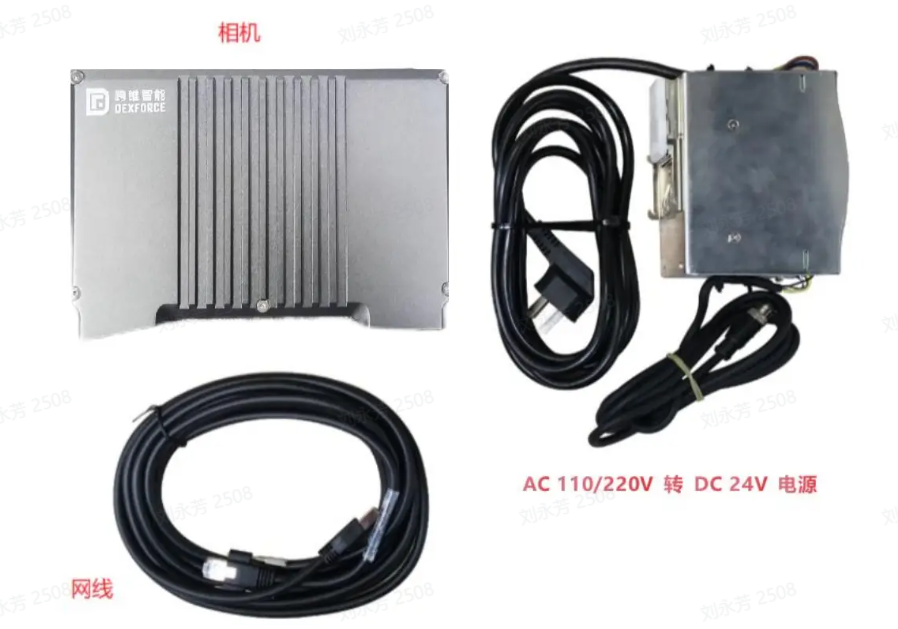
4.2 Hardware Installation
There are two installation methods. One is direct communication through a network cable (connect the Camera and the industrial PC with a network cable). The other is interaction through a Router or switch (one end of the network cable connects to the Router and the other end connects to the Camera).
- Connect through a Router/switch
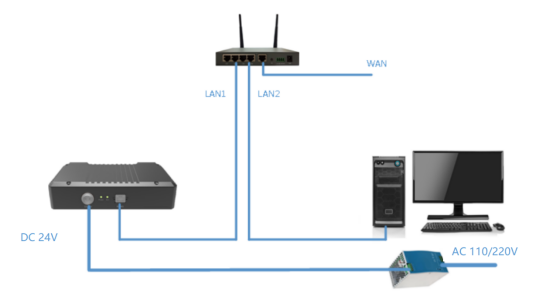
- Communicate directly through a network cable
When there is no DHCP server on the network (that is, the Camera is directly connected to the computer), the Camera's DHCP mechanism will try for 30 seconds and, if it still does not obtain an IP, it will switch to the AVAHI mechanism to negotiate an IP. The negotiated IP will be in the 169.254.x.x network segment.
- Connect the Power Supply to the Camera and turn on the power
Before powering on the Camera, first confirm that the Power Supply cable and network cable are firmly connected. After the power is turned on, the “Power” Indicator Light stays on continuously. After about 30 seconds, the Camera startup is complete. At this time, the green Indicator Light of the Camera network port stays on and the orange Indicator Light flashes, indicating gigabit network bandwidth. The “Act” working Indicator Light of the Camera lights up during image capture and data transmission and remains off at other times.
4.3 Connect the Camera
Before connecting the Camera, download and install DexSense. Please follow the DexSense Installation Guide to install DexSense
Open the DexSense software and search for the connection directly in the DexSense interface
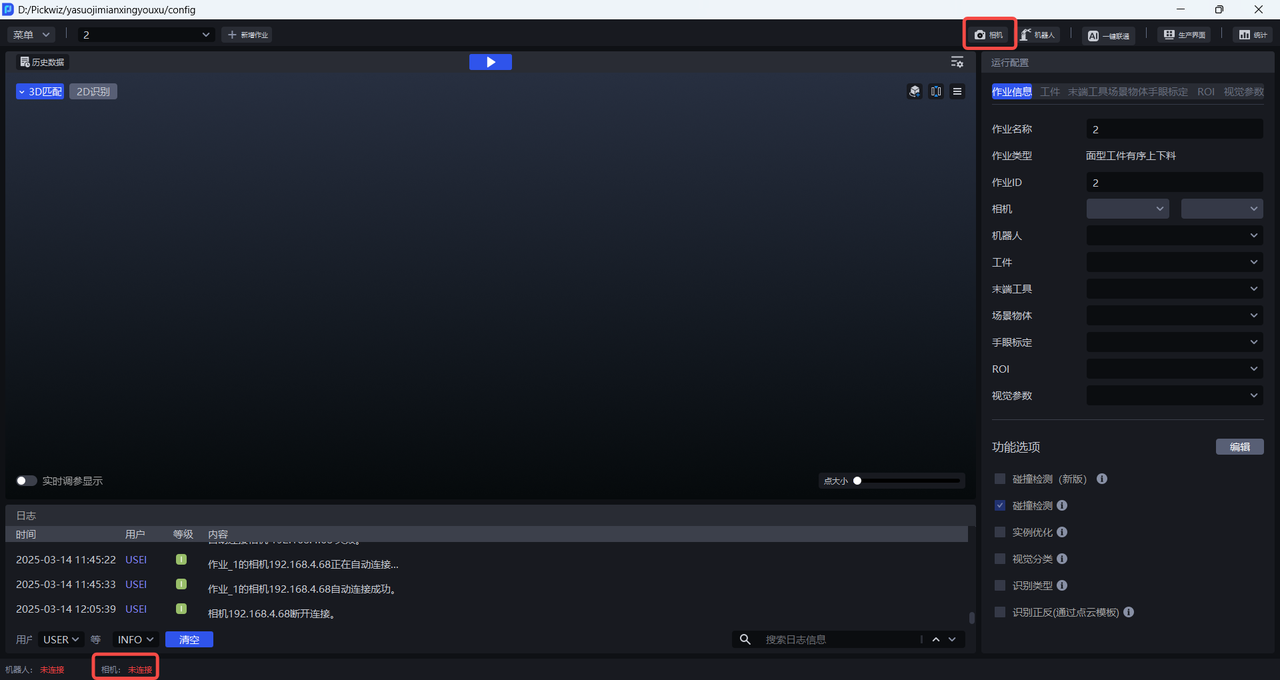
Use a network cable to connect the Camera and the industrial PC, turn on the Camera power, then click the
Camerapanel on the main interface to open theCamerainterface
- In the Camera interface, select the Camera brand to be connected. Available options are XEMA, FINCH, SPARROW, KINGFISHER, and KINGFISHER-R. Then click
Searchfor the current brand Camera or previously connected Cameras, and connect to the Camera at the corresponding IP address.
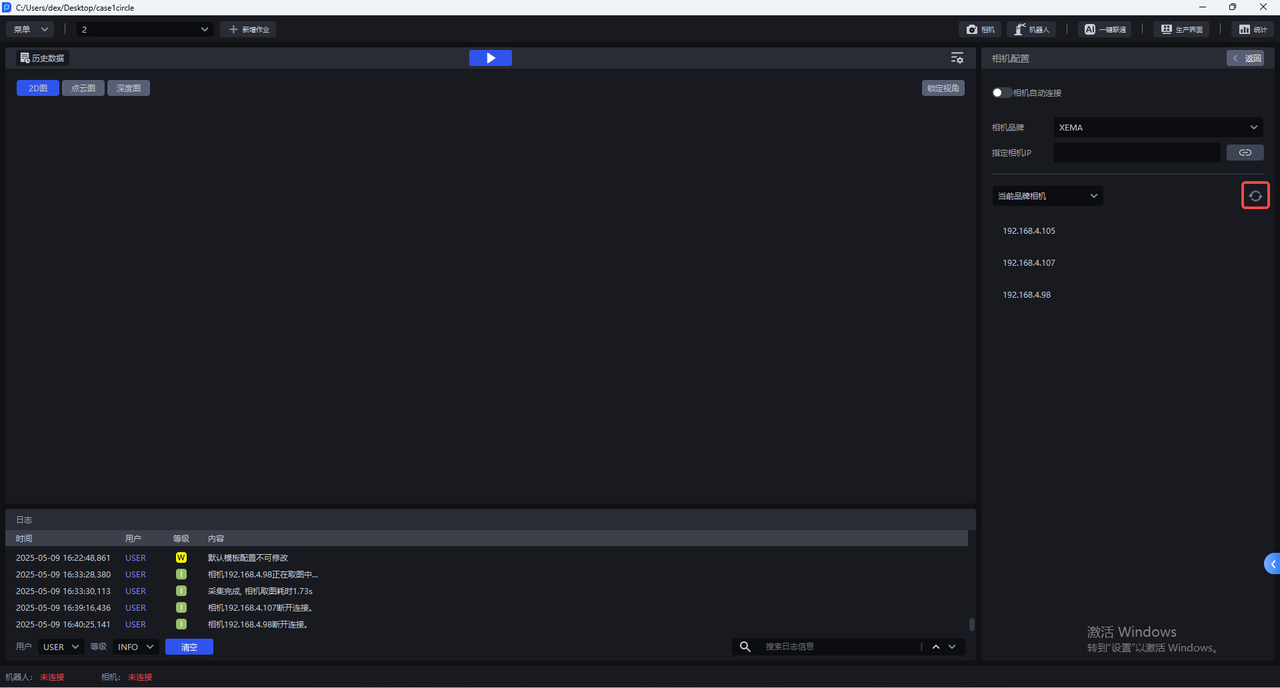
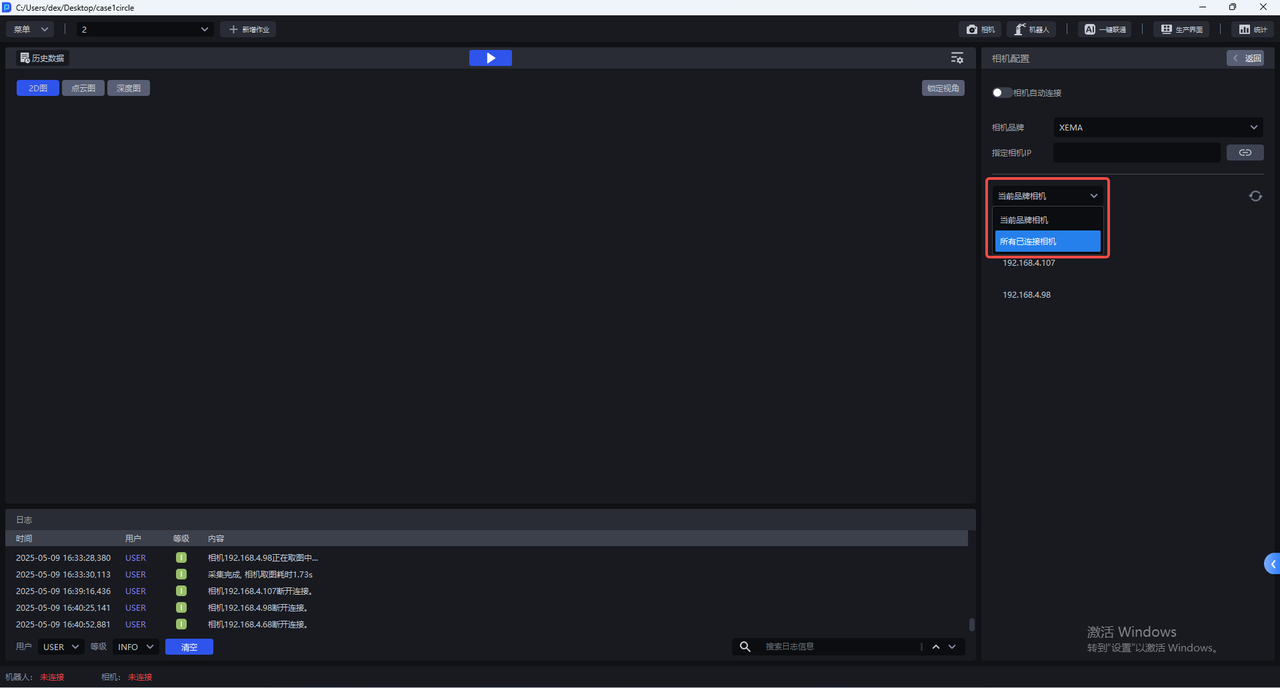
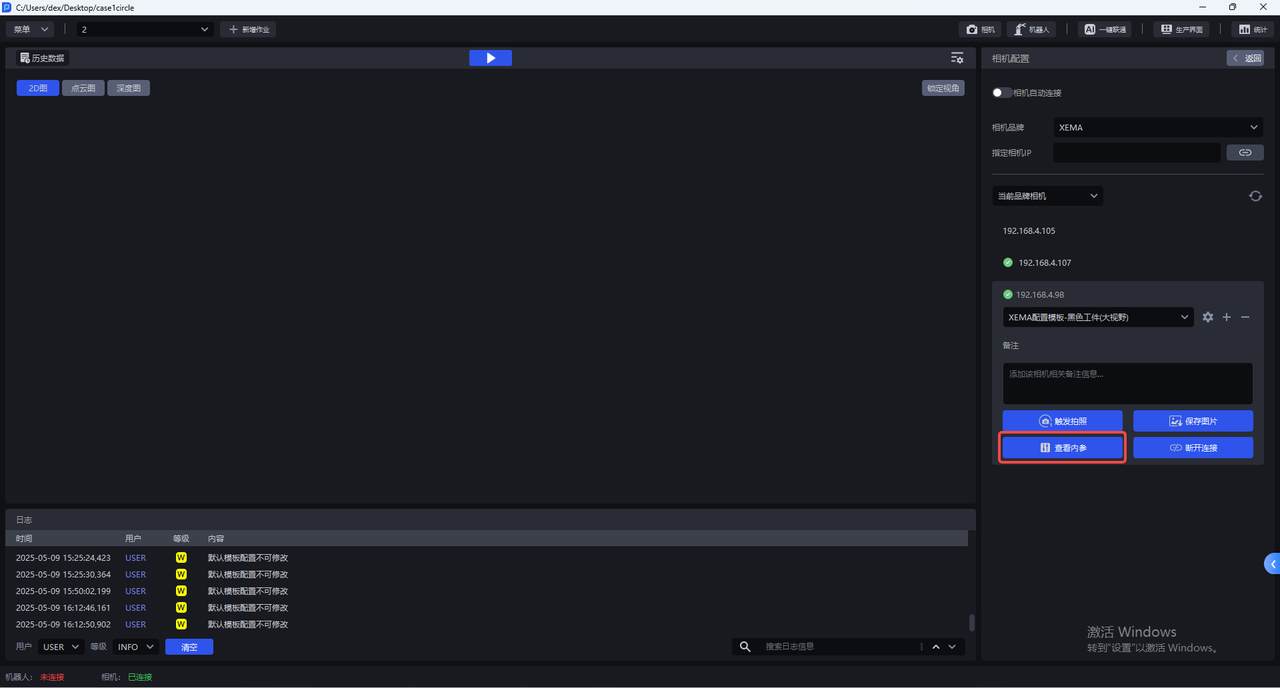
You can also directly enter the Camera IP address and then click the Connect Camera Button.
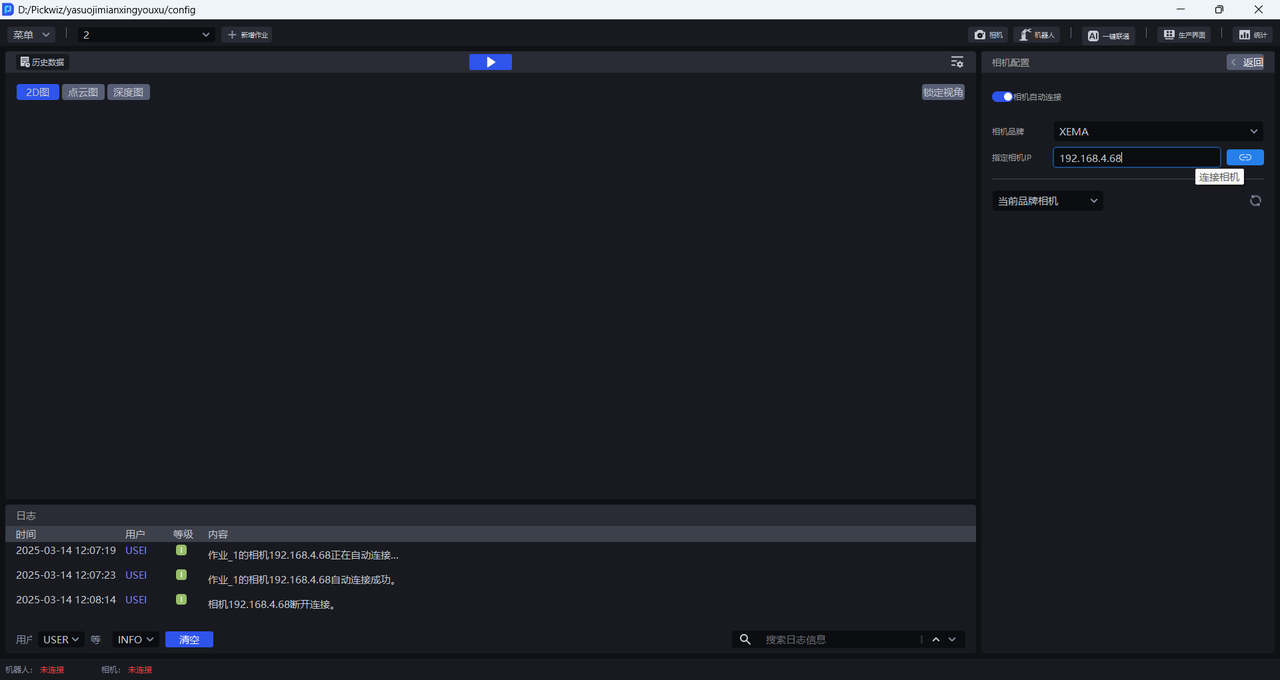
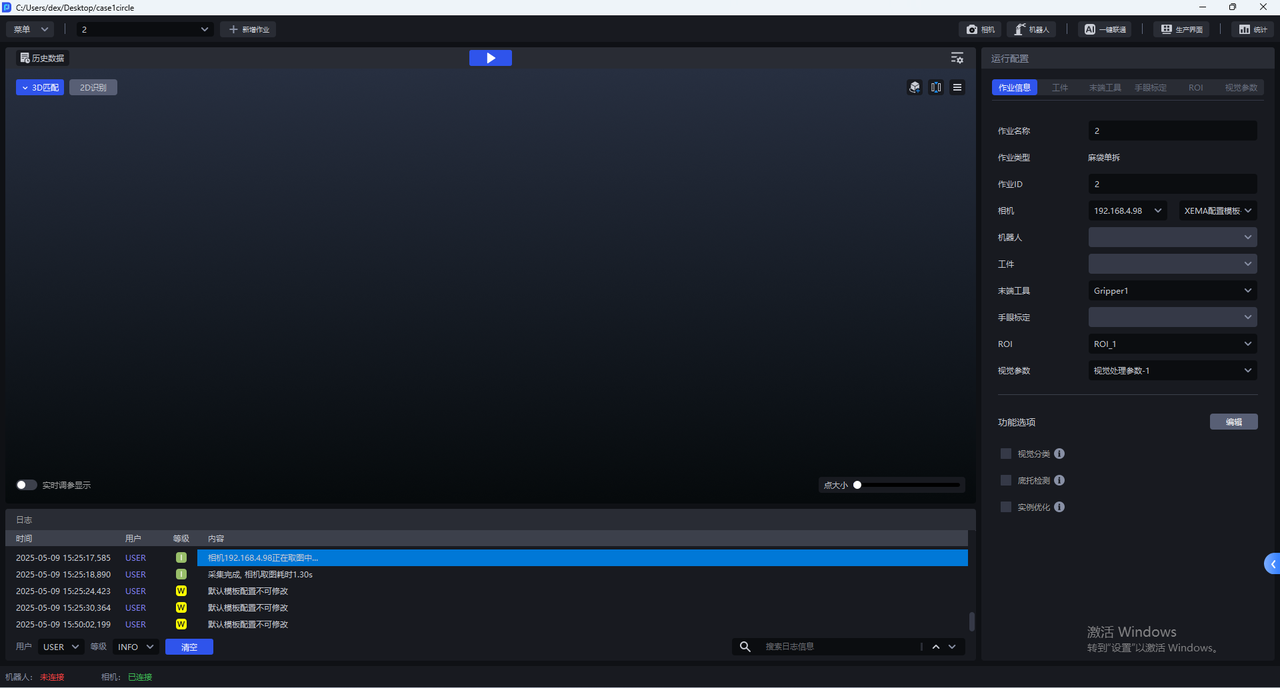
- After the Camera is connected successfully, you should select a Camera for the current task in the
Task Infointerface. After selecting the Camera, the Camera connection status in the status bar changes to "Connected", as shown below.
5. Camera Configuration
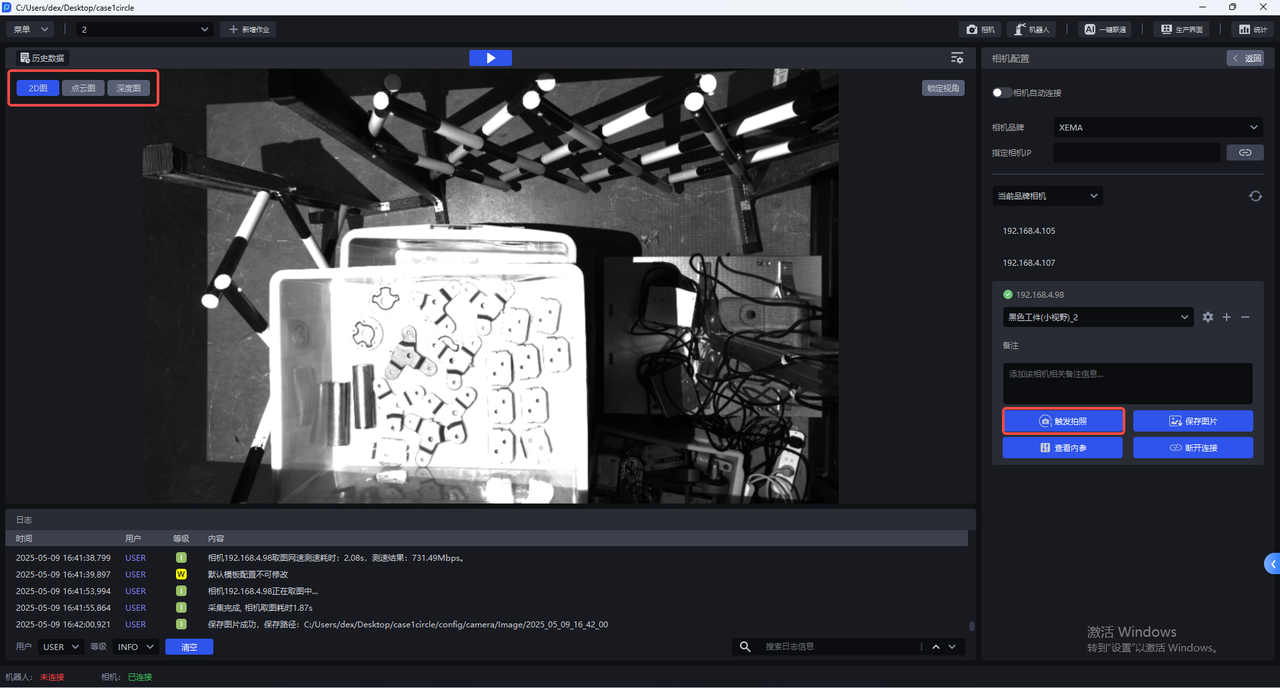
- Each Camera has multiple default configurations, and none of them can be modified. Select the corresponding default configuration, click
Trigger Capture, and use the imaging parameters to capture 2D images, point clouds, and depth maps. You can view the imaging quality in the visualization window on the left.
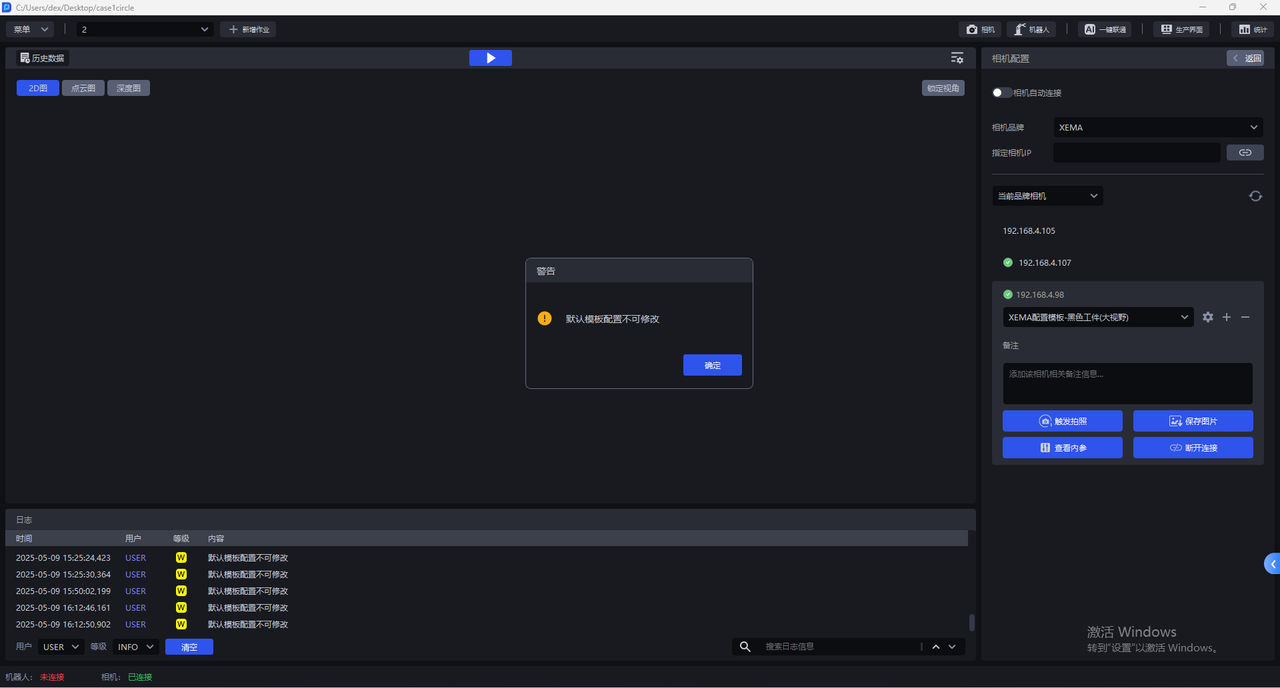
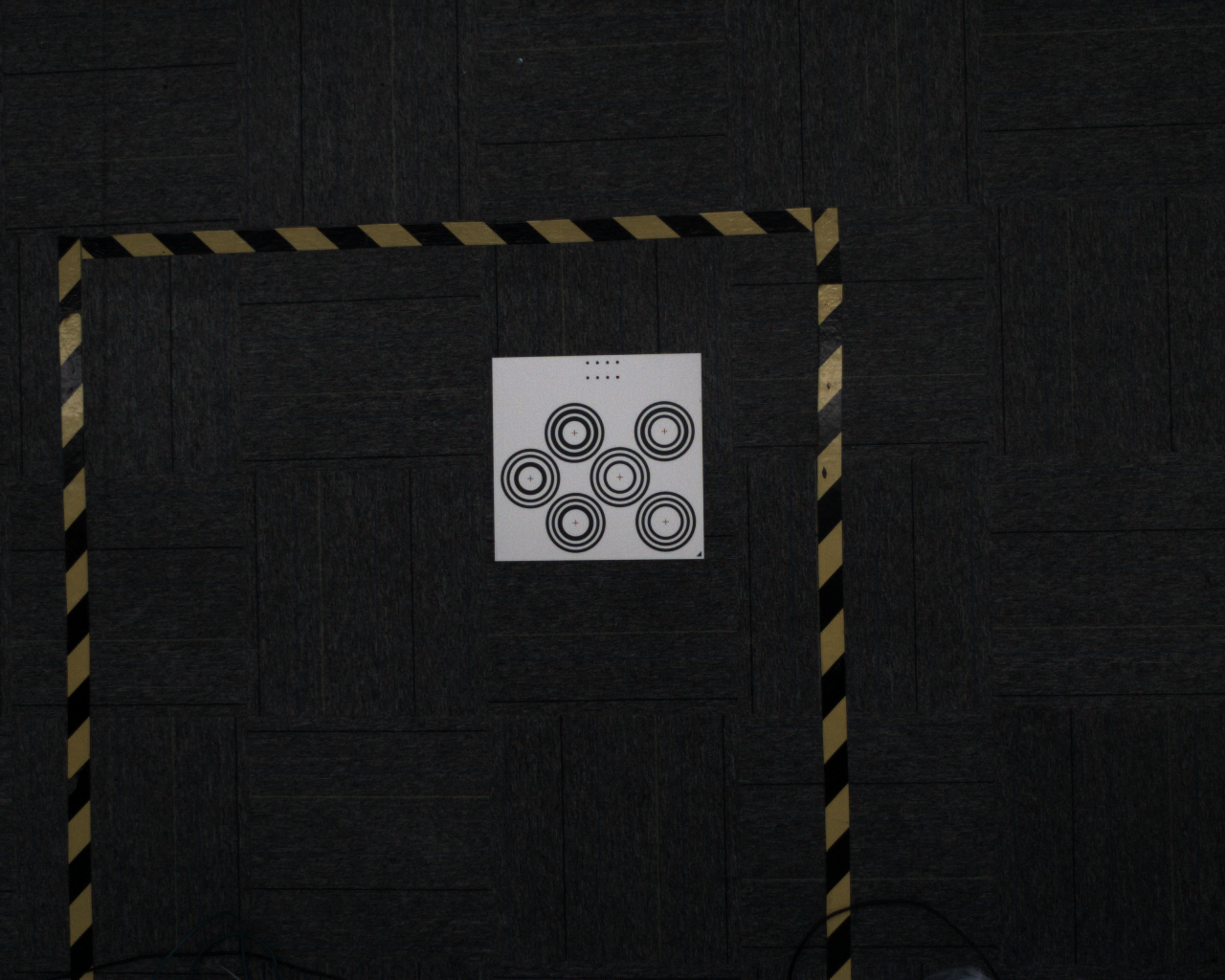
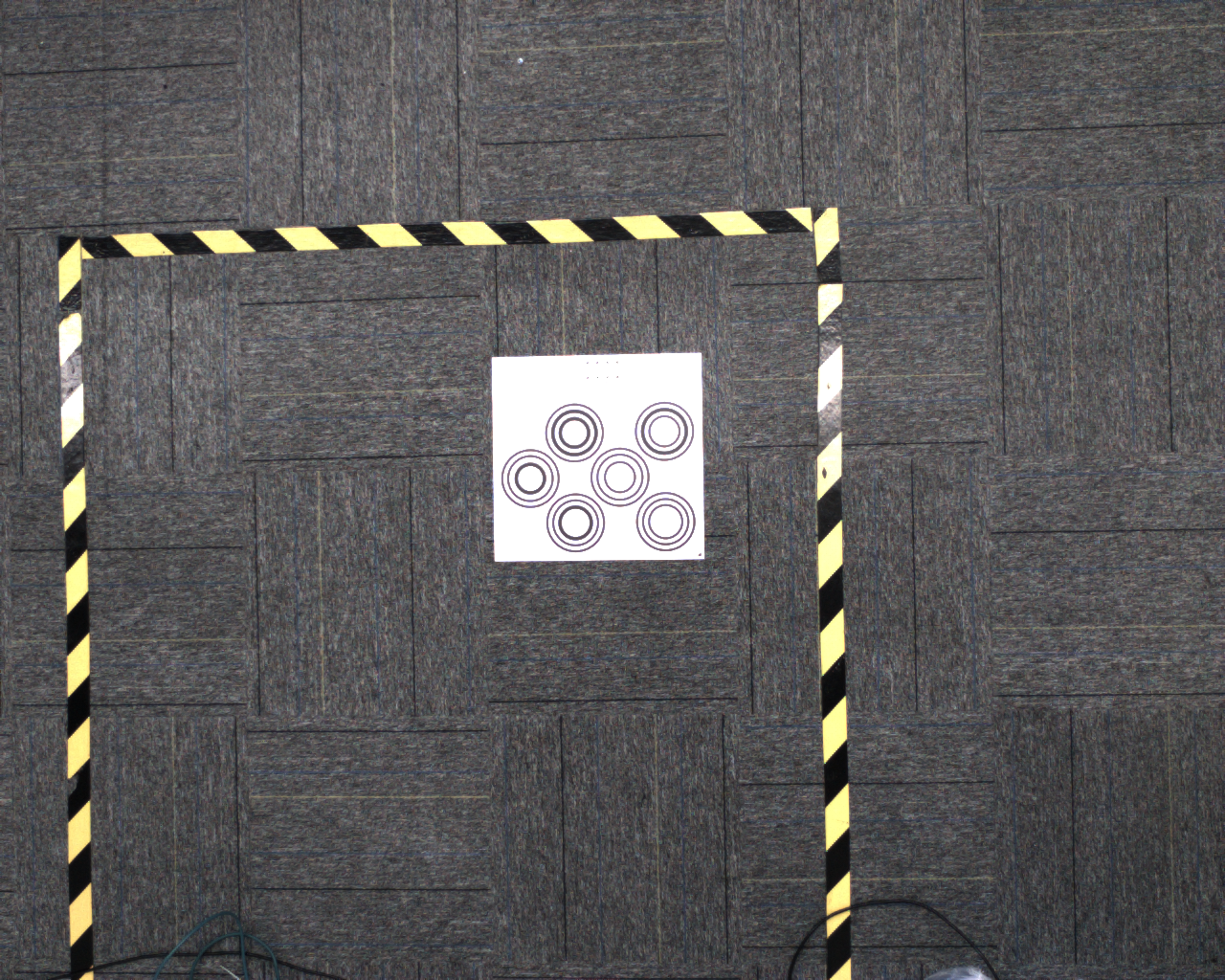
- The default Camera configuration cannot be modified. If none of the default configurations can produce a 2D image with proper exposure, you can click
+to copy the current default Camera configuration, add an identical Camera configuration, and directly enter the Camera configuration interface to modify parameters.
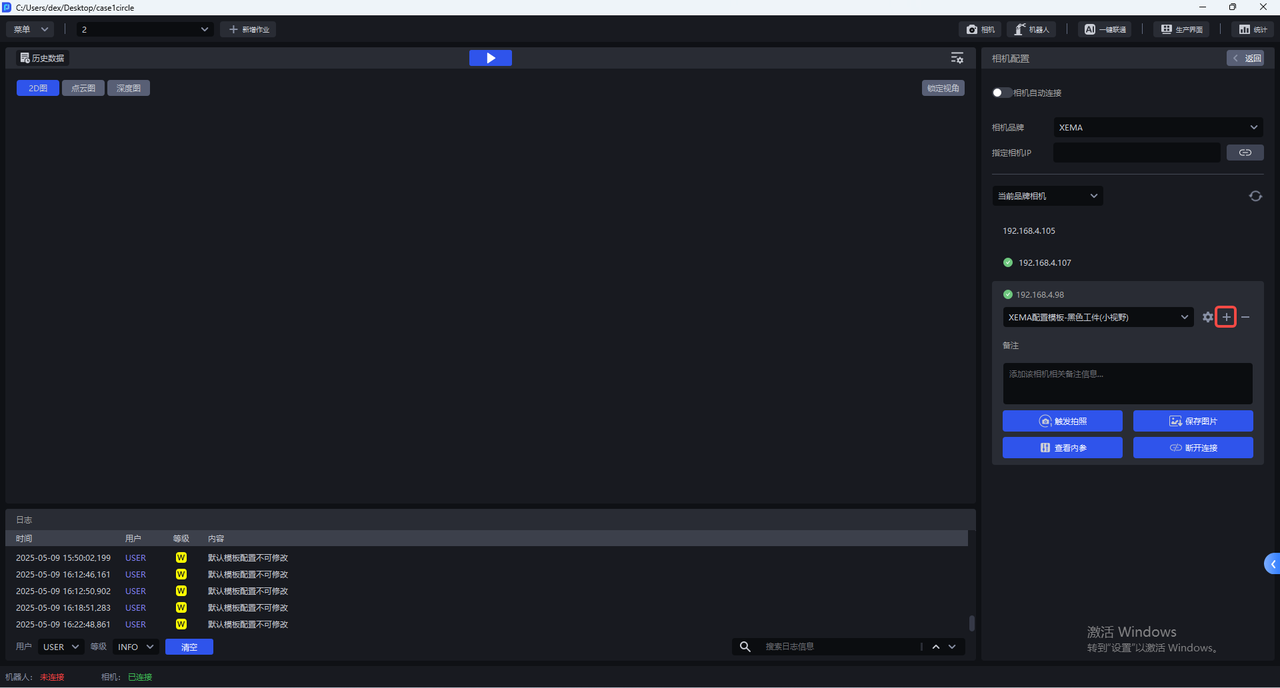
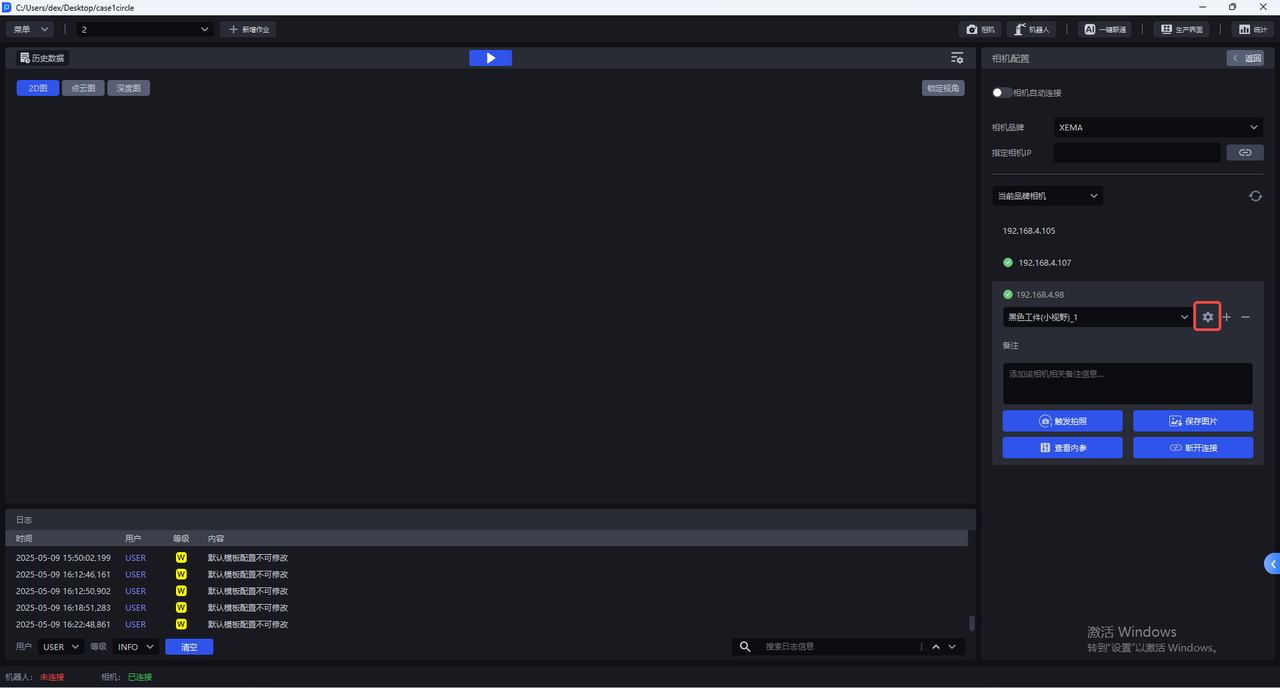
After copying the current default Camera configuration, you can switch to the newly added Camera configuration and click the settings Button to enter the Camera configuration interface and modify parameters.
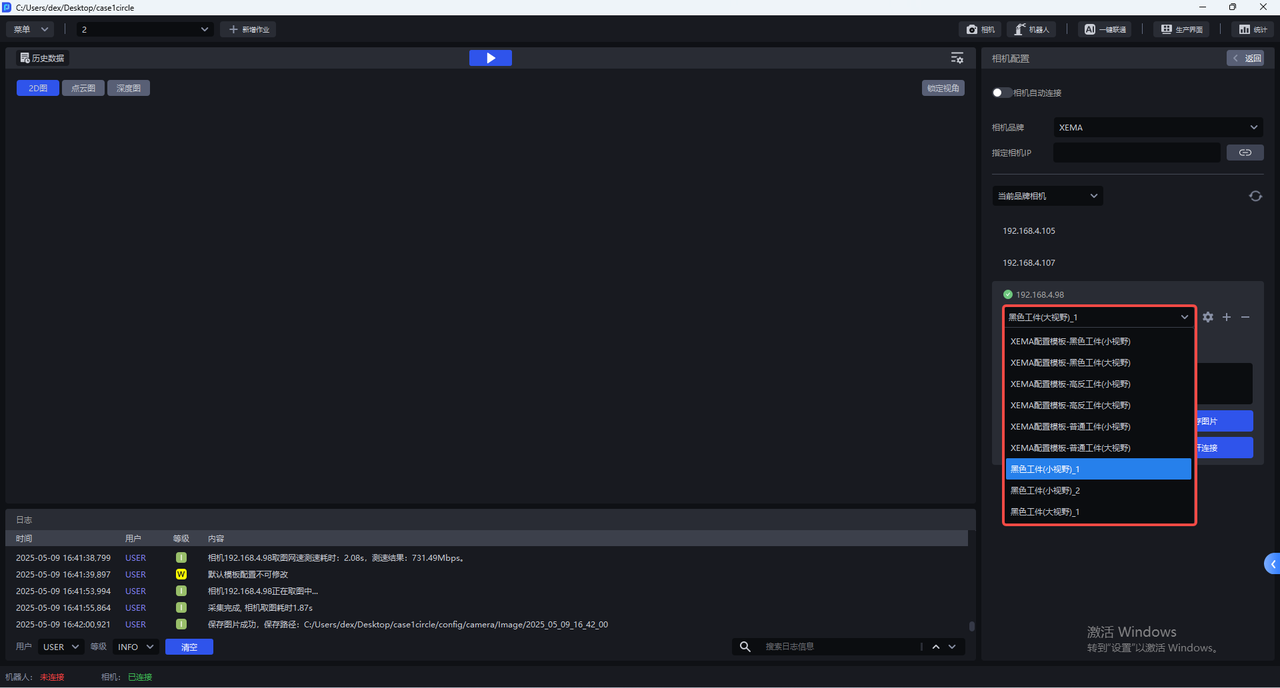
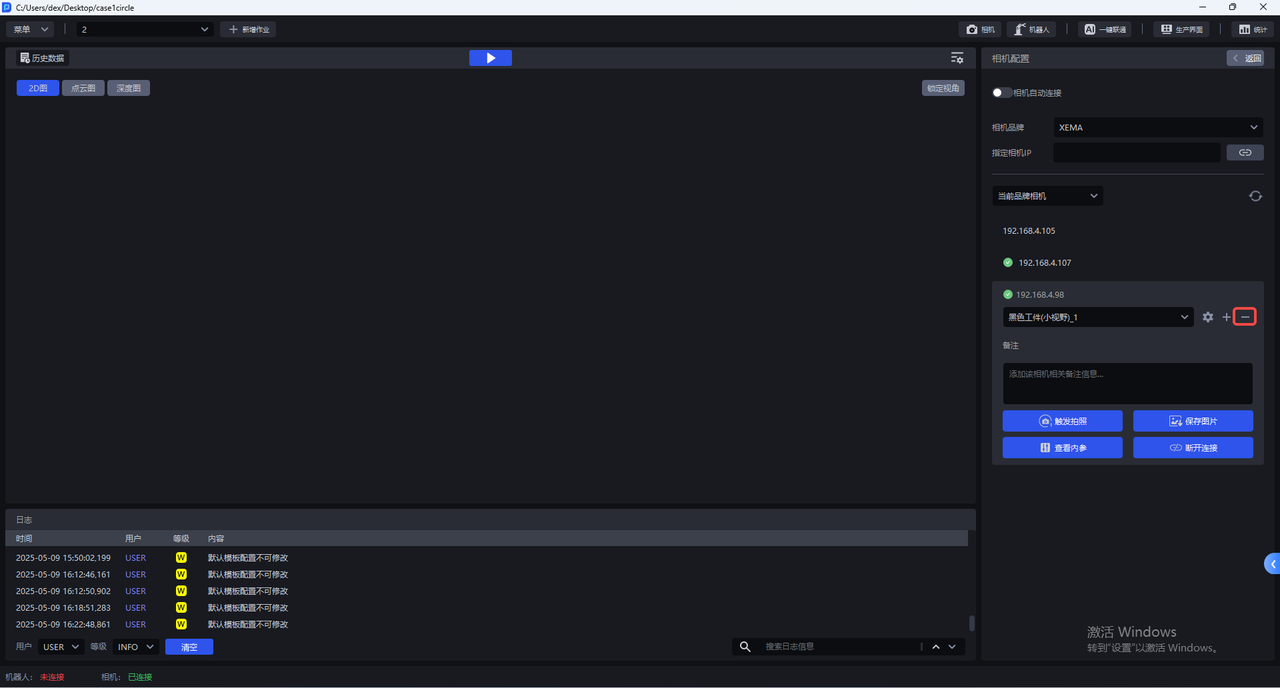
Click — to delete the newly added Camera configuration.
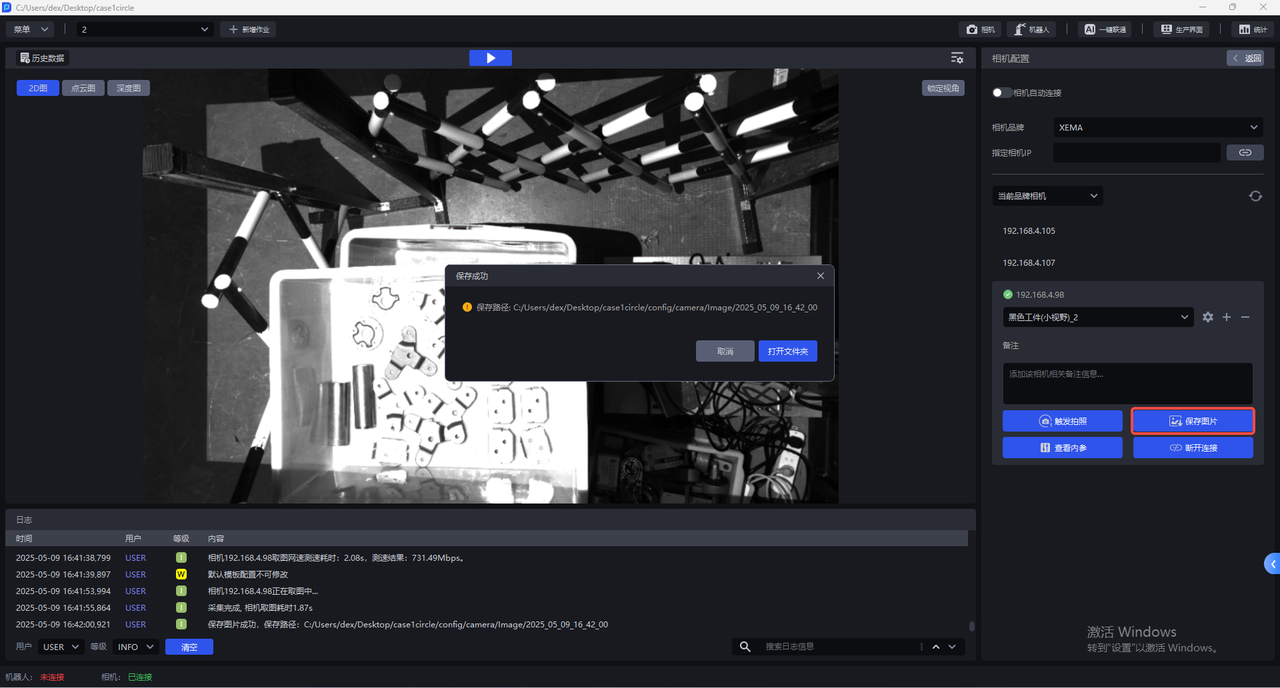
- Click
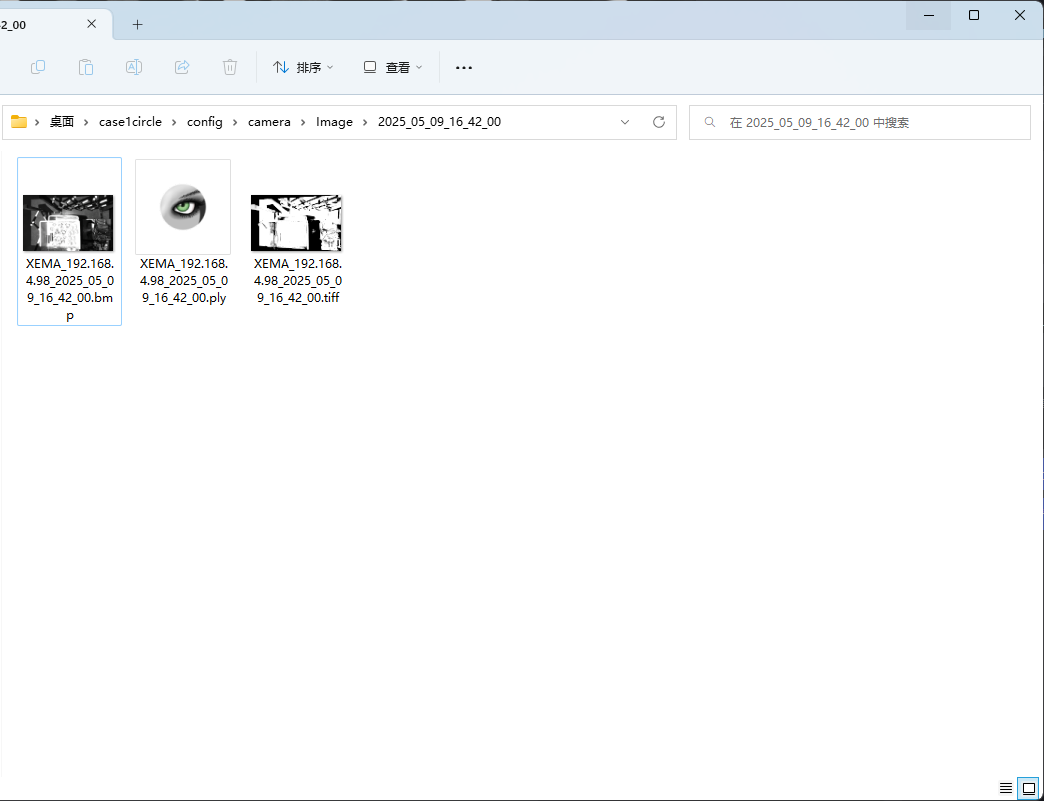
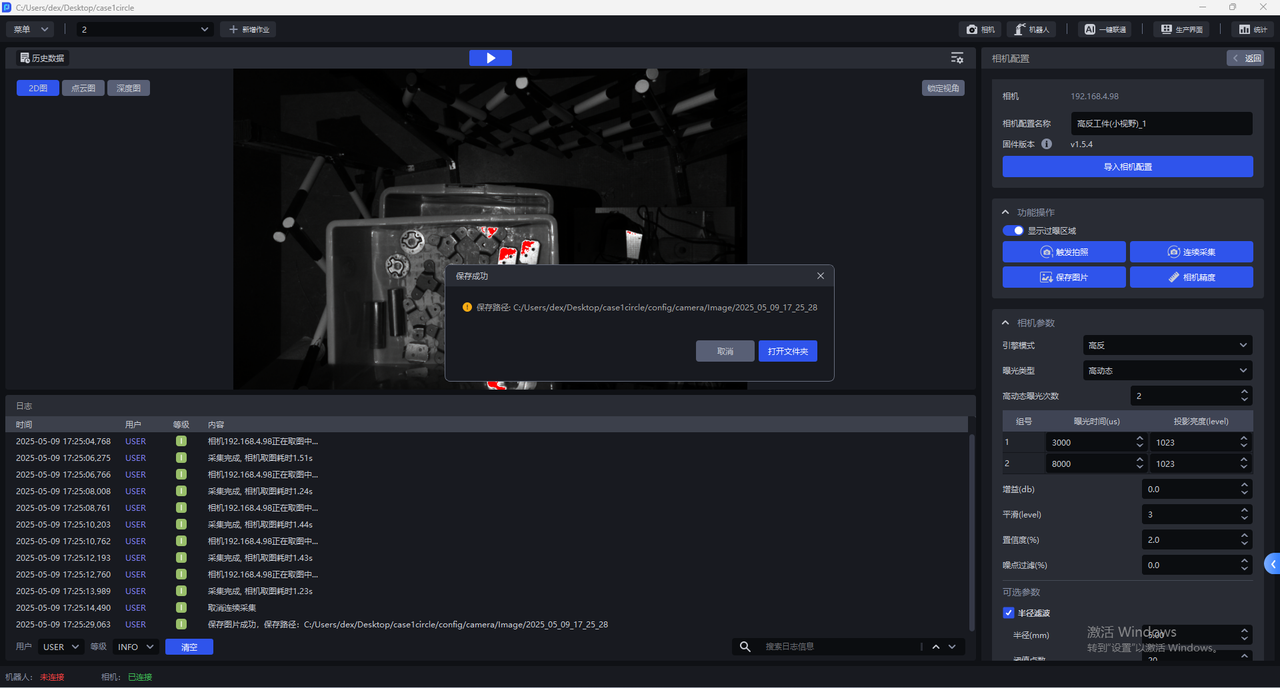
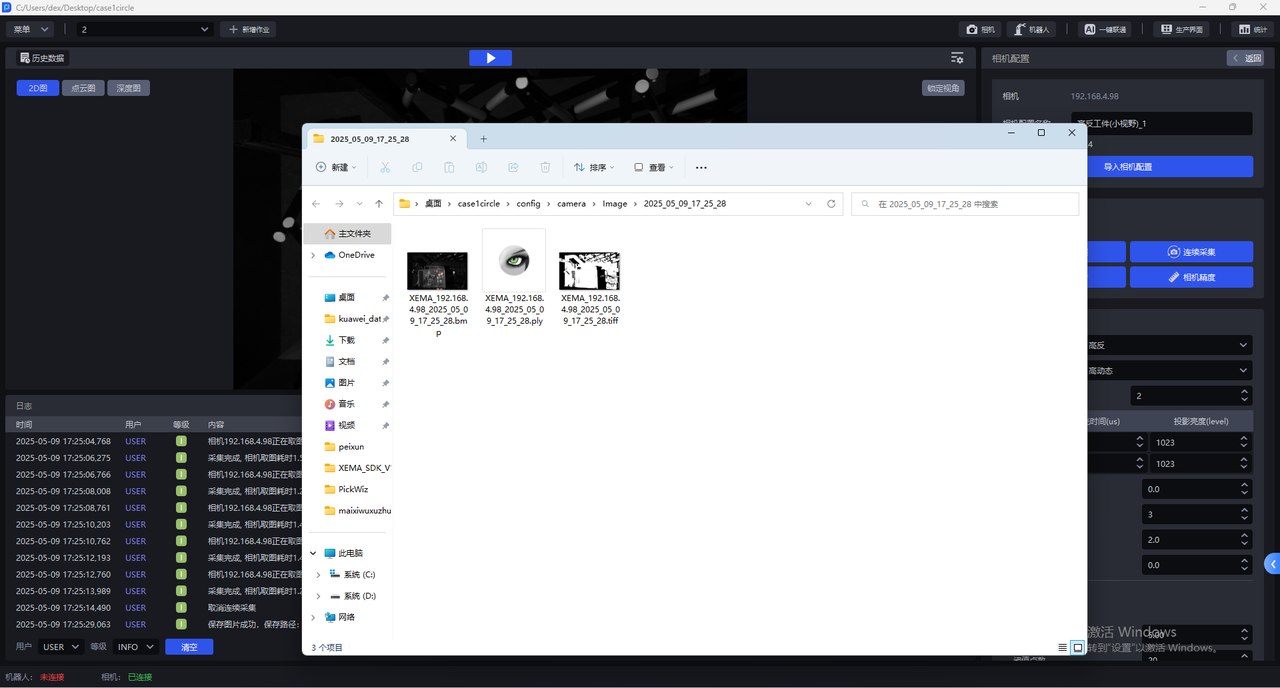
Save Imagesto save the 2D image, point cloud, and depth map captured with the current configuration to the local machine, as shown below. The save Path is 项目文件夹/config/camera/image/拍摄时间. Files with the bmp extension are 2D images, files with the ply extension are point clouds, and files with the tiff extension are depth maps.
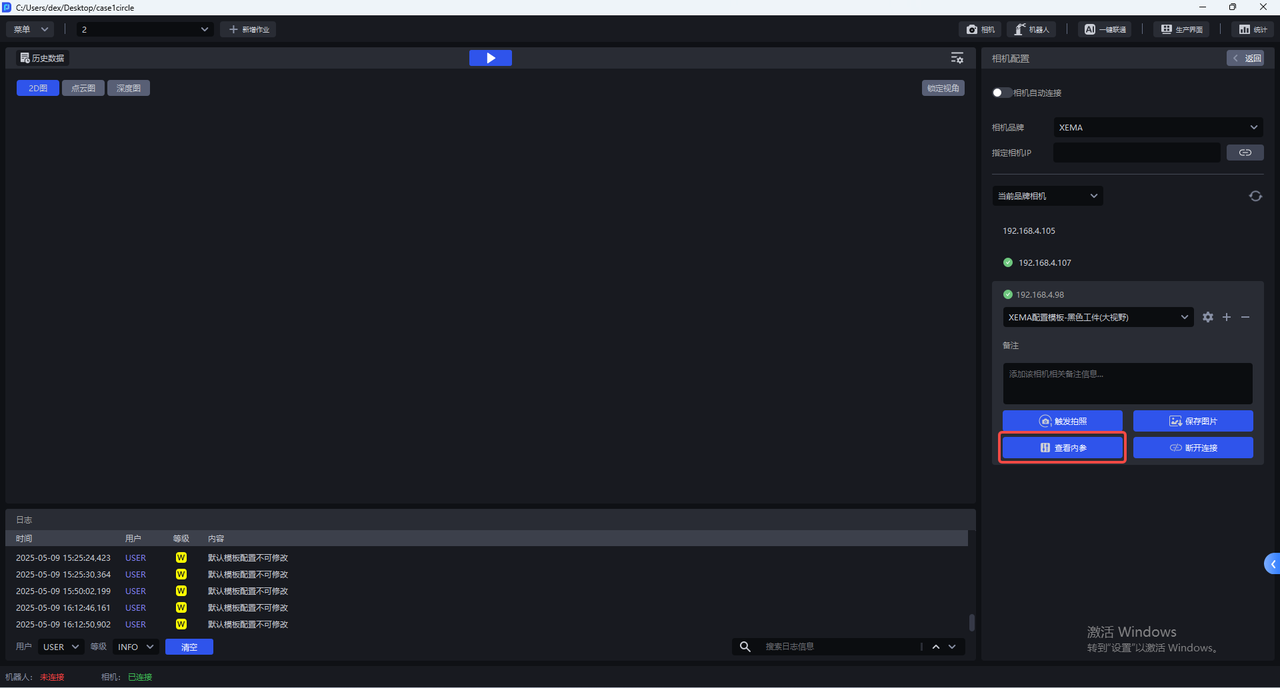
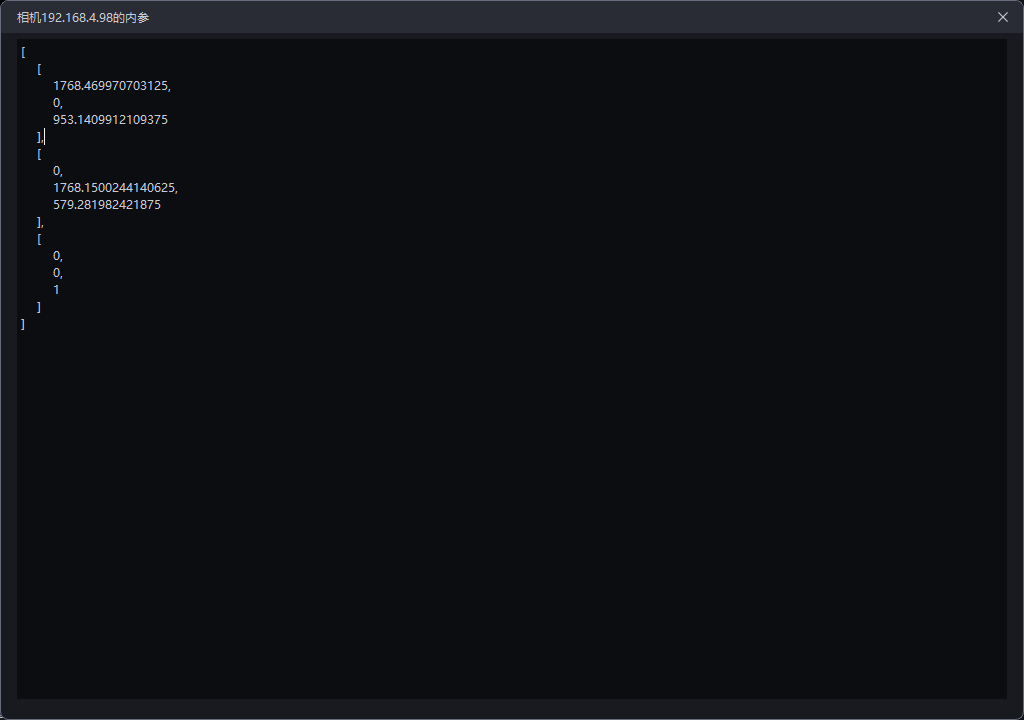
- Click
View Intrinsic Parameterto view the Camera Intrinsic Parameter, including lens focal length, principal point coordinates, distortion coefficients, and so on.
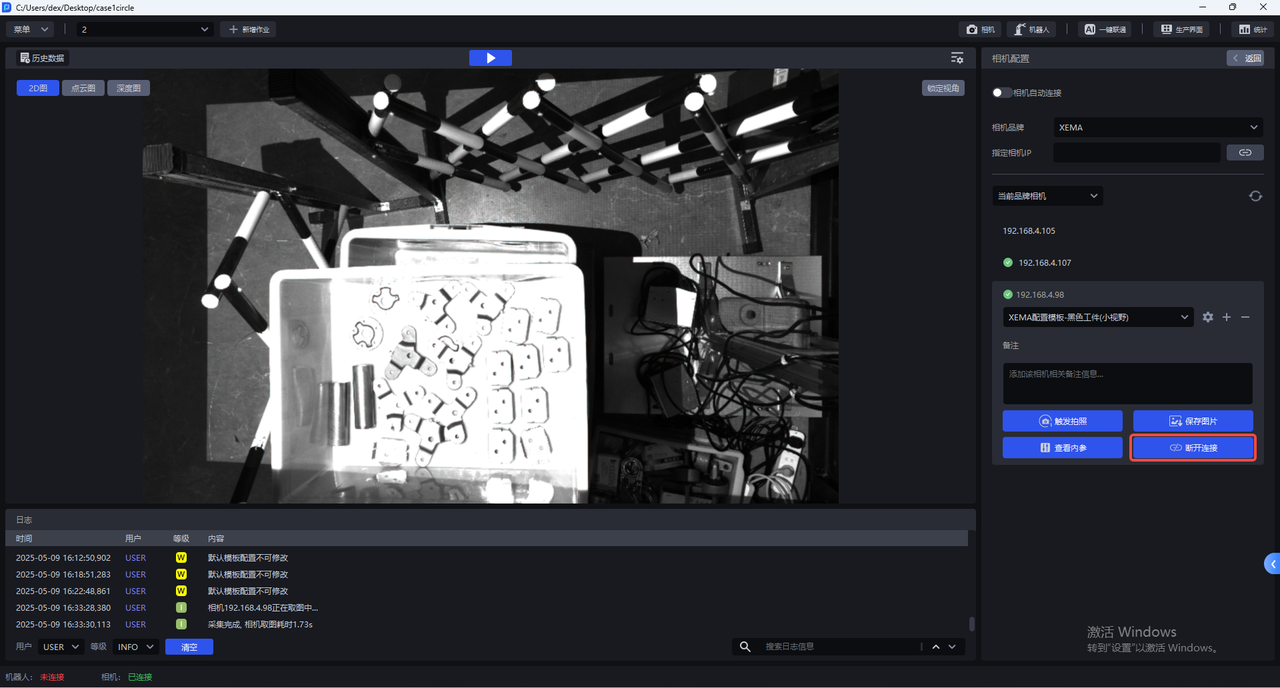
- Click
Disconnectto disconnect the Camera and select another Camera to connect.
5.1 Import Camera Configuration
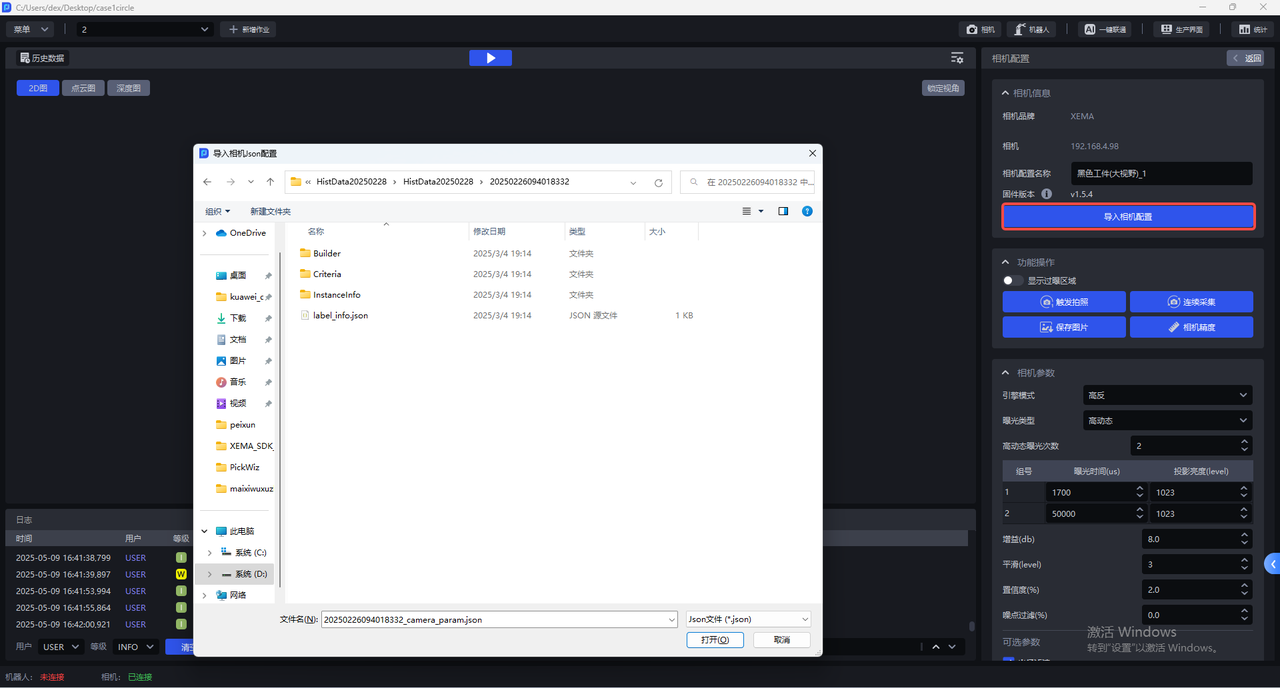
In the Camera configuration interface, click Import Camera Configuration to import an existing Camera configuration into the Camera.
5.2 Functional Operations
The Camera configuration interface has the following functions:
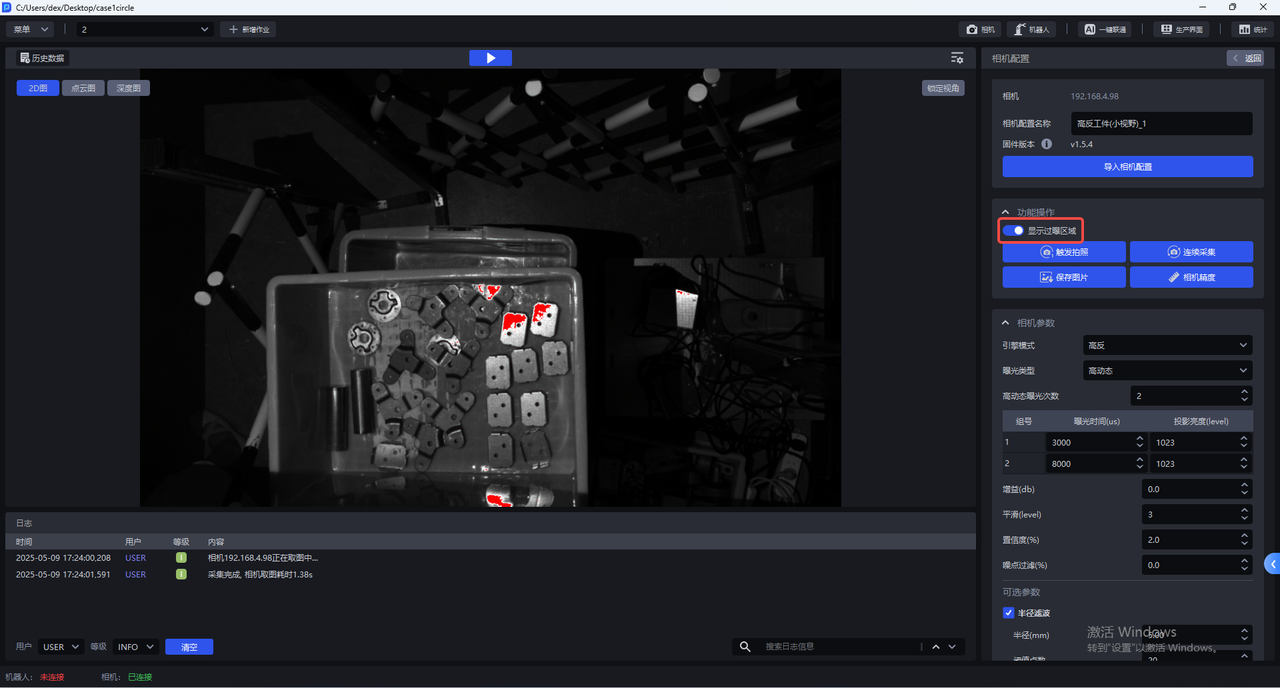
- Display Overexposed Areas
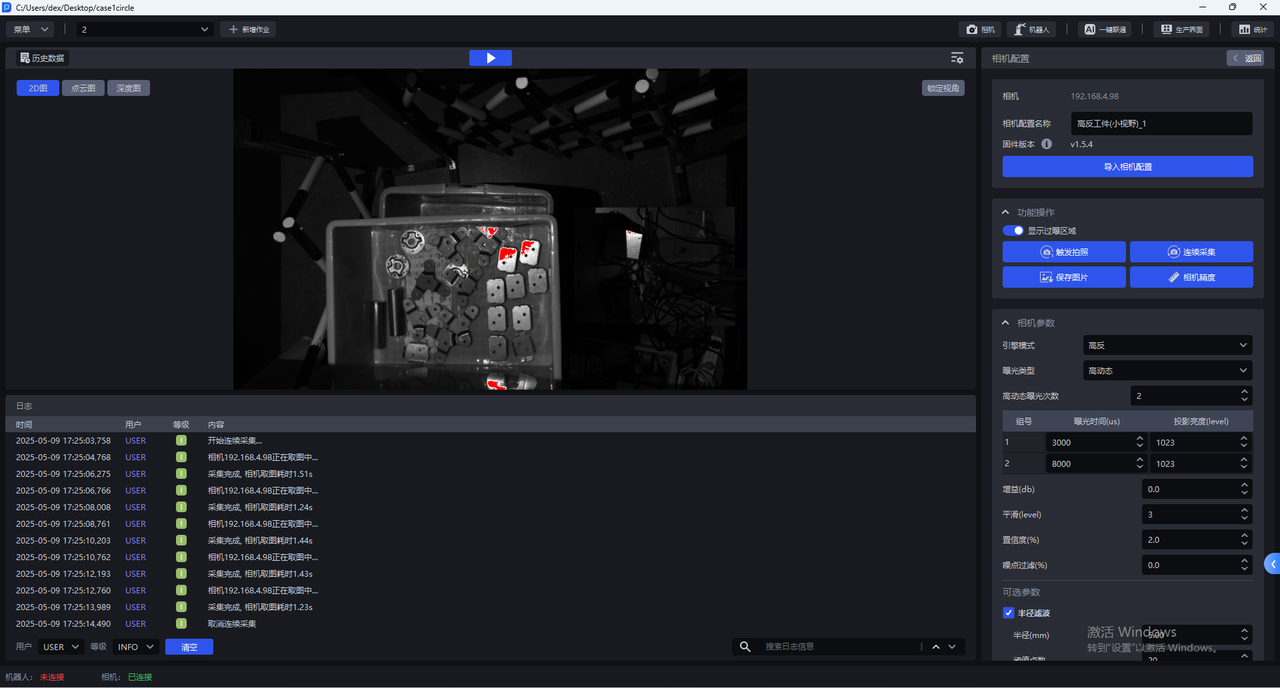
After Show Overexposed Areas is enabled, the visualization window will display the overexposed areas of the current image, as shown below.
- Trigger Capture
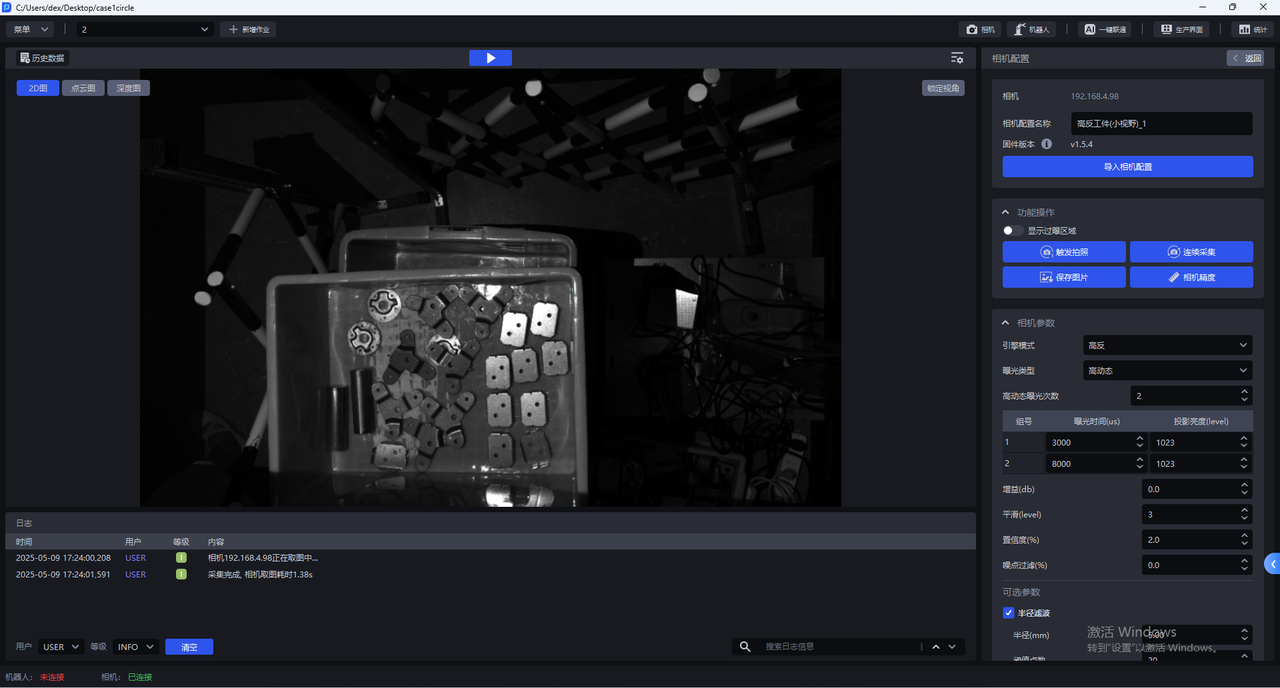
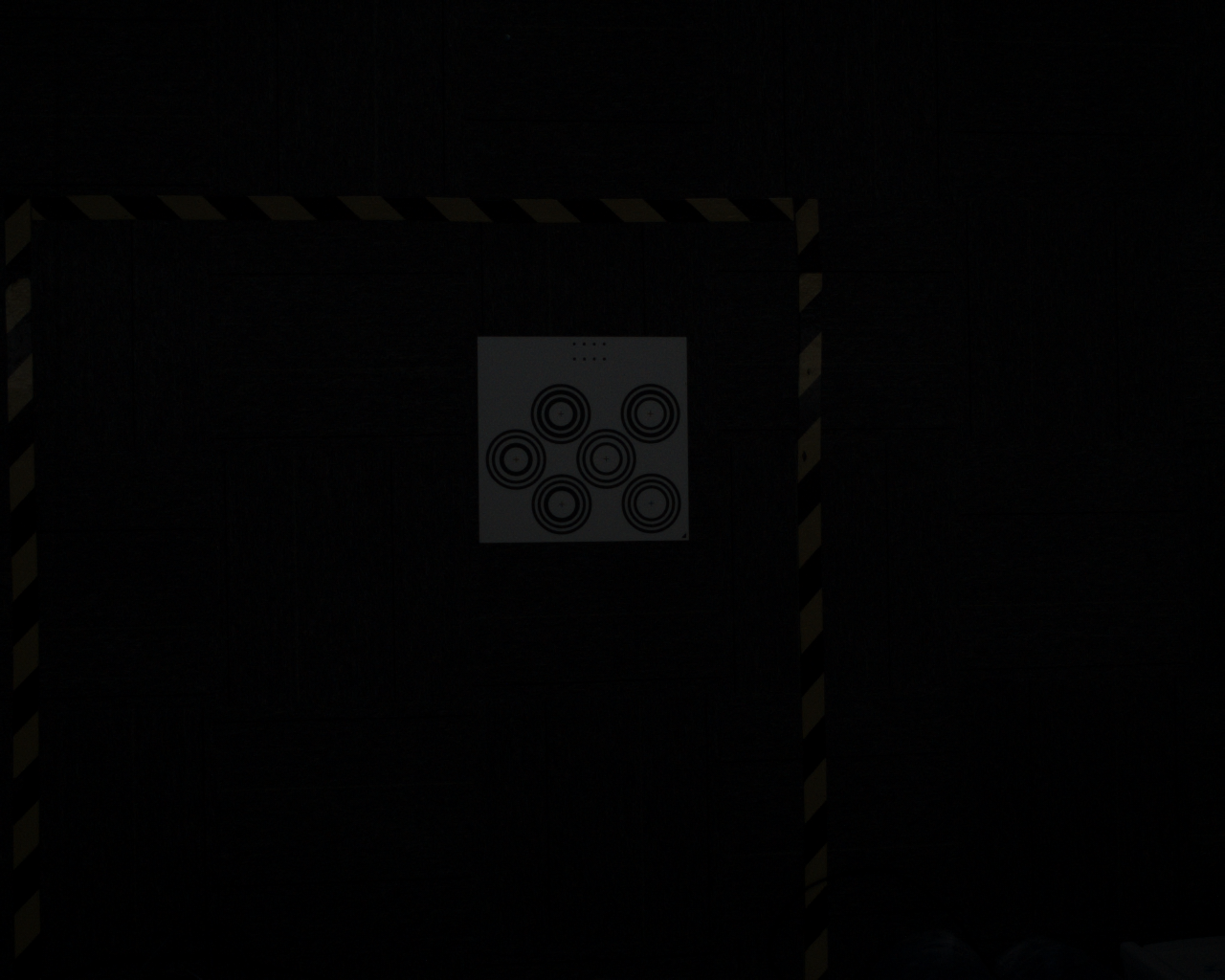
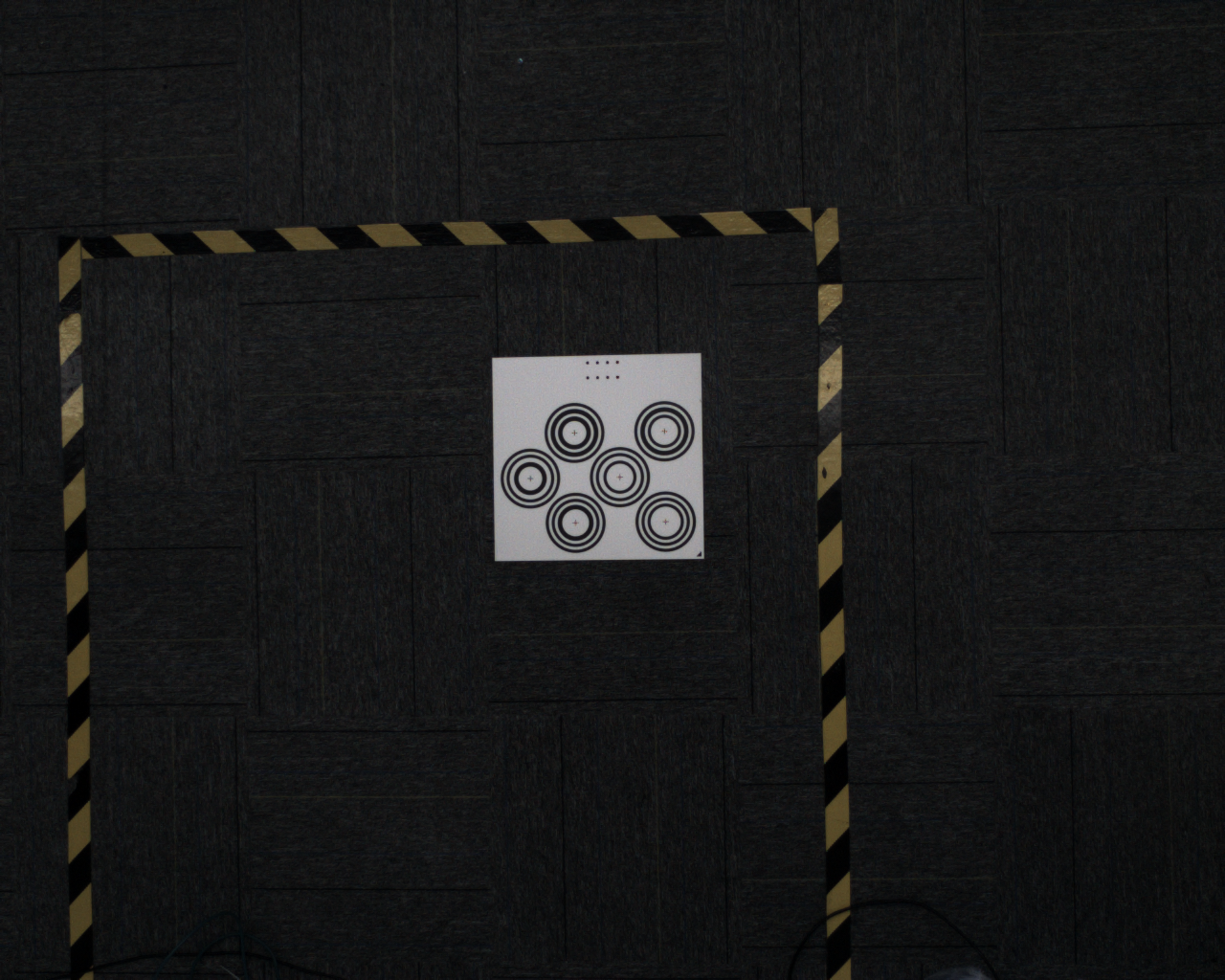
Click Trigger Capture to capture 2D images, point clouds, and depth maps using the current Camera configuration. You can view the imaging quality of the current Camera configuration in the visualization window.
- Continuous Capture
Click Continuous Capture, and the Camera will capture images continuously. Image capture stops only after you click Stop Capture
- Save Images
Click Save Images to save the captured 2D images, point clouds, and depth maps
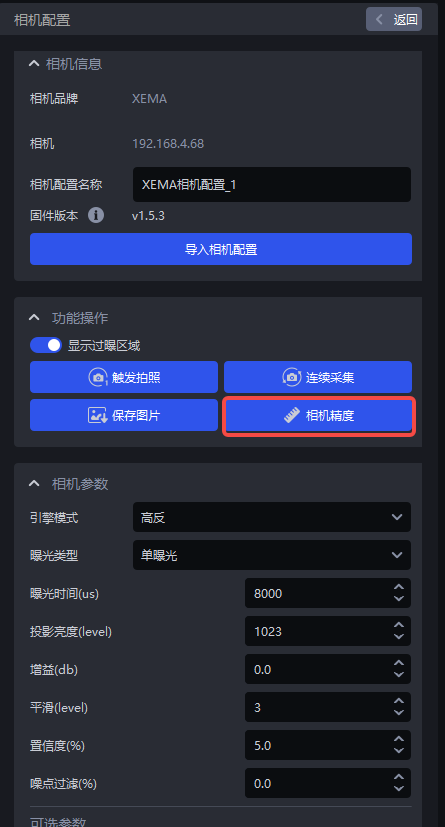
- Camera Accuracy
Click Camera Accuracy to view and verify Camera Accuracy
5.3 Camera Accuracy
5.3.1 View Camera Accuracy
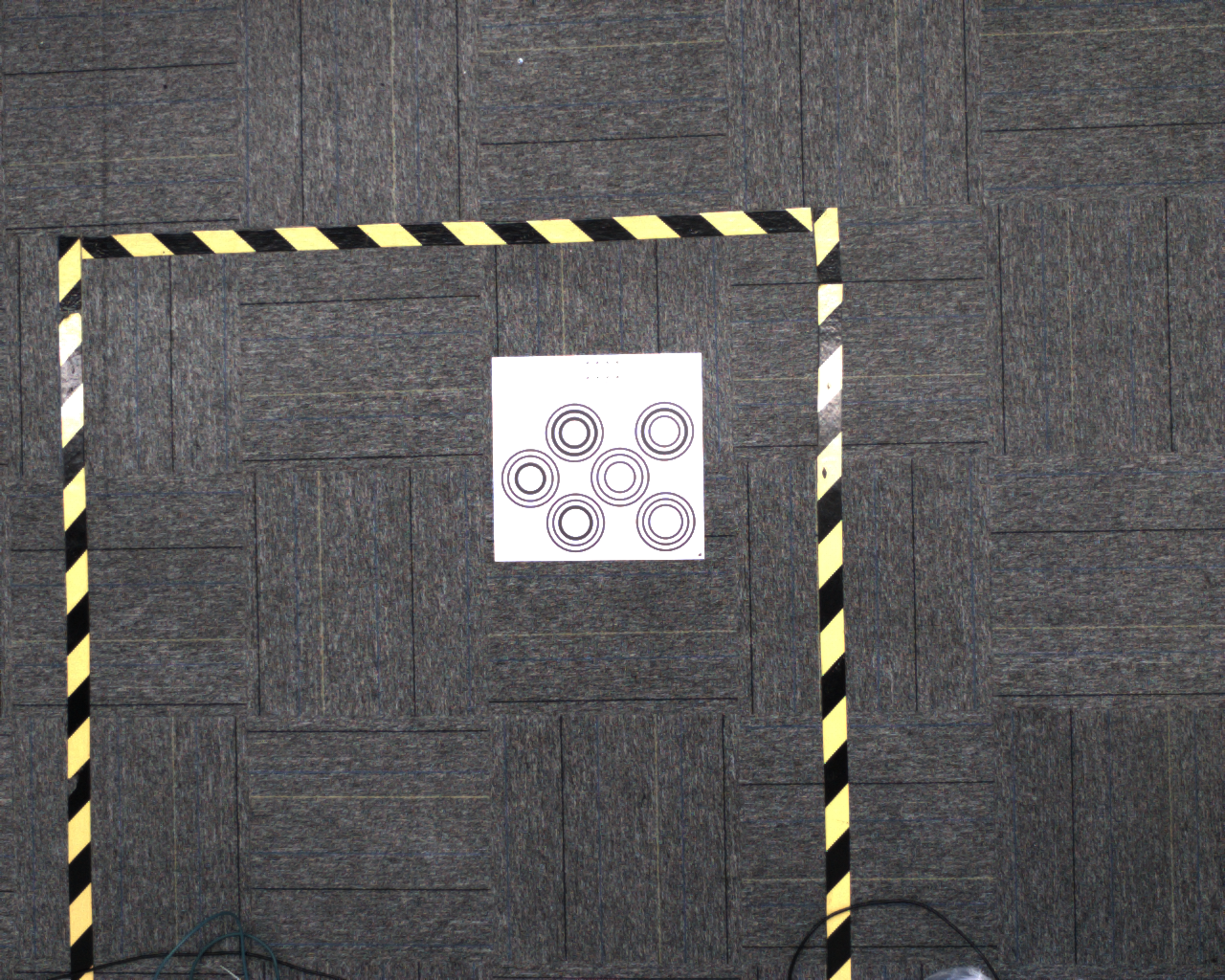
- Place the Calibration Board within the Camera field of view. In the Camera configuration interface, click
Camera Accuracy, and the Camera Accuracy interface will appear, as shown below
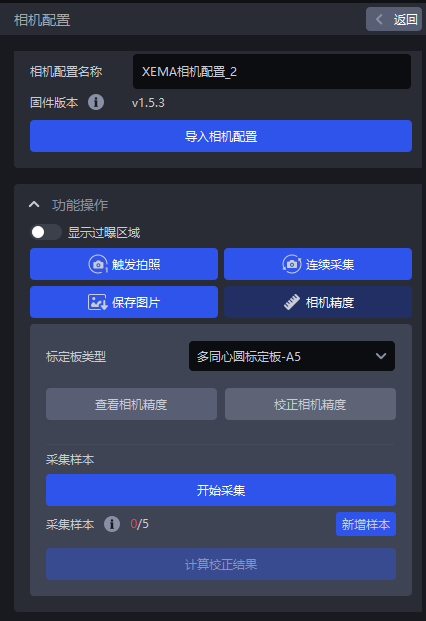
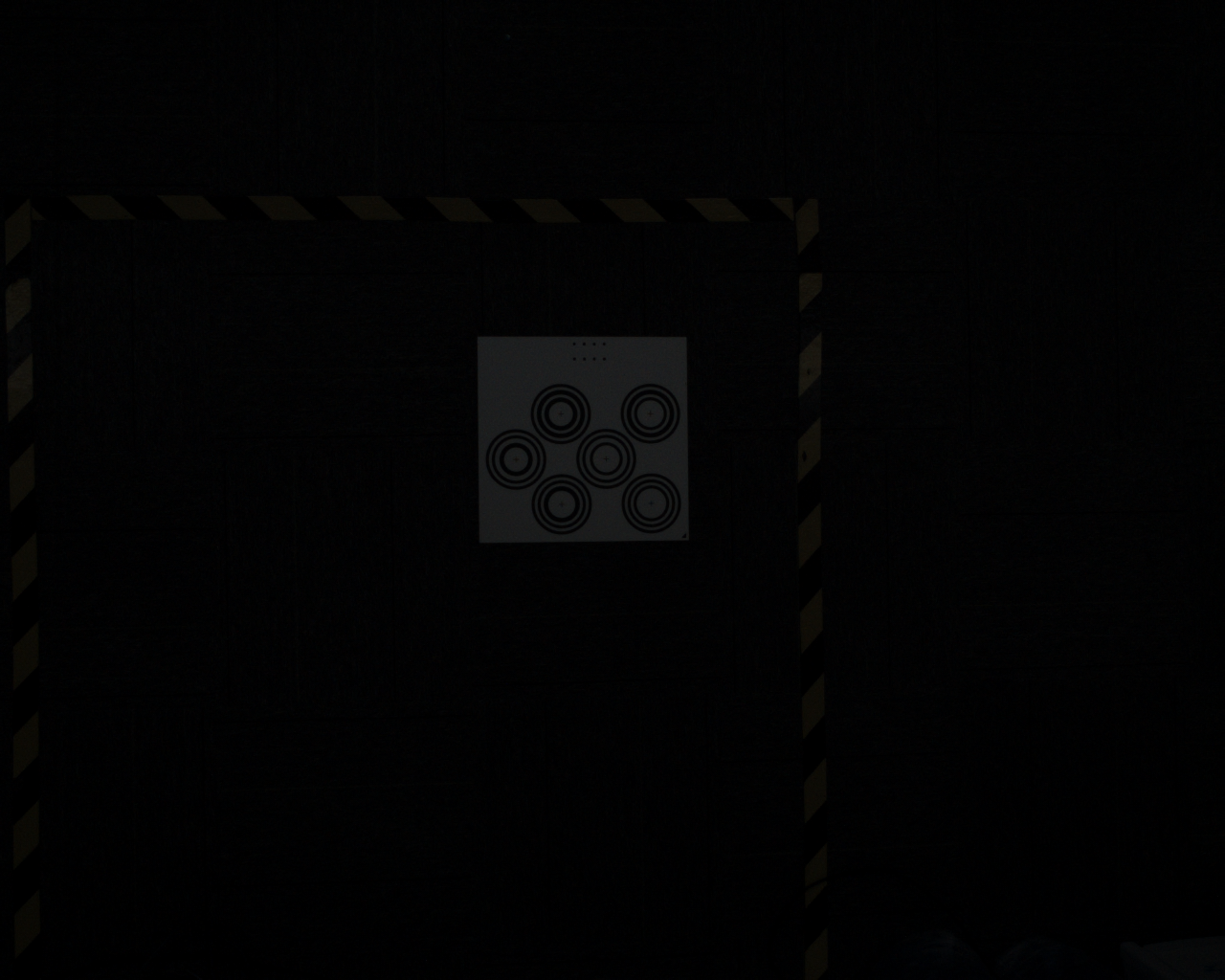
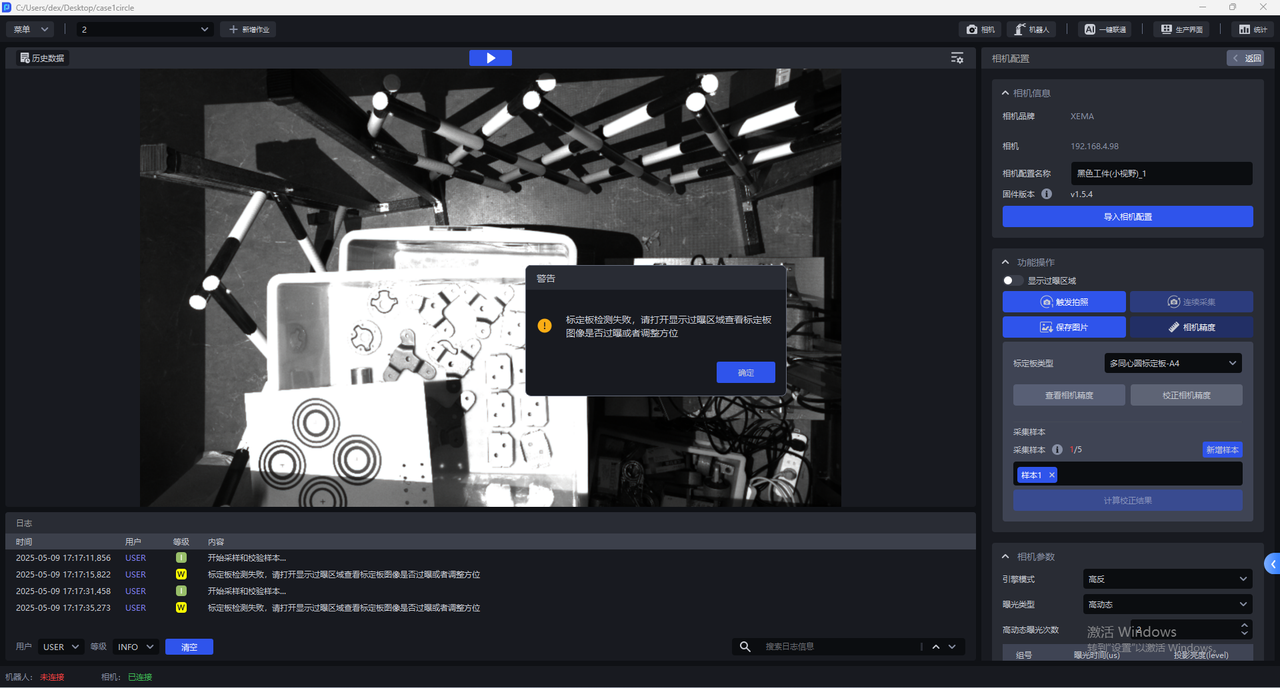
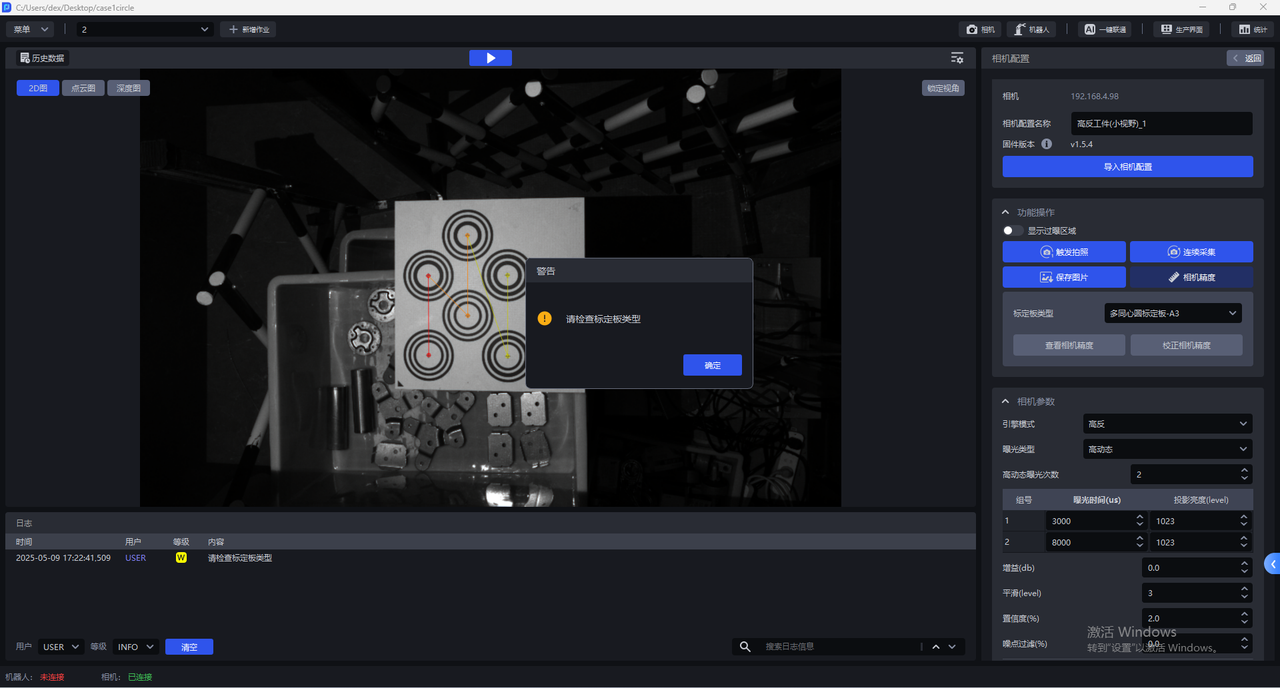
- Select the corresponding Calibration Board. If the selected Calibration Board does not match the actual one, a warning dialog stating "Please check the Calibration Board type" will pop up, as shown below. A warning dialog appears when the Calibration Board type is A3
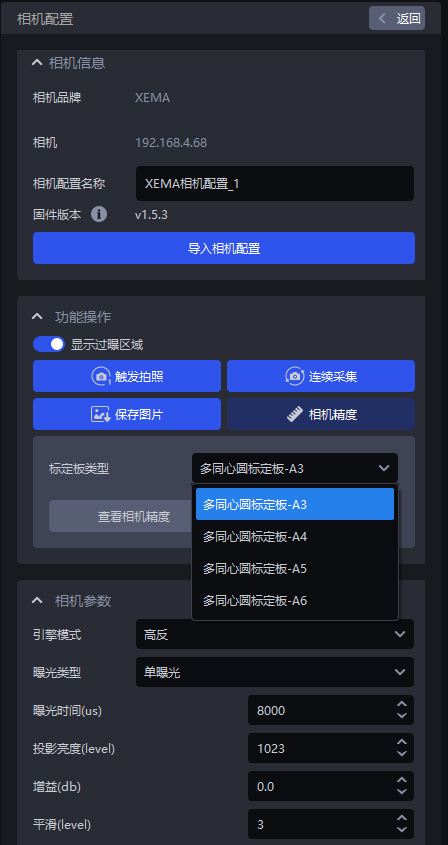
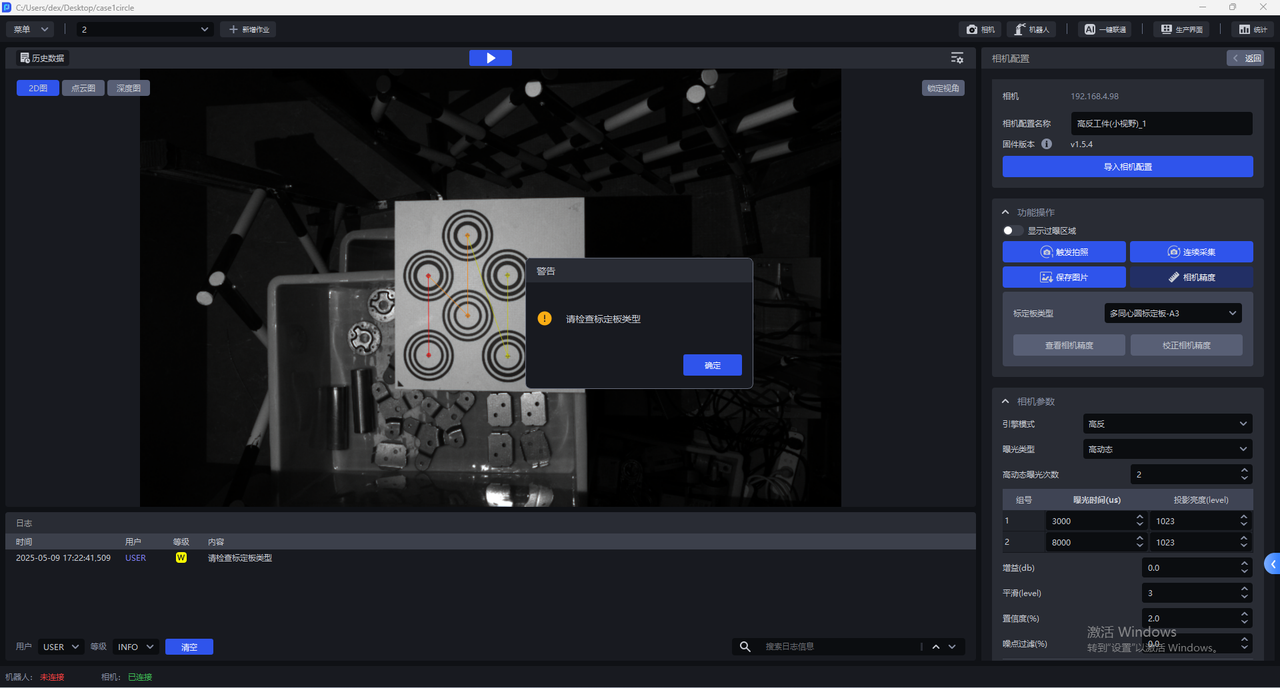
- After selecting the correct Calibration Board type, click
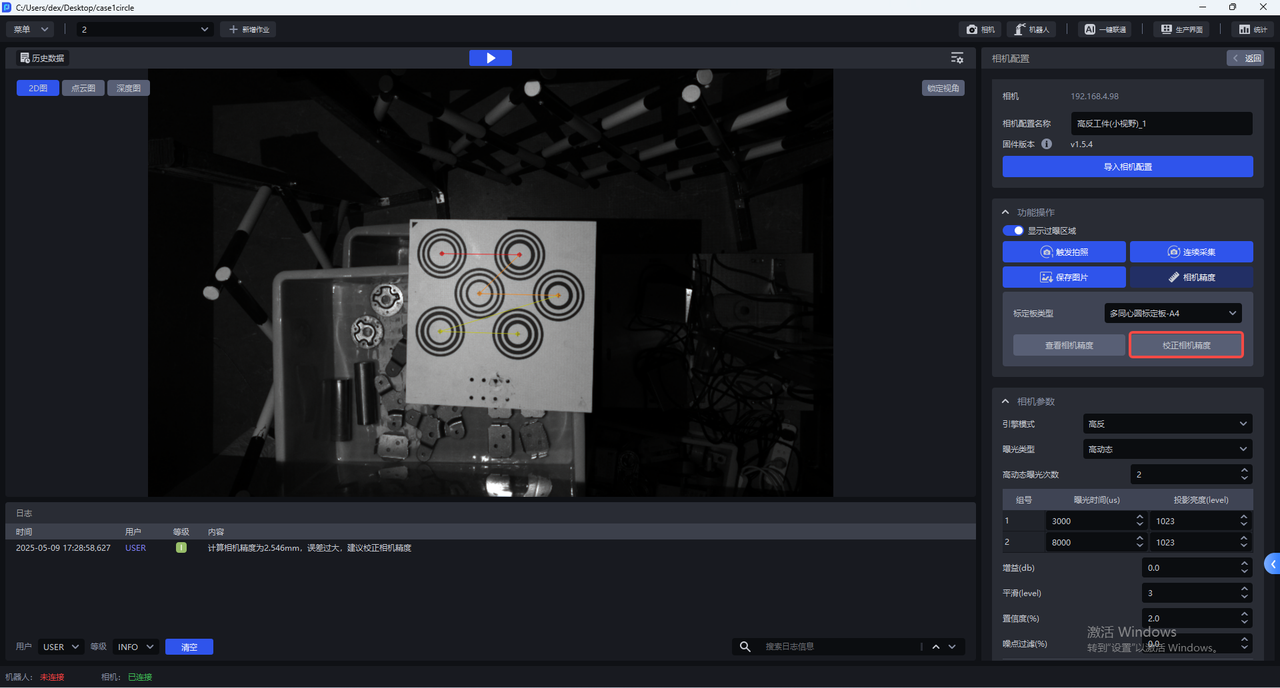
View Camera Accuracy. PickWiz will automatically calculate the Camera Accuracy of the current Camera. If the Camera Accuracy meets the requirements, you can directly adjust the Camera imaging parameters. If the Camera Accuracy is too large, a prompt dialog stating "The error is too large; Camera Accuracy calibration is recommended" will pop up.
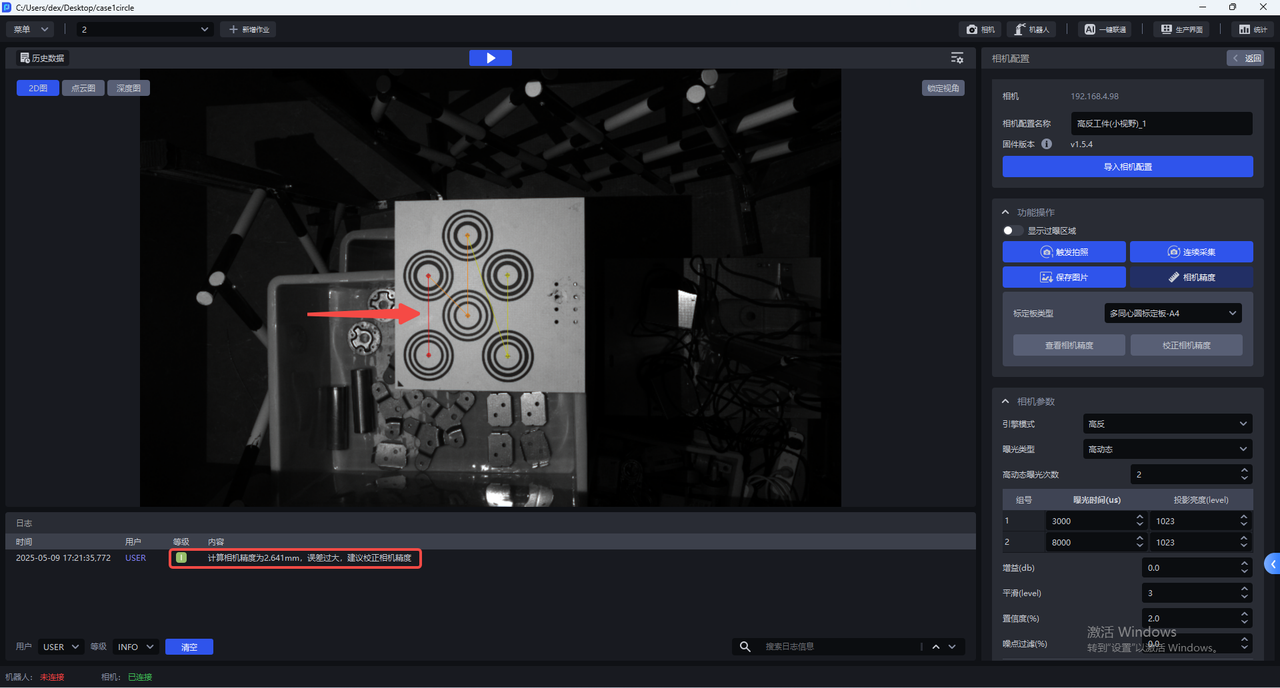
For each Camera series, Camera Accuracy <Xmm indicates that the accuracy meets the requirements
XEMA-D:0.2mm
XEMA-S:0.2mm
XEMA-L:0.5mm
5.3.2 Calibrate Camera Accuracy
During actual Camera use and after Extrinsic Parameter correction, it is necessary to verify whether the current Camera Accuracy meets the requirements.
If the Camera Accuracy error is abnormal when viewing Camera Accuracy, the Camera Accuracy should be calibrated;
If the point cloud captured by the current Camera has large undulations, the Camera Accuracy should be calibrated
Before calibrating Camera Accuracy, enable
Show Overexposed Areasto check the exposure level of Camera imaging. If there are overexposed areas, adjust the exposure time of single exposure to ensure normal Camera imaging exposure.After calibration is completed, switch the Camera imaging parameters back to the original configuration
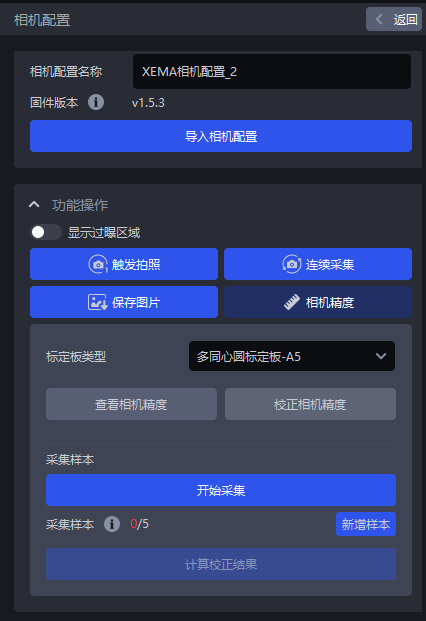
- In the Camera configuration interface, click
Camera Accuracy
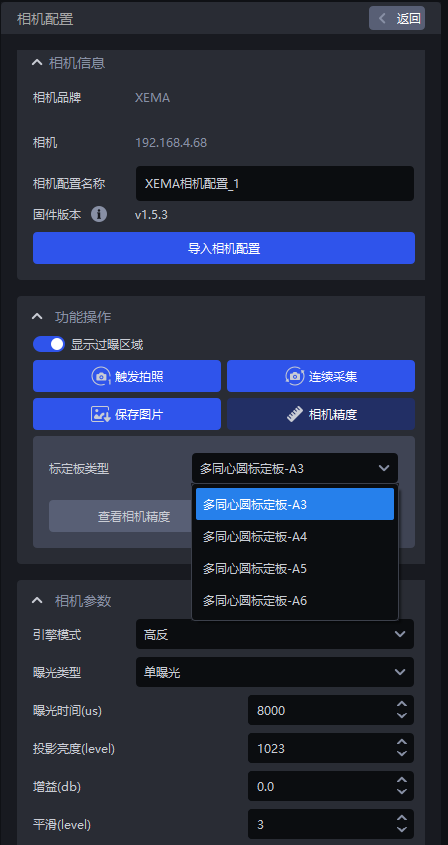
- Select the corresponding Calibration Board. If the selected Calibration Board does not match the actual one, a warning dialog stating "Please check the Calibration Board type" will pop up, as shown below. A warning dialog appears when the Calibration Board type is A3
- After selecting the correct Calibration Board type, click
Calibrate Camera Accuracy
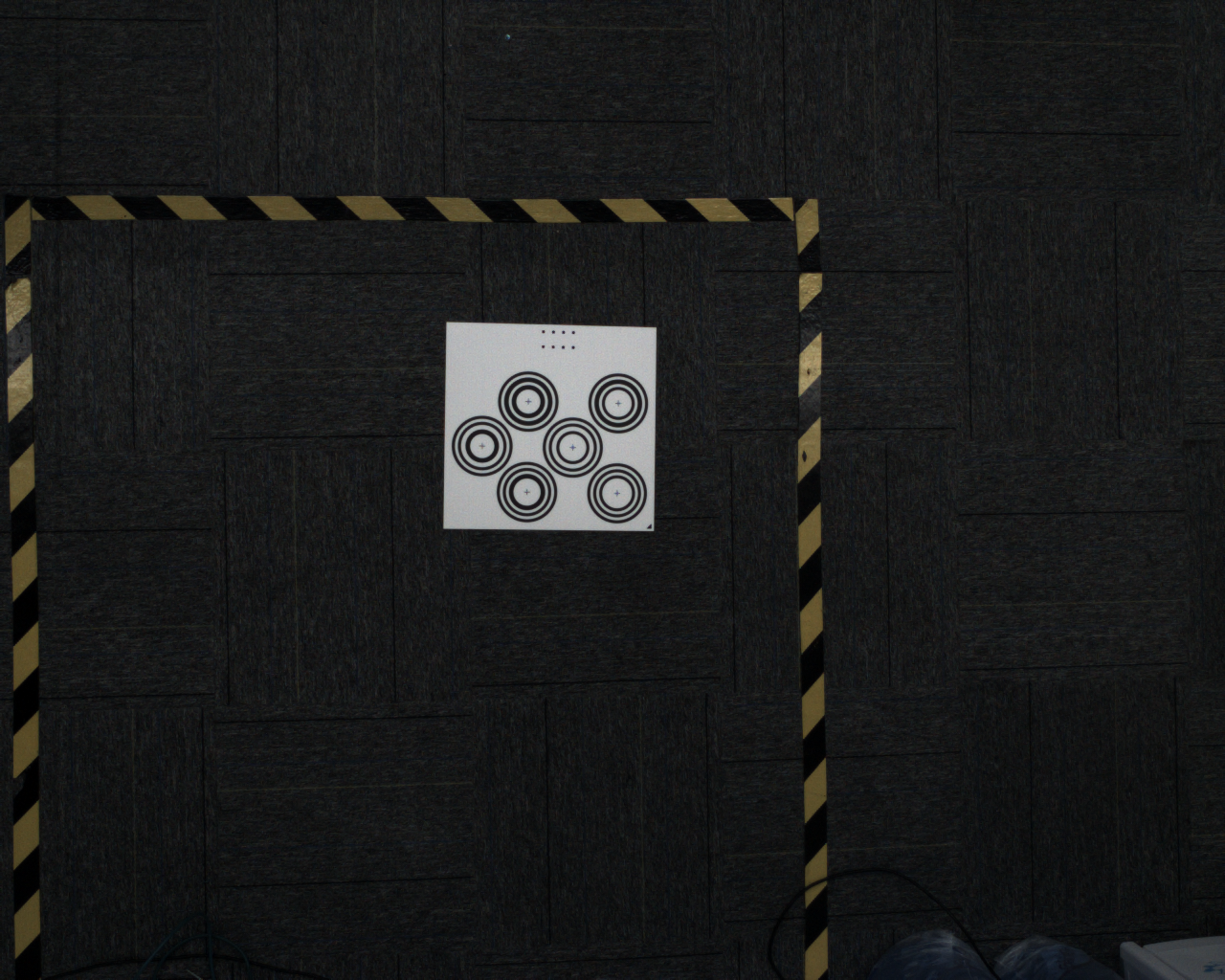
- Place the Calibration Board horizontally at the center of the Camera field of view, then click
Add Sample. The Camera starts sampling and verifying samples. If a collected sample passes verification, it will be added belowCollected Samples, as shown below
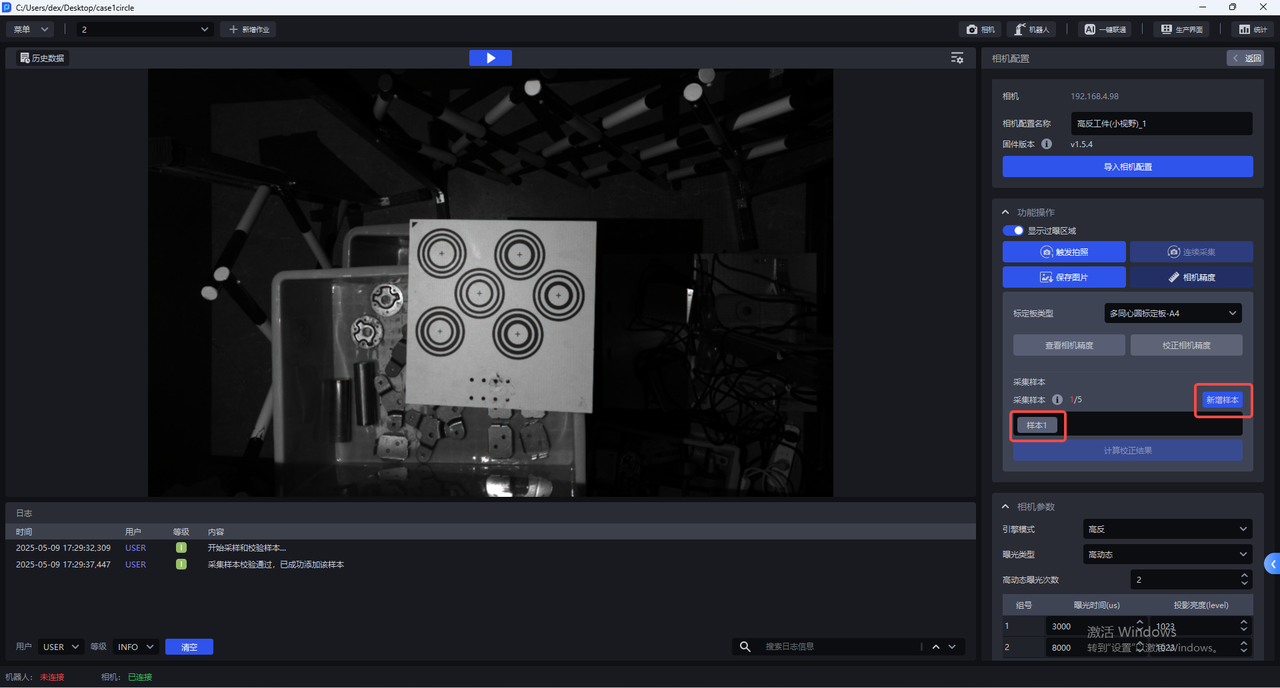
Click Sample x to view the collected sample. For a sample that passes verification, the centers of all concentric circles on the Calibration Board turn green
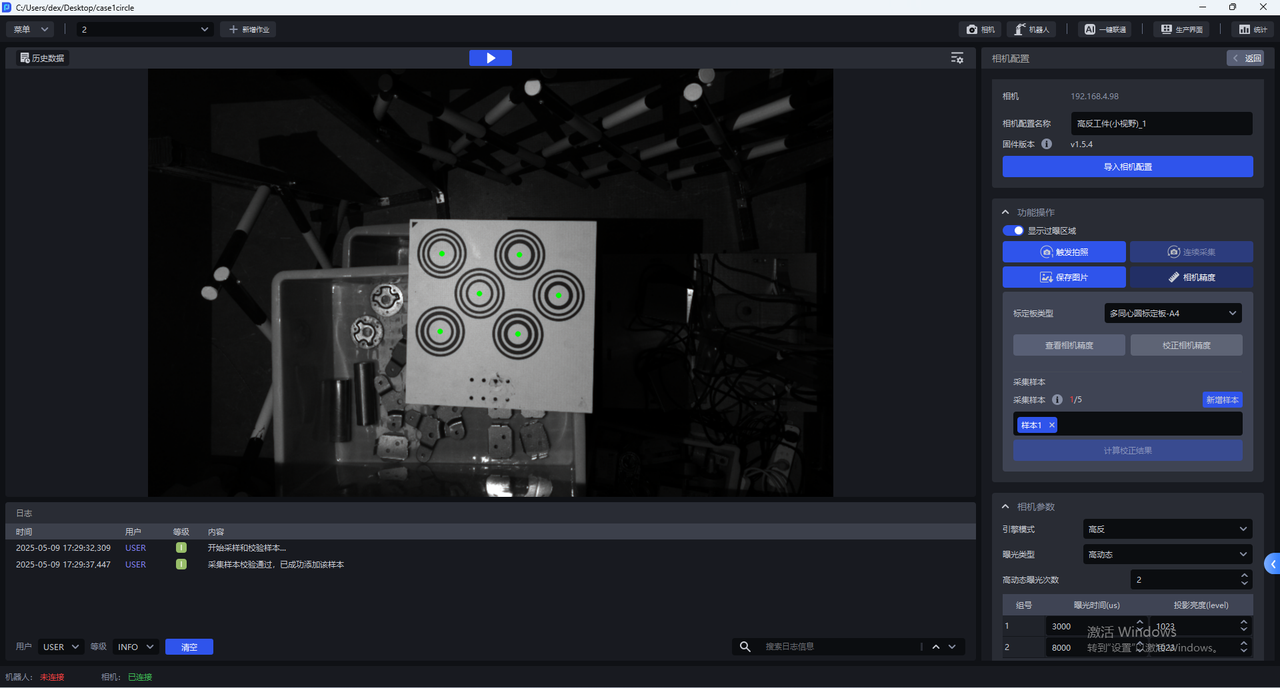
- Move the Calibration Board to the four corners within the Camera field of view and add samples
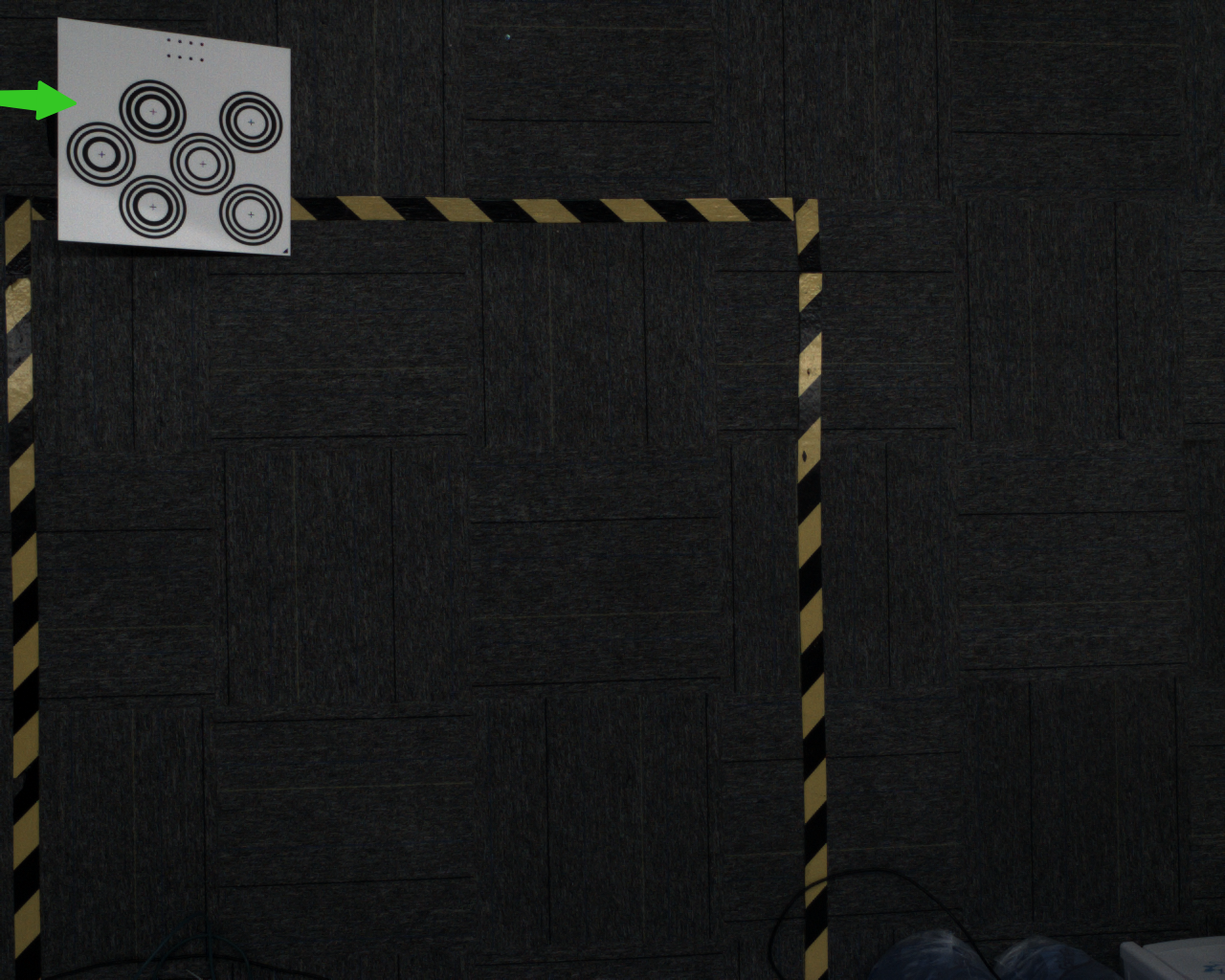
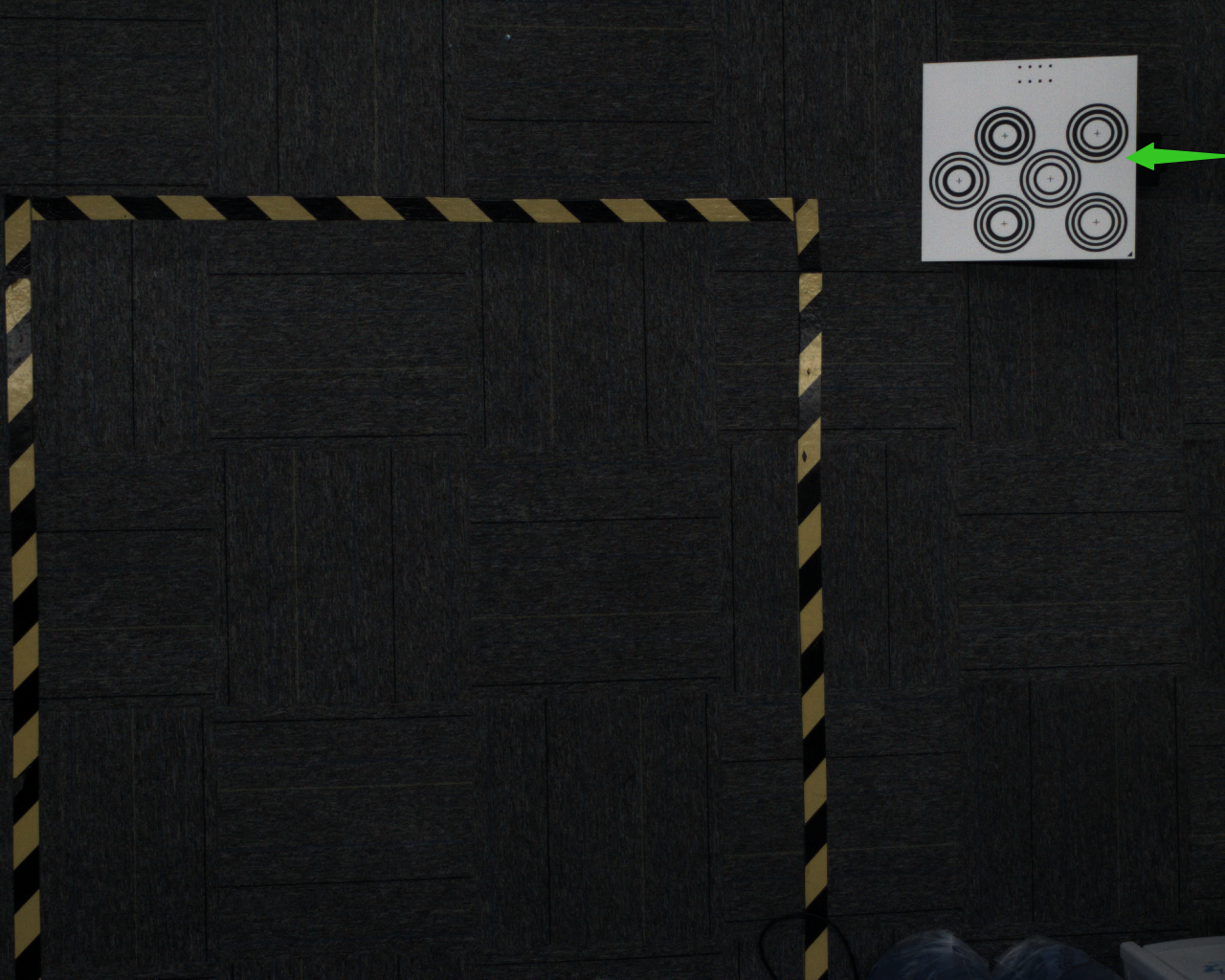
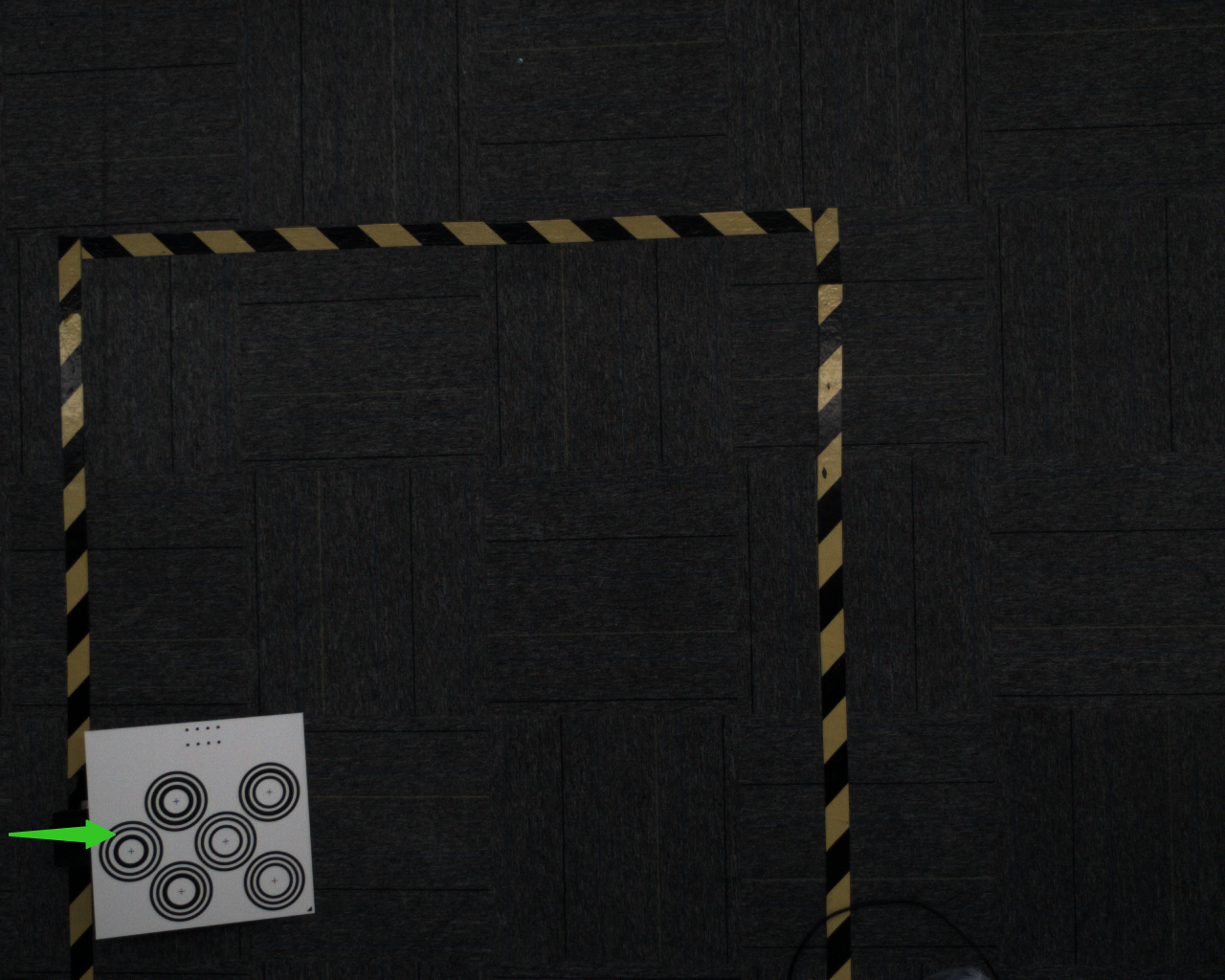
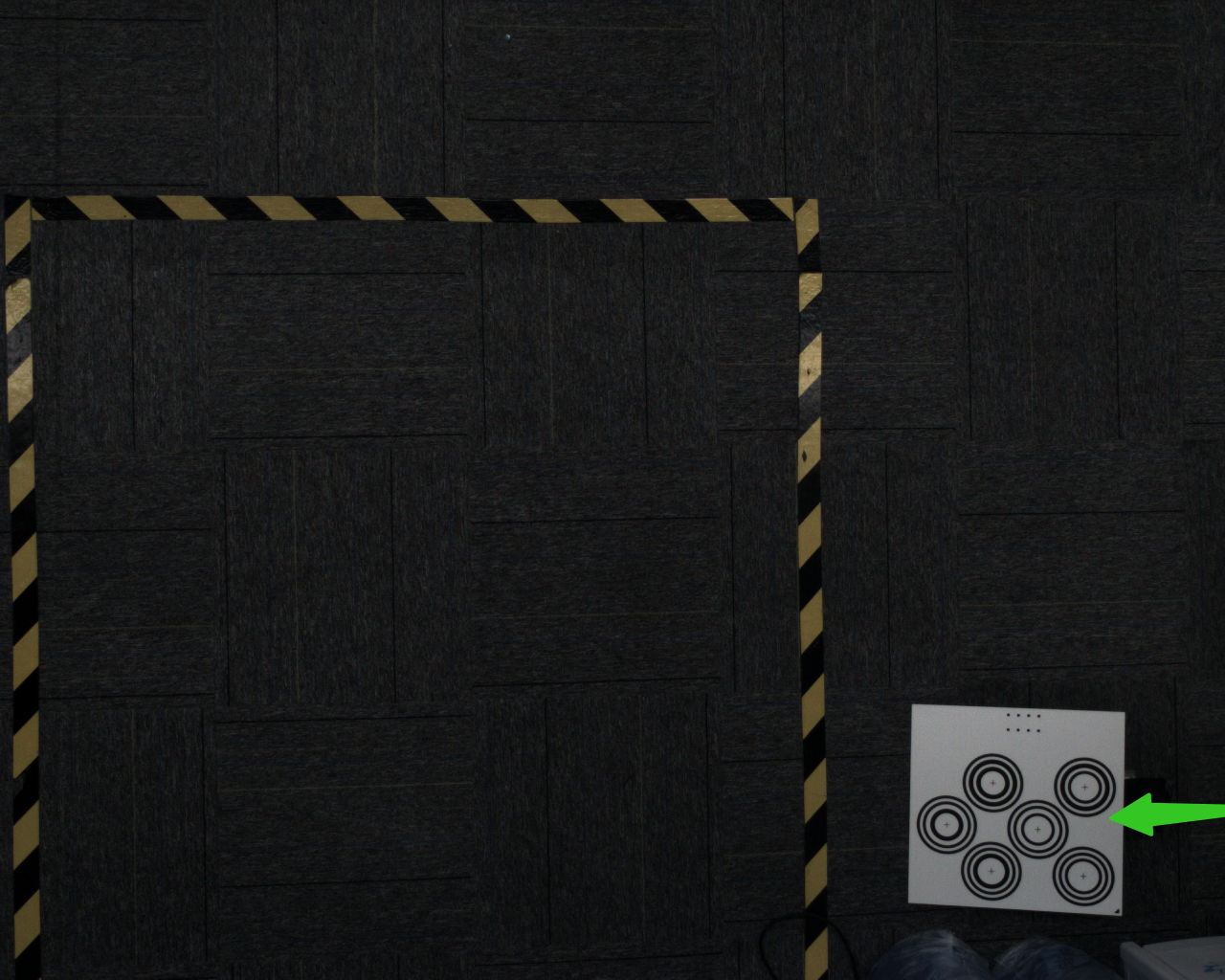
At each corner, prop up the Calibration Board at an angle. The placement angle of the Calibration Board should be 15-30°. The tilt angle should not be too large or too small
- After adding 5 samples, click
Calculate Calibration Results
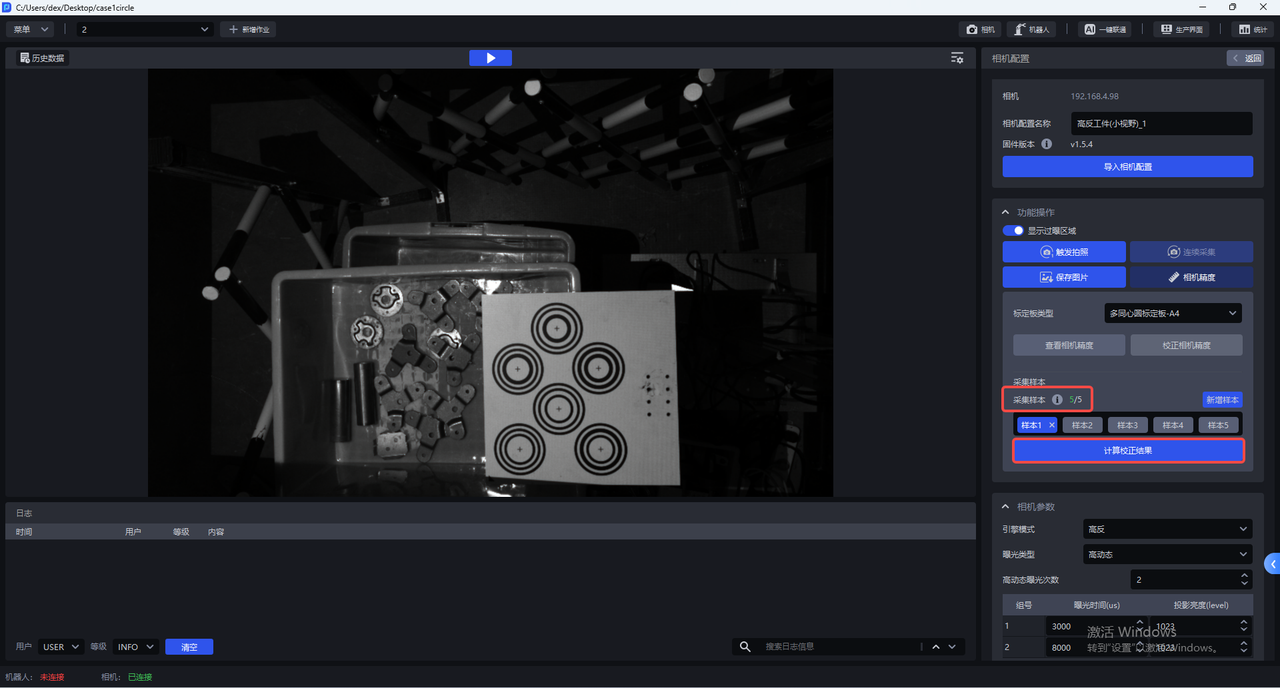
- After calibration is completed, a prompt dialog will appear: "Camera Accuracy calibration is complete. The calibrated accuracy is x, and the error is within the normal range. Overwrite the current Camera parameter configuration?"
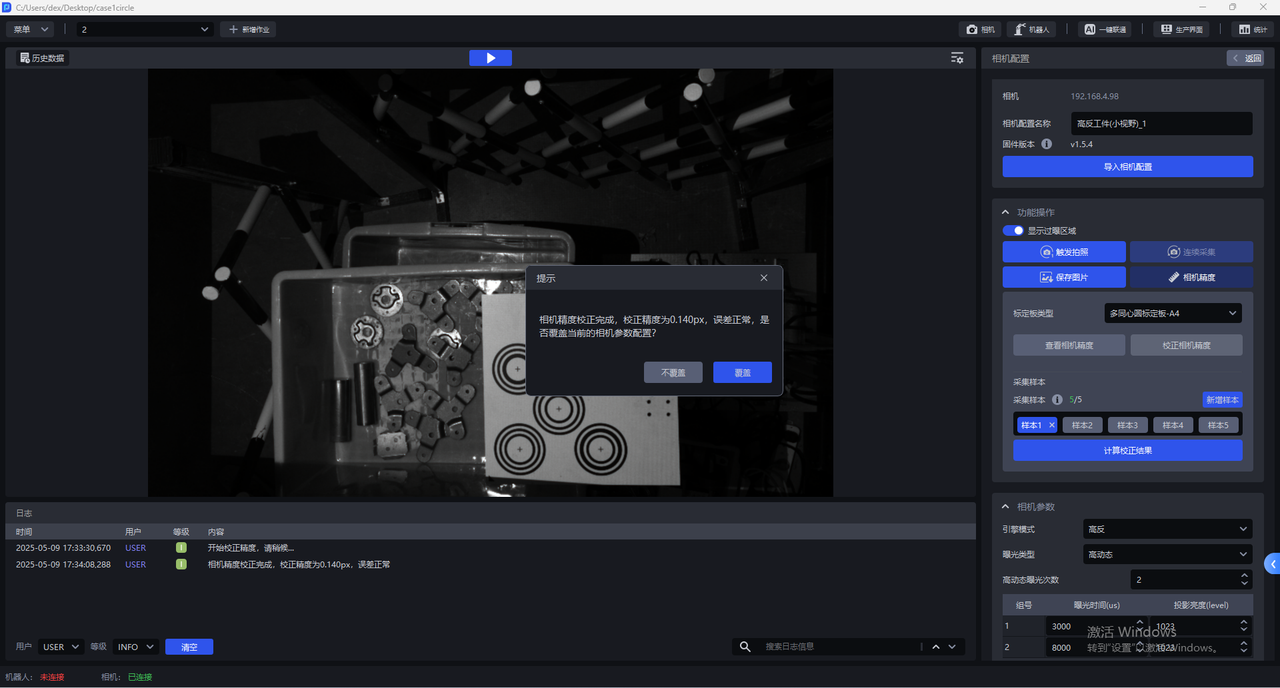
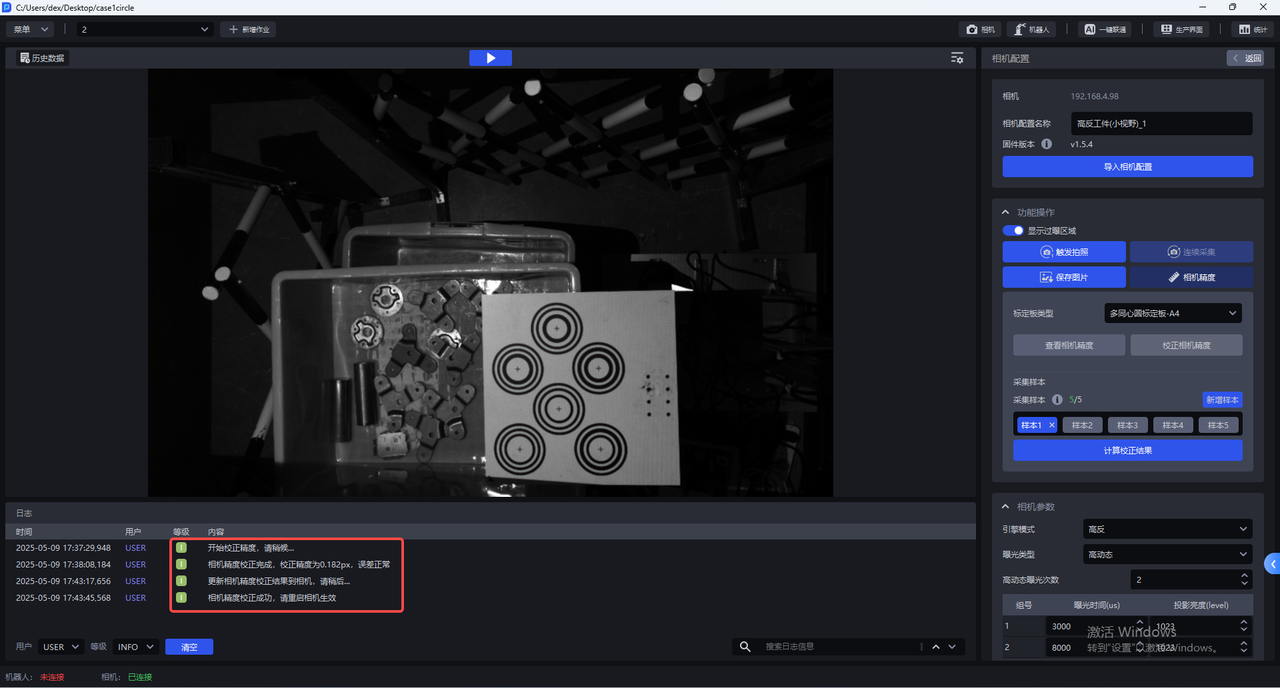
If you choose to overwrite the current Camera parameter configuration, the Camera Accuracy calibration result will be updated to the Camera. The Camera must be restarted for it to take effect
6. Camera Parameter Adjustment
6.1 Required Parameters
6.1.1 Engine Mode
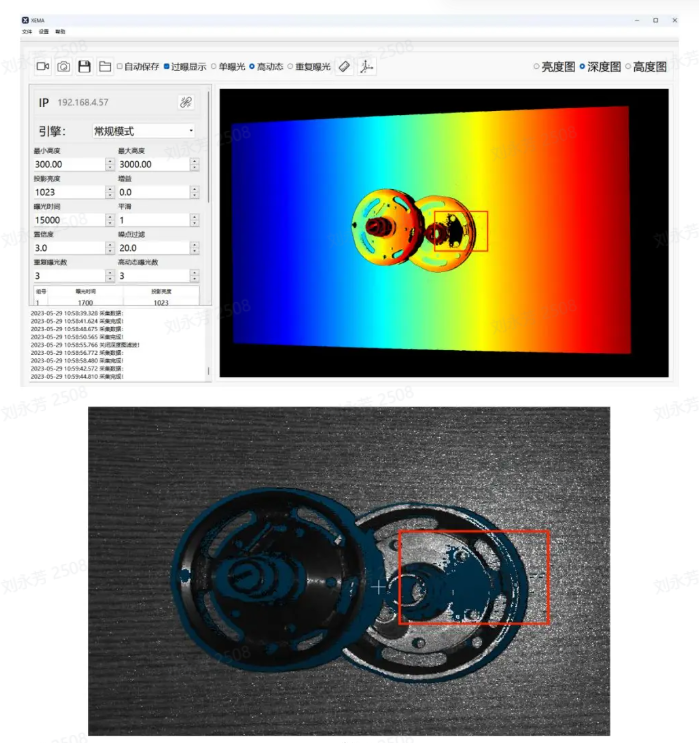
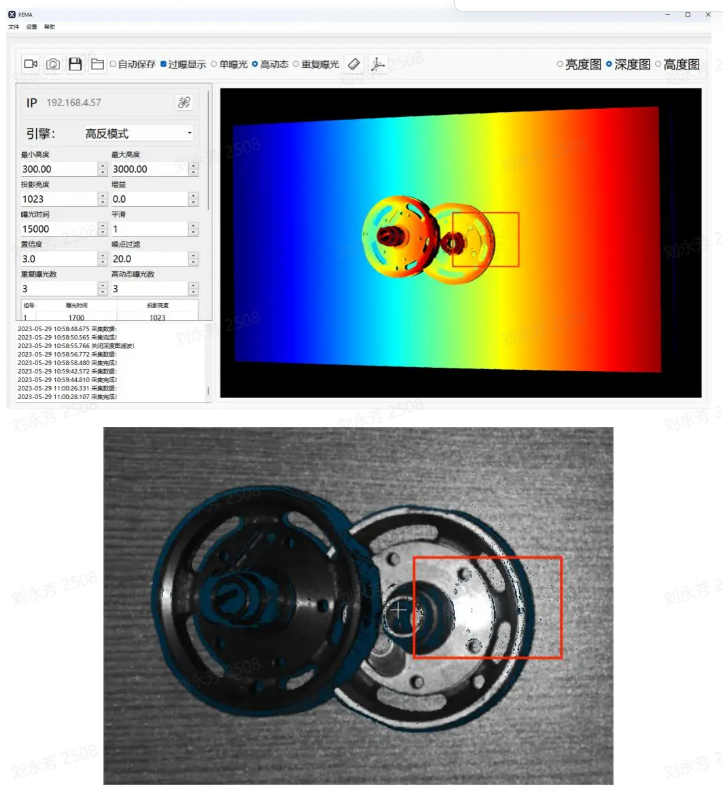
Engine modes include Standard, High-Reflective, and Black. High-Reflective mode is highly effective for highly reflective objects, Black mode is highly effective for black workpieces, and Standard mode can handle ordinary workpieces.
| Engine Mode | Description |
|---|---|
| Standard | Suitable for general workpieces |
| High-Reflective | Suitable for highly reflective workpieces |
| Black | Suitable for black workpieces |
6.1.2 Exposure Type
(1)Single Exposure
Single Exposure can be used for workpieces with ordinary textures
(2)High Dynamic Range:
The HDR function can be used for highly reflective workpieces to perform point cloud fusion
The High Dynamic Range option of Exposure Type should be used together with the High Dynamic Range option of Engine Mode
High Dynamic Range Imaging (HDRI or HDR for short) is a set of technologies used to achieve a greater exposure dynamic range (that is, a larger difference between light and dark) than ordinary digital imaging technology.
High Dynamic Range makes image layers clearer and light-dark contrast more obvious (especially when facing reflective workpieces).
Parameter adjustment suggestions:
- When using High Dynamic Range, you can select the number of HDR exposures according to the specific Scene and workpiece. The value range is 2~6, and the default is 2. If the 3D point cloud quality and 2D image quality are poor, increase the number of groups to expose the object multiple times to achieve the best imaging quality.
It is recommended to use fewer HDR exposures while still meeting point cloud quality requirements.
(3)Repeated Exposure: the number of times the Camera repeatedly captures images. Its function is to improve the signal-to-noise ratio (the ratio of signal to noise). The higher the signal-to-noise ratio, the better, because random noise will be suppressed and effective information will increase. The value range is 0~10.
Repeated Exposure can be used for black objects to optimize the point cloud through multiple exposures
6.1.3 Exposure Time
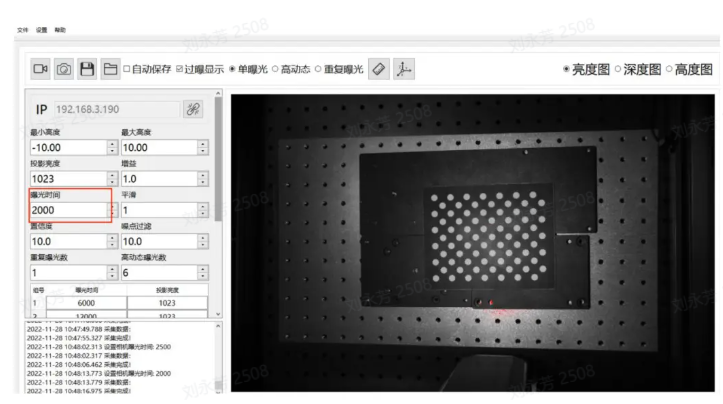
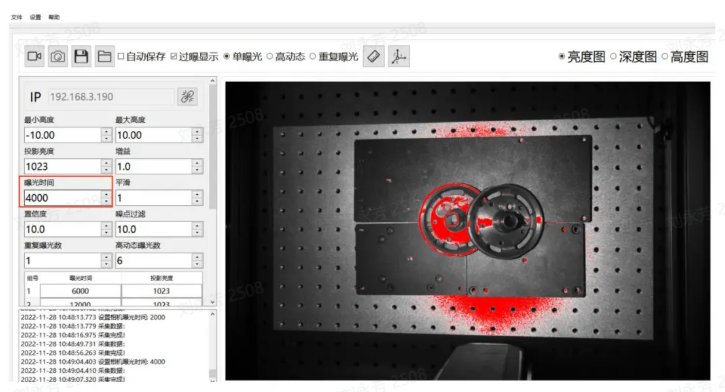
Camera exposure time: Exposure time is the amount of time the shutter remains open while reflected light from the scene passes through the lens and reaches the imaging photosensitive material. The longer the exposure time, the more light enters. If the exposure time is too long, overexposure will occur, thereby affecting the point cloud. It should be adjusted according to the actual situation
Range: 1700-100000
Exposure time and projection brightness form one group. Each HDR exposure count corresponds to one group, and an appropriate exposure time and projection brightness value should be set for each group.
Exposure time: The exposure time is the duration during which light enters the Camera while the shutter is open. The longer the exposure time, the more light enters and the clearer the image becomes.
If the exposure time is too long, overexposure will occur. You can enable the display of overexposed areas, and the red parts indicate overexposed regions.
6.1.4 Projection Brightness
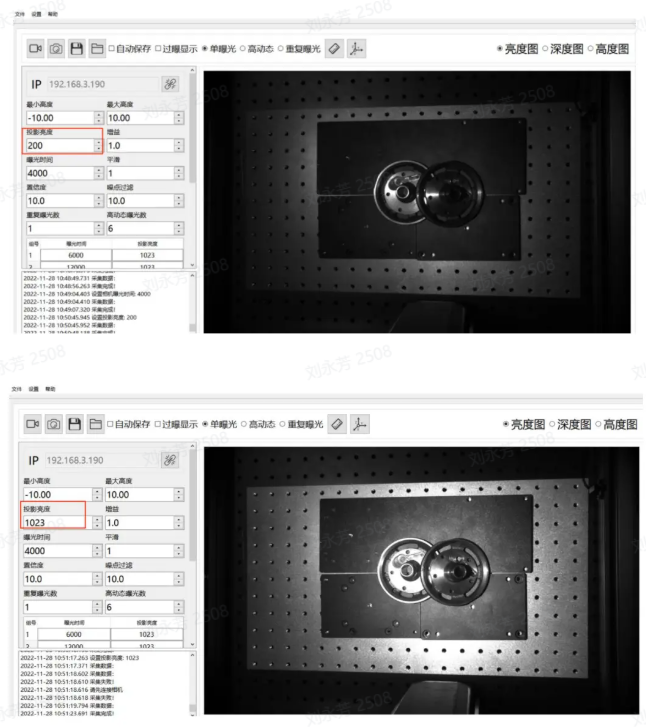
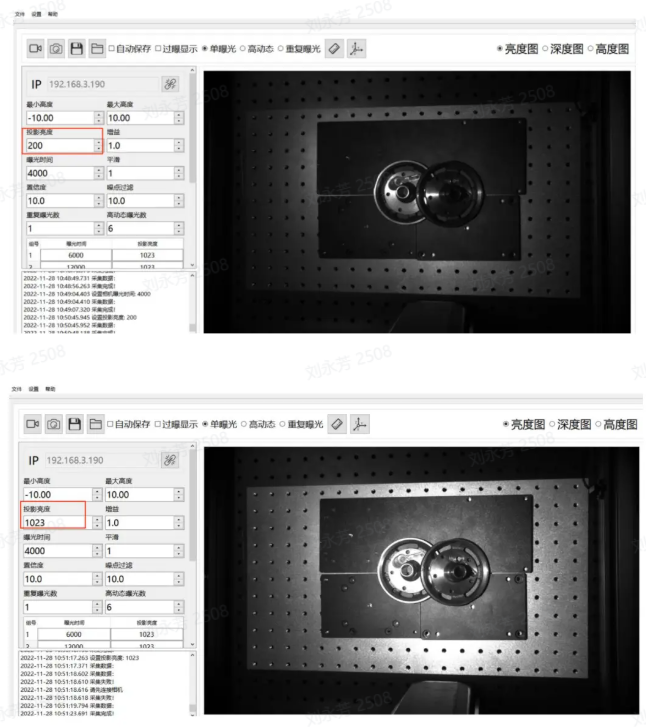
Projection brightness refers to the intensity of the projected light. The greater the light intensity, the brighter and clearer the image. Within a certain range, the human eye perceives a brighter image as clearer. If this limit is exceeded, excessive brightness will make the image impossible to see clearly.
Range: 0-1023
The larger this value, the greater the projection brightness and the more effectively the signal-to-noise ratio can be improved. It is recommended to use the maximum value. Only consider reducing this value if the exposure time has been adjusted to the minimum and overexposure still occurs
Note: It is recommended to adjust the brightness to 1023
6.1.5 Gain
Adjusts image brightness.
Range: 0-24
The gain value of the 2D Camera can be adjusted and should be increased appropriately. As gain increases, noise also increases accordingly
6.1.6 Smoothing
Range:0-5
Performs smoothing on the point cloud
6.1.7 Confidence
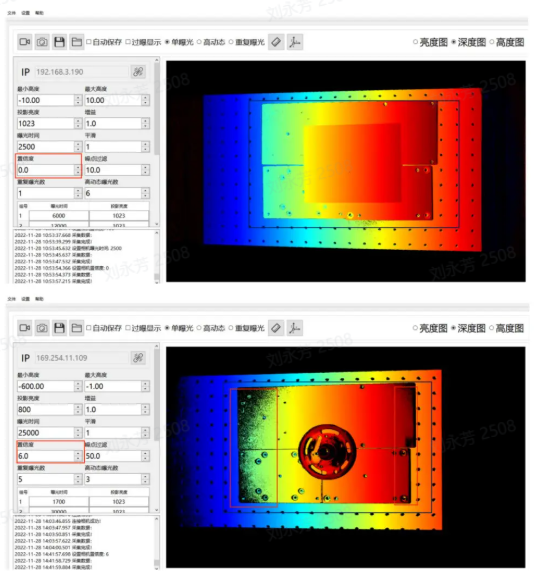
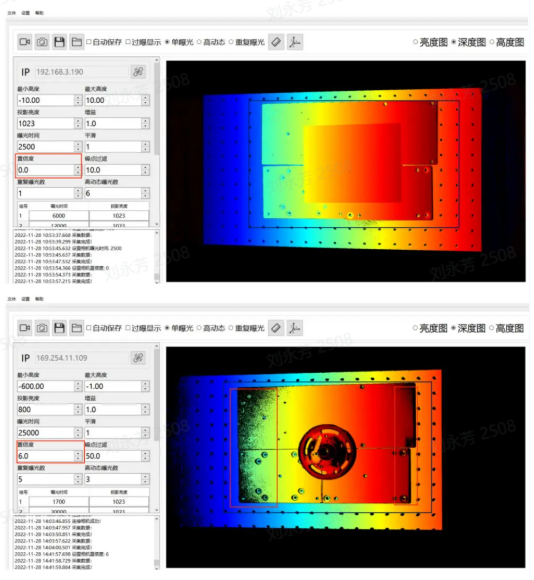
Confidence indicates the degree of reliability. It performs an initial screening of the point cloud. Generally, 2-5 is sufficient, and customers can adjust it according to the on-site conditions
Lowering the Confidence retains more black areas in the depth map; conversely, increasing the Confidence removes black noise in the depth map.
Range: 0-100
6.1.8 Noise Filtering
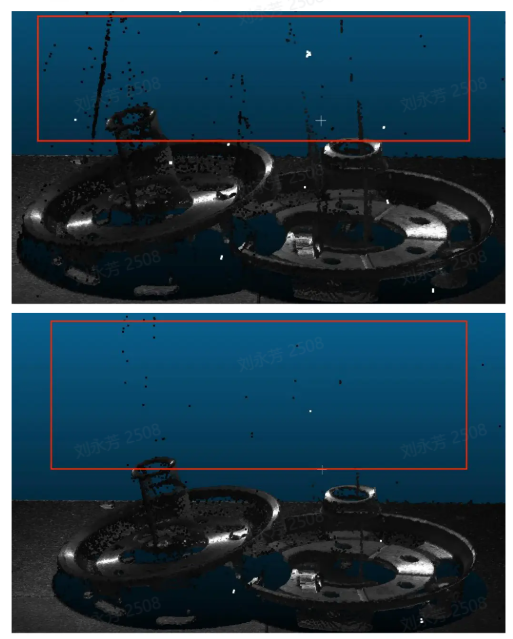
In machine vision application scenarios, when detecting metal, aluminum foil surfaces, reflective films, and objects with smooth surfaces, specular reflection can cause local reflected light to be too strong, resulting in the loss of the object's original information and interfering with machine vision detection. Noise Filtering can remove the generated noise and preserve the object's original information.
Range 0-100
When recognizing metal, aluminum foil surfaces, reflective films, and objects with smooth surfaces, specular reflection may cause local reflected light to be too strong, thereby losing the original object information and interfering with Pickwiz recognition and image detection. Increasing the Noise Filtering value can remove the generated noise and preserve the object's original information.
6.2 Optional Parameters
6.2.1 Radius Filtering
For each point in the point cloud, determine a sphere with radius r and count the valid points. If the number of internal points is less than the valid point threshold, it is considered a noise point and removed. The smaller the radius and the larger the valid point count, the more obvious the filtering effect
Radius range: 0-99
Valid point range: 0-99
6.2.2 Depth Filtering
Filters suspended noise points in the Z-axis direction. The larger the Threshold, the more obvious the filtering effect. For the filtering method based on the depth map, a Threshold of 33 is recommended at a distance of 1000mm.
Range: 0-100
6.2.3 Reflection Filtering
Filters facade noise caused by mutual reflection of metal. The larger the Threshold, the more obvious the filtering effect
Range: 0-100
6.2.4 Phase Correction
Phase Correction, that is, point cloud grayscale compensation, is a method of correcting grayscale information in 3D point cloud data. The purpose of point cloud grayscale compensation is to eliminate these grayscale differences and convert the grayscale information in the point cloud into values corresponding to the actual surface reflectivity of the object. The larger the Threshold, the more obvious the correction
Range: 0-100
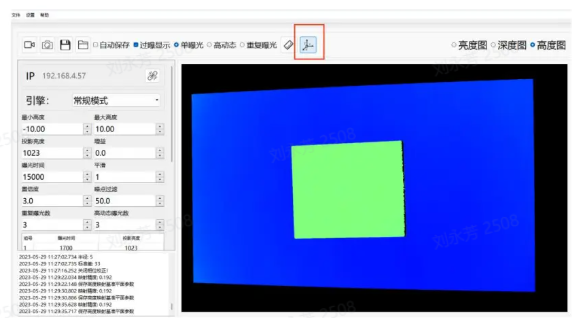
Usage: First place the Calibration Board and use its plane as the reference plane, as shown above.
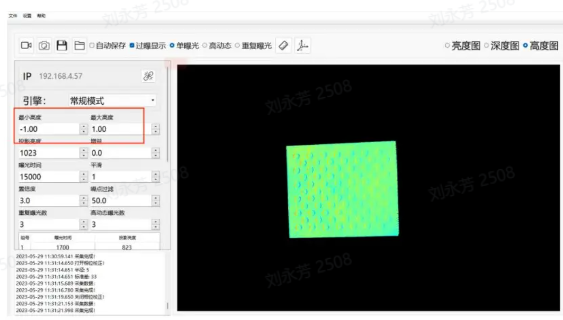
As introduced in the Maximum Height and Minimum Height section, set the maximum height to 1 and the minimum height to -1 so that only the Calibration Board part is displayed, as shown above.
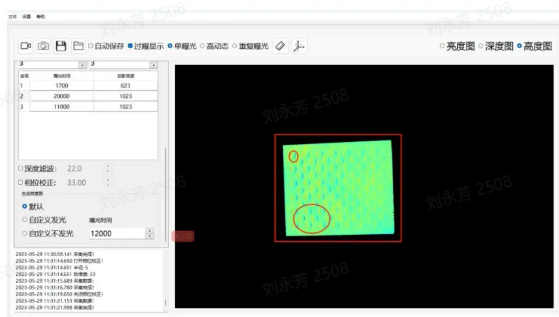
When Phase Correction is not enabled, the Calibration Board is shown above. In the actual Calibration Board, the whole surface is planar, and there is no up-and-down fluctuation between the circular and non-circular parts, but the actual captured result shows fluctuations on the circles.
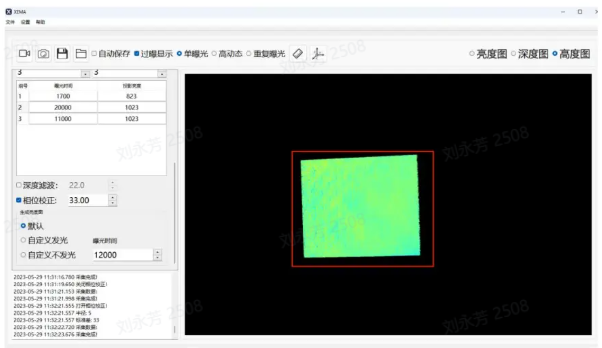
After enabling Phase Correction, if the Calibration Board basically shows no color difference or the difference is not obvious, the correction is successful.
6.2.5 2D Image Overlay Exposure
This function can separately overwrite the initial 2D image after obtaining the point cloud. Sometimes the point cloud is good, but the 2D image is too dark or overexposed and does not meet requirements. At this time, 2D overlay exposure can be enabled to overwrite the initial 2D image.
Selecting illumination allows you to set the exposure time, gain, and shooting mode (Single Exposure or High Dynamic Range).
Selecting no illumination means using the ambient light brightness. You can also set the exposure time, gain, and shooting mode (Single Exposure or High Dynamic Range).
Overlay Gain
When using the 2D overlay exposure function, this gain can be adjusted to make the image brighter
Overlay Exposure Time
When using the 2D overlay exposure function, this exposure time can be adjusted to make the image brighter